
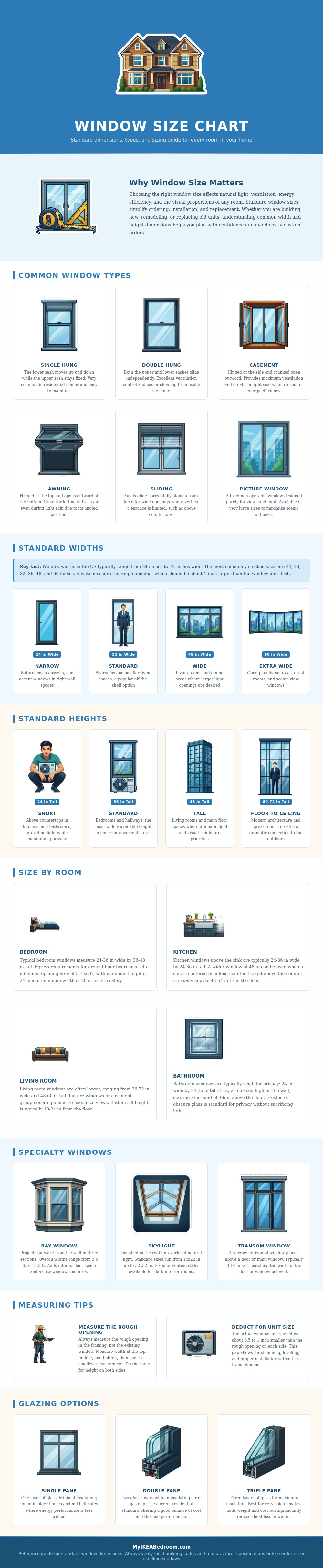
Choosing the correct window size is a decision that affects how a room feel, and the correct window size affects how much light enter the room. If the window size is too small for the room, the room may feel closed in because a small window will not allow the room to recieve enough light. If the size of the window is too large for the room, the proportion of the room may appear incorrect because a large window take up space that may be needed for furnitures.
Using standard sizes for windows from the manufacturer in which you will install the windows will eliminate guesswork about the size that will work best for each room. The type of window that will be used is important to the function of the rooms in the house. The dimension of the windows are also important.
How to Choose the Right Window Size
Single hung windows is a good choice for many rooms because only the bottom sash of the window can move. This is a good window if the needs of the rooms are not requiring alot of airflow. Double hung windows are a good choice for rooms that need both sashes to be able to move, as you can easily clean the windows from within the rooms.
Casement windows are a good choice for areas that need to have the window create a tight seal when it is closed. These types of windows swing outward on a hinge. Awning windows are a good choice for areas where it is often rain because the glass of these windows can act as an overhang for the structure.
Sliding windows are a good choice when you need a large opening for a room but dont have the space for a swinging window. Picture windows do not open and are a good choice for areas where the 住户 wants to have an unbroken view of the scenery outside of the house. Windows can be of different widths and heights.
Windows can be narrow in width or they can be extra widely in width. Narrow widths are useful in areas like the bathrooms of a house or the stairwells. Wide widths of windows are useful in areas like living rooms.
Windows can also be of different heights within the rooms of the house. Short heights for windows are useful in areas above countertops in the kitchen and the dining areas. These windows will not block the view into the kitchen or dining areas.
Tall heights for windows are useful in areas where the windows is meant to create the sense of a large vertical space within the house, thus making the room appear larger in size. The function of each room in the house will help to determine what type of window size is best for that room. Bedrooms must have windows that meet the building code’s requirements for egress.
These rooms must have a window that can be used as an emergency exit from the bedroom. Kitchen windows are often located above the sink. These windows should allow light into the area but should be high enough to allow for the counter within the kitchen to remain clear of water.
Living rooms are often large because many people spends time in these rooms. Therefore, many people prefer the choice of large windows in living rooms. Finally, bathrooms are often small rooms and require privacy from the rest of the house.
Small windows in these rooms that use frosted glass allow the bathrooms to receive the light they need but without giving others in the house the opportunity to have a view of the bathroom. There are also specialty windows that can be included in the house as an alternative to standard windows. Bay windows extend outward from the main structure of the house.
These windows often create an area within the home where individuals can have a seating area in the house. Skylights are an alternative window that can be installed into the ceiling of the house. These windows allow for light to enter the homes into the interior rooms that do not have windows on their walls.
Transom windows are windows that are located above the entry doors or other windows in the house. These types of windows allow for the windows to provide light to the areas of the house without taking up any wall space for the doorway or other windows. In order to choose the proper size for the windows in the house, you must measure the rough opening of each room.
The rough opening is the opening within the walls of the house where the window will be installed. This dimension should be measured instead of the dimensions of the old window in the room. The rough opening must be slightly larger than the dimensions of the windows unit because the frame of the window will need to be able to be leveled against the walls of the house.
Taking measurements of the rough opening at multiple points in the walls will help to identify any irregularities in the walls that must be accounted for in installing the windows. The glazing of the windows can help to determine the comfort of the rooms in the house as well as the insulation of those rooms. Using single pane glass for the windows will allow the rooms to lose a lot of their heat; thus, they will be uncomfortable to reside in.
Single pane glass is mostly used in older homes. The majority of windows have double pane units. These windows allow for the area to retain its heat, which contributes to the comfort of the individuals in those rooms.
Finally, triple pane glass is another alternative used in areas of the house that is exposed to very cold climates. These windows create three layers of glass that allow for the areas to be very well insulated from the outside air. Finally, the best choice for the windows in the house will depend on the way in which each room is to be use in the house.
In some rooms, the requirements of the individuals who will use the rooms will dictate some of the features that the windows must have. For instance, a bedroom may require different sized windows than a room that young children will use as a bedroom. Another factor that will play a role in the choice of windows is the existing layout of the house.
A size for the windows that works for one area of the house may not allow for the windows to work in another area of the house. The size and placement of the windows may have to be chosen with care to ensure that the windows appear to be an intentional part of the décor of the houses.
