
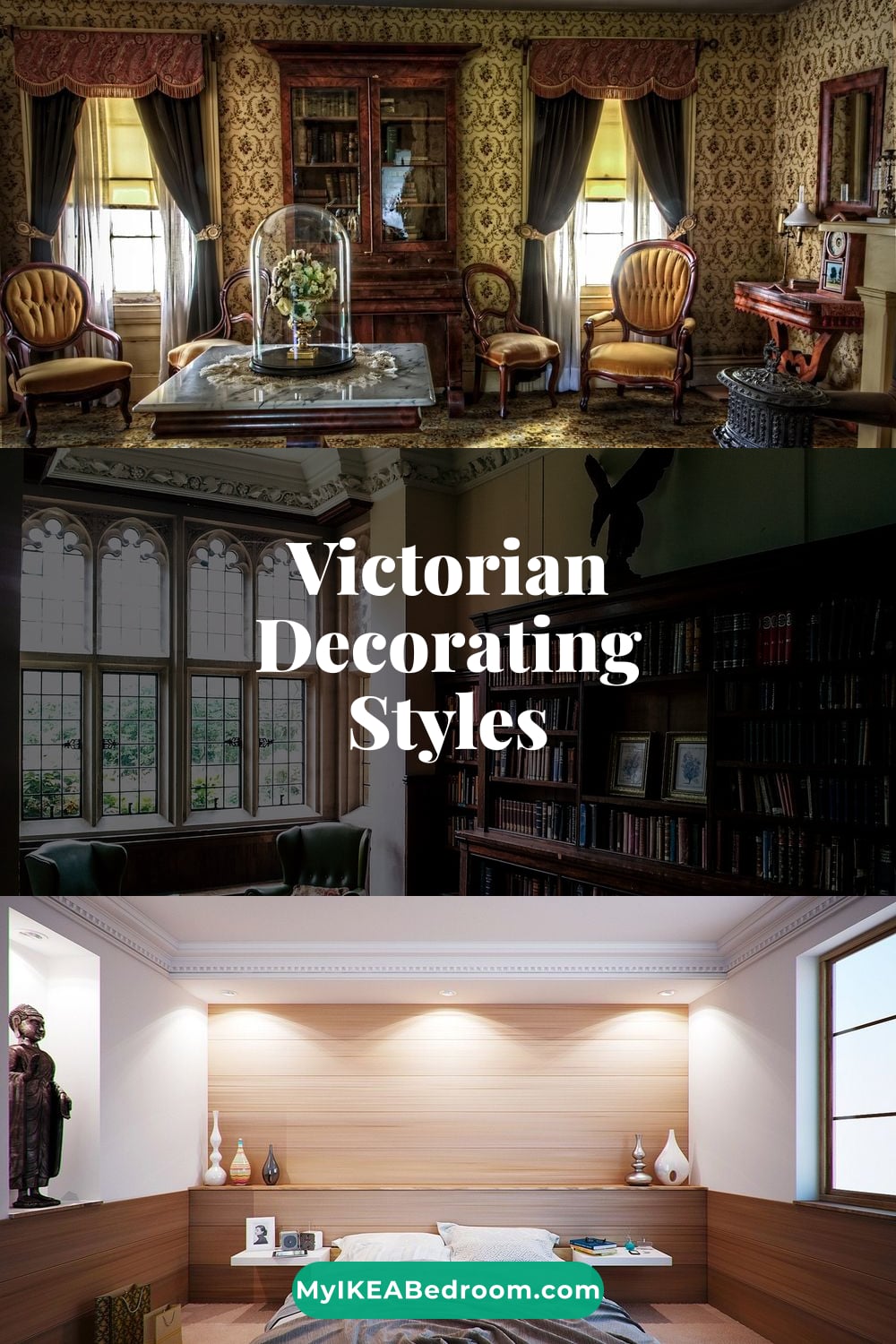
The Victorian style continues to influence homeowners looking to create a dramatic yet cozy atmosphere in there homes. Some of the element of the Victorian era, such as the use of heavy drapes, dark woods for furnishings, and ornamental detailing, were not included randomly within these homes. These elements were meant to reflect both the industrialization of the era as well as the romantic appreciation for craftsmanship and history within those homes.
Homeowners who decorate their spaces in the Victorian style desire to experience both grandeur and intimacy within their homes. This appreciation for both of these elements is the reason why the Victorian style continue to be popular among those who decorate their homes. The Victorian era was comprised of several different movement that encompassed various design elements.
Rather than attempting to include all of these elements within a single home décor style, it is important for the homeowner to understand each of these separate movements and styles. By understanding each of these separate movements, a homeowner can incorporate only those elements that best reflect their appreciation for the Victorian period. By borrowing only those elements that reflect an appreciation for the Victorian period, a homeowner will not transform their living room into a costume drama set.
Each of these movements had certain elements, color palettes, and rules regarding their use in period décor. By mastering these individual movements, a person can begin to confidently incorporate each of these elements into their homes. The Gothic Revival style was among the first to emerge during the Victorian period.
Different Victorian Decorating Styles to Explore
1. Gothic Revival Style
Some of the characteristics of the Gothic Revival style include tall, narrow windows that include stained glass, heavy oak furnishings, and walls that is painted deep crimson or forest green. These types of furnishings the homeowners of the 1830s and 1840s used as a way of creating an alternative to the classicism that was dominating the décor styles of the previous century. The vertical lines of the Gothic Revival style and the ornamental carvings of its furnishings were used to provide a level of ornamentation that was not provided by the machine-made furnishings of the time period.
The use of this style should be limited when decorating modern spaces. For instance, only incorporating one mirror or a pair of velvet chair may provide a touch of Gothic Revival style to a modern space without creating a sense of theatricality within that space. Using such elements excessively, however, will transform the space into a chapel.
2. Rococo Revival Style
The Rococo Revival style emerged after the popularity of the Gothic Revival movement. The Rococo Revival movement featured the opposite of the Gothic movement, utilizing curves and pastel colors for its furnishings. For instance, Rococo Revival features furnishings that have cabriole legs and tufted upholstery, and the parlors in which these furnishings were displayed often featured colors like blush, ivory, and celadon, as well as porcelain figurines of the female servants of these homes.
The middle class of the country used this decorative style who wished to exhibit their refinement, yet avoid the more somber looks of the furnishings in the Gothic movement. To utilize this decorative movement appropriately within modern décor, it is important for the individual who selects these furnishings to balance the sweetness that is characteristic of Rococo Revival furnishings. For instance, a rosewood marble-top table may be used in a space that also features furnishings with more linear designs.
If furnishings with excessive sweetness are incorporated into a décor space, however, the space may begin to resemble an overdecorated wedding cake.
3. High Victorian Eclecticism
High Victorian Eclecticism was the movement that defined the 1860s and the 1870s. Some of the characteristics of Victorian Eclecticism include the incorporation of Japanese screens into the décor of the homes, the placement of Turkish carpets in the homes, and the decoration of the mantel with a variety of décor items from different categories of décor. During this time period, abundance in the décor of the homes was a sign of wealth and the worldly nature of those homeowners.
For instance, a single chair may feature Egyptian motifs on its legs, but include Celtic knotwork on the back of the chair. The use of this decorative movement in the present day may include the use of a dominant textile or wallpaper within the home, and the use of furnishings that echo the colors of that main textile or wallpaper in the décor of the space. Introducing new colors into the space, however, should be avoided.
4. Aesthetic Movement
The Aesthetic movement was used as a rebuke to the excess of the High Victorian Eclecticism movement. The Aesthetic movement focused on using the concept of beauty as the guiding element within the décor of the homes. Designers such as E.W. Godwin and Christopher Dresser began to move away from clutter within their homes by using natural materials, earth tones, and muted colors. Some of the elements of Aesthetic movement include the use of ebonized woods for furnishings, blue motifs that were inspired by Japanese design elements, sage greens for the furnishings in the home, and gold accents to the furnishings. Sunflowers and the feathers of a peacock were among the signature motifs of Aesthetic movement designers.
This decorative movement may be beneficial for homeowners who wish to decorate their homes in the present day, as it promotes the use of negative space within the homes. Only the incorporation of one sideboard or a set of porcelain dinnerware may be needed to embrace this decorative movement. The Aesthetic movement promotes the idea that Victorian décor can be used as a form of cerebral décor as well as emotional décor.
5. Queen Anne Movement
The Queen Anne movement was used within the 1880s. Some of the characteristics of the Queen Anne movement include the fact that the interiors of the homes often have flowing areas within the home that are connected to one another, rather than the separate areas of the older Victorian homes. In addition, the wallpaper that was used in the Queen Anne movement featured lighter colors, and often incorporated stylized floral and animal motifs on the walls of these homes. The Queen Anne movement was inspired by the architecture of England and India, as well as various features of colonial and Eastlake homes.
Those who embraced this decorative movement within the Victorian period desired a style that was both cozy and elegant to their homes. For those who wish to decorate their homes today to exhibit this decorative feature, the Queen Anne movement may be the best of the Victorian decorative movements to study. For instance, a mantel that features turn spindles and transferware may be used to decorate the area where the homeowners entertain their friends and relatives.
6. Arts and Crafts Movement
The Arts and Crafts movement is the last to be discussed, and was used in the final decades of the Victorian era. William Morris and Philip Webb were two of the individuals who promoted the Arts and Crafts movement, which aimed to provide alternatives to the shoddy furnishings that began to flood the marketplaces of the period. Some of the characteristics of Arts and Crafts include the use of oak furnishings, hand-blocked wallpaper color motifs in indigo and madder hues, and rush-seated chairs.
Compared to other decorative movements of the Victorian era, the Arts and Crafts movement replaced the ornamental features that adorned furnishings with features that depicted nature within the décor. For instance, Morris promoted the idea that the décor of a home and the items within that home may improve the moral character of those who use them. While this may seem complex and unrelated to the use of decorations in a home, a chair designed by Morris will be significantly more comfortable for those who use the chair than a mass-produced and flimsy alternative.
In some ways, the Arts and Crafts movement is arguably the easiest of the various decorative movements of the Victorian era to embrace within the décor of modern homes. The use of one wallpaper design by Morris or the placement of a set of copper fixtures may be all that is needed to embrace this decorative movement in one’s home. Finally, the Edwardian Baroque movement is the last to be discussed.
7. Edwardian Baroque Movement
This decorative movement emerged as the grand finale of the period. Decorations within the Edwardian Baroque movement featured ornate plasterwork, furnishings of satinwood, and decorative inlays. The characteristics of Edwardian Baroque included soft colors of ivory and pale sage greens.
This decorative movement reflected the optimism of the start of the new century. Many of the grand hotels that were constructed during the Victorian era continue to utilize the Edwardian Baroque decorative movement within their hotels. For example, these hotels often continue to use crystal chandeliers in their dining areas that scatter the light within the rooms rather than absorbing it.
In modern homes, however, which are typically significantly smaller than the homes of the Victorian era, the Edwardian Baroque decorative movement can be incorporated in ways that do not require the extensive use of wood or plaster decorations. By mastering each of these individual decorative movements within the Victorian period, an individual can confidently create their homes in a way that incorporates these various movements into their décor. The various movements may be incorporated into the home in a way that reflects the appreciation for the different movements during the Victorian period.
Each of these decorative movements can be combined in various ways to reflect the life of the individuals within the homes. Finally, the most important use of these decorative movements is for the décor to reflect the life of those who live within the homes. For instance, if an individual feels that they are to live among beautiful and storied things in their home, they will feel a sense of satisfaction in their life.
This appreciation for the Victorian decorative movements and their purpose for the life of the individual is what originally inspired individuals throughout the Victorian period to incorporate these elements into their décor. The appreciation for such an element continues to work its magic within the present day.
