
When you purchases a storm door, there is several factors to consider prior to your purchase. The first thing you should consider is the size of the storm door. The size of the storm door will determine whether or not it will fit into your existing door frame.
Storm doors is designed to fit within an existing door frame. A storm door that is too large will not allow the door to fit into the frame, and a storm door that is too small will allow for gaps between the frame and the storm door. Additionally, a storm door that correctly fit into the door frame will swing smooth, while a storm door that is measured incorrect may stick within the frame or allow air to leak from the gaps between the door and the frame.
How to Measure and Choose a Storm Door
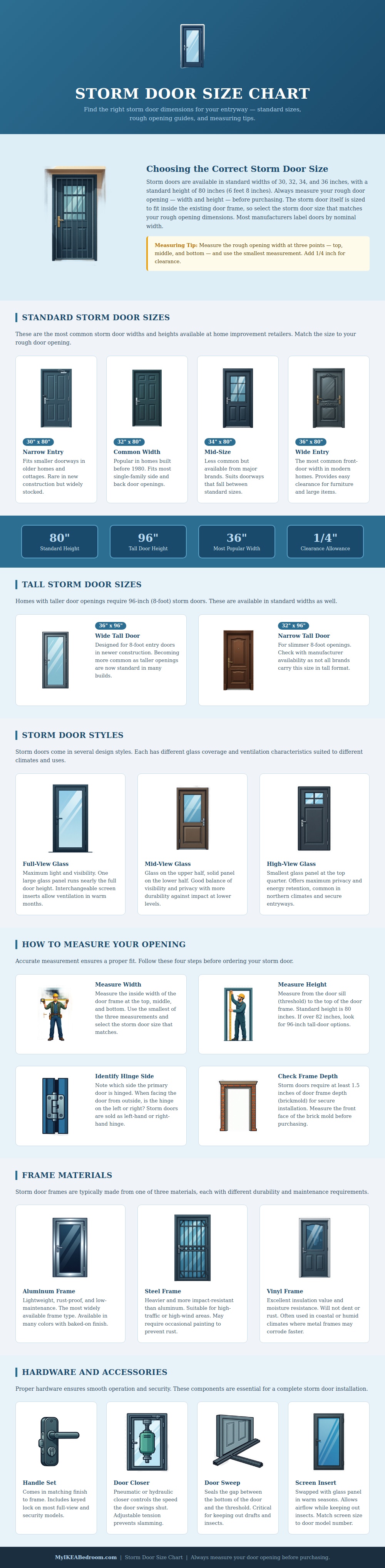
The infographic displays the common size of storm doors and the number of different options available for storm doors. Most common storm doors has a height of 80 inches. These 80-inch storm doors come in four different width.
Additionally, some storm doors are available in a height of 96 inches; these are generally used for homes that has higher ceilings. The 36-inch width of storm doors is the most common width for storm doors. This width allow enough space for individuals and pieces of furnitures to pass through the doorway.
The 30-inch width is not as common for storm doors. However, 30-inch widths are generally used for older cottage or homes that have narrower doorways. To determine the size of a storm door that will best fit into your existing door frame, you must measure the dimensions of the door frame.
There are three specific measurement for the width of the door frame to take; the width of the door frame at the top, the middle, and the bottom of the door frame. The width of the door frame should be measured at these three points because the smallest of the three measurements will ensures that the storm door will fit within the frame. Additionally, you must also measure the height of the door frame; from the threshold of the doorway to the top of the frame.
If the height of the door frame is in excess of 82 inches, then you should order a 96-inch storm door rather than an 80-inch door. The storm door includes a small amount of clearance for the weatherstripping that wraps the storm door and the door sweep that covers the threshold of the doorway. The material that the storm door is made from will affect the performance of the storm door.
Aluminum is a common material that people use to construct storm door frames because aluminum is a lightweight material that will not rust. Additionally, steel is a common material for storm door frames; however, steel is a heavier material. Steel is generally used in areas that are exposed to high wind.
You will need to occasionally paint the steel doors to protect the metal from rusting. Vinyl is another common material of storm door frames; vinyl allows for high level of insulation of the home and is moisture resistant. Vinyl storm door frames are common in areas that have high levels of humidity in the air because the vinyl will not rust.
The style of the storm door will determine the amount of glass that the storm door will contain. Full-view storm doors contain large area of glass to allow for the entry of light into the home. Additionally, mid-view and high-view storm doors contain more solid panels of glass than a full-view storm door; these solid panels provides more privacy to those entering the home through the storm door.
The high-view storm doors have a smaller area for glass; this smaller area of glass allow for the doors to retain heat within the home during cold weather climates. There are several piece of hardware that are generally included with the purchase of a storm door. The pneumatic closer will prevent the door from slamming into the door frame.
Additionally, the door sweep will cover the threshold to prevent gaps in the door and the entry of insects into the home. Finally, retailers sell screen inserts as an additional purchase and they must match the model number of the storm door in order to ensure that the screen insert will properly fit into the storm door. Prior to the delivery of the storm door, you must determine the hinge direction of the door.
Stand outside the door and inspect the hinges of the door; note on which side the hinges is installed. Storm doors come as either a left-hand door or a right-hand door. If you order the wrong type of door, the installation of the storm door will be difficult.
Additionally, the depth of the frame should be measured. The trim that surrounds the doorway must be deep enough to allow the storm door frame to be secured into place. Order the storm door using the smallest measurement of the width of the door frame, order the storm door with the correct hinge side, and ensure that the frame depth is sufficient to allow for the securing of the storm door to the frame.
These measurements will ensure that the storm door will fit into the doorway properly. Additionally, using the measurements and the standard size of storm doors that are available; you can determine the size of the storm door that will best fit into the doorway. The infographic is a tool to assist you in determining the size of the storm door; however, it isnt a substitute for measuring your own doorway.
By measuring the doorway and selecting the correct size of storm door, you will prevent air leaks through the door and the need to return the storm door to the store. By measuring the dimensions of the doorway, you can ensure the door will function as intended.
