🧵 Slipcover Fabric Calculator
Calculate exact fabric yardage needed for any furniture slipcover — sofa, chair, ottoman & more.
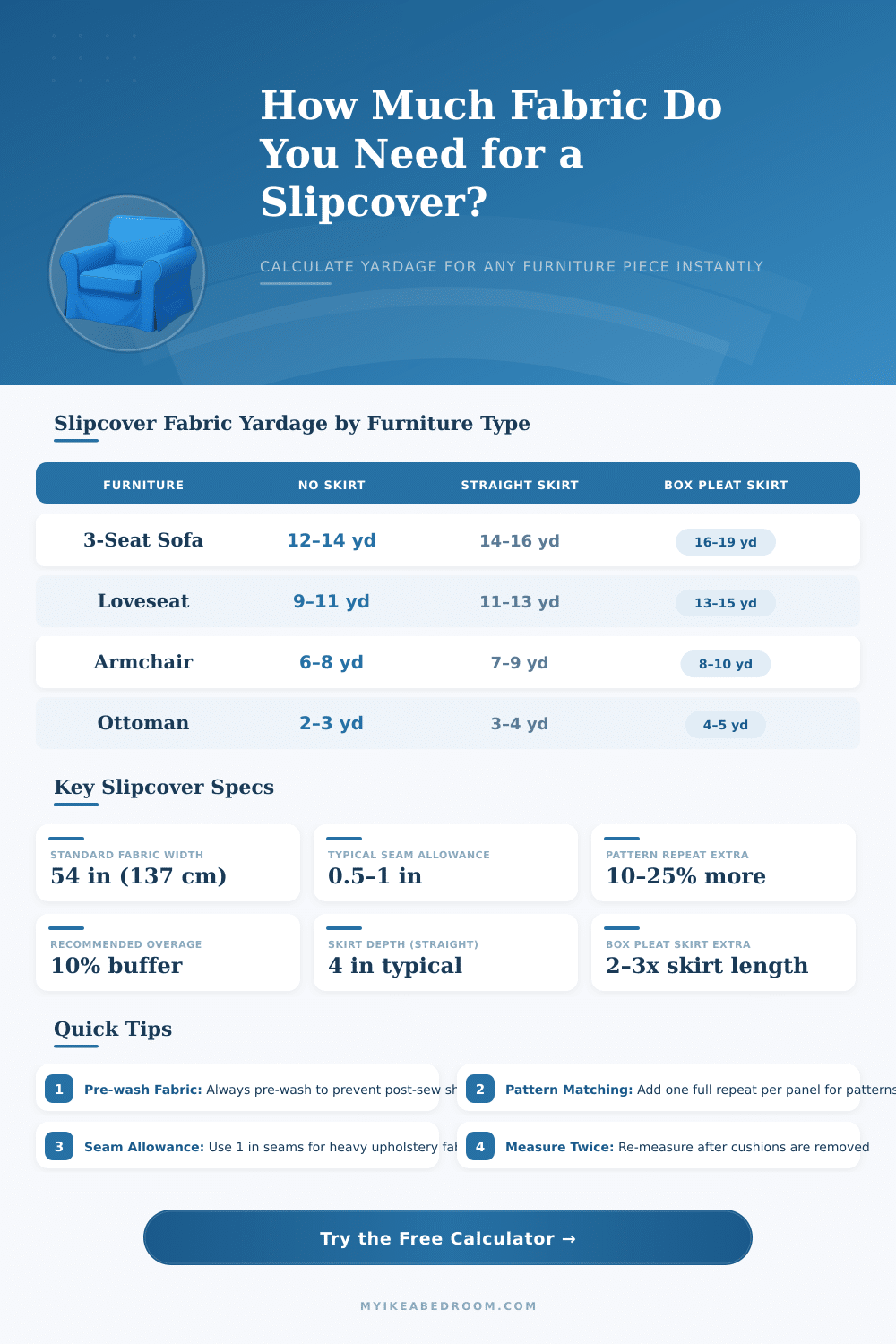
| Furniture | No Skirt | Straight Skirt | Box Pleat Skirt | Patterned (+extra) |
|---|---|---|---|---|
| 3-Seat Sofa | 12–14 yd | 14–16 yd | 16–19 yd | +2–4 yd |
| Loveseat | 9–11 yd | 11–13 yd | 13–15 yd | +1–3 yd |
| Armchair | 6–8 yd | 7–9 yd | 8–10 yd | +1–2 yd |
| Recliner | 8–10 yd | 9–11 yd | 10–12 yd | +1–2 yd |
| Ottoman | 2–3 yd | 3–4 yd | 4–5 yd | +0.5–1 yd |
| Dining Chair | 2–3 yd | 3–4 yd | 4–5 yd | +0.5–1 yd |
| Bench | 3–5 yd | 4–6 yd | 5–7 yd | +1–2 yd |
| Sectional Piece | 10–14 yd | 13–17 yd | 15–20 yd | +2–4 yd |
| Seam Allowance | Best For | Added per Seam | Typical Use |
|---|---|---|---|
| 0.5 in (1.3 cm) | Lightweight cotton, linen | 1 in per seam pair | Pillow covers, thin slipcovers |
| 1 in (2.5 cm) | Upholstery, canvas, denim | 2 in per seam pair | Most slipcovers (recommended) |
| 1.5 in (3.8 cm) | Heavy velvet, thick brocade | 3 in per seam pair | Professional custom work |
| Pattern Repeat Size | Extra per Panel | Typical Total Extra | Notes |
|---|---|---|---|
| 0 in (solid fabric) | None | 0 yd | No matching needed |
| 1–6 in small repeat | ~0.5 yd | 0.5–1 yd | Easy to match |
| 7–12 in medium repeat | ~0.75 yd | 1–2 yd | Plan panel placement |
| 13–18 in large repeat | ~1 yd | 2–3 yd | Center motifs on seat/back |
| 19–27 in extra-large | ~1.5 yd | 3–5 yd | Professional layout required |
Fabric for slipcover seem simple at the surface but it indeed is not. Linen and cotton are usually the most popular choices for covers of sofas. Many covers are sewed from twill or duck, materials that are heavy on the cotton side.
Imagine those thick khaki-pants of the 90s, only even thicker. Twill and duck are pure 100% cotton and honestly, they become better the more you wash and use them. You can cast cotton washable cover in the machine, and it handles almost any mark that you did.
How to Choose Slipcover Fabric
Then exist clothes designed for saving your money. It works superbly for slipcover and upholstery works, although you can use it also for other projects. This material is 100% cotton and it finds the balance between durability and ease during the work.
The best clothes sit in that medium weight, rugged enough for sewing without the form falling.
Whether you want something that restores the form just after you rise? Then mix does the whole difference. Mix of 50% polyester and 50% natural fiber, linen or cotton, is usually the best way.
Covers that fit well almost always have something special. In practice, that usually means polyester mixed with spandex for the best tension and return.
Revolution Plus are mainstream among the washabl clothes. It is upholstery fabric without support that resists marks but feels soft on the skin. You can simply wash it in cold water with soap without dye and everything is ready.
Clothes for covers must balance weight and force, heavy enough to be strong, but light enough so that your washing machine do not suffocate.
Medium or heavy natural clothes that wash well and keep their form genuinely shine hear. Some folks favor that their covers be cloud-soft and relaxed, while others search something crisp and formal. There is also a custom way, you can ask a designer create something entirely your own.
Many stores offer swatches, so you can order samples to see the colour and feel the fabric before buying. But mind: many upholstery clothes do not tolerate water. I advocate to take a little bit of that what pleases your eye, and wash it to see whether it keeps up before you spend much money.
Pre-wash the fabric before buying the whole roll. If you forget this, you maybe will be forced use dry cleaning forever.
I saw washed denim-cover that felt surprisingly, kept itself well in the wash and looked gorgeous on a family sofa. I saw also little woven fabric on a corner sofa that survived two children and a pair of Labradors virtually nothing happened. If you choose the right fabric, slipcovers genuinely can last bigpunishment.