Rug Size for Bedroom Calculator
Match your bed, room, and walking space to a rug that feels balanced, anchors the layout, and fits the room cleanly.
📋Bedroom presets
🔢Bedroom inputs
📈Reference sizes
Standard rug sizes
| Size | Inches | Metric | Best fit |
|---|
Bed footprints
| Bed | Inches | Metric | Room note |
|---|
Placement guide
| Placement | Reveal | Metric | Use case |
|---|
Common room matches
| Room | Bed | Rug | Note |
|---|
💼Rug material guide
💡Tips
Choosing the right size of carpet can seem difficult. Carpet under furniture well defines the area and gives the room more depth and warmth Even so too big carpet takes the whole space, and too narrow runner makes even nice hallways strangely tight.
For rooms a rule works: choose carpet that covers the seating area and leave one-inch distance at the furniture sides. That however depends on the arrangement of furniture. The whole layout decides the carpet size, not only the sofa.
How to Choose the Right Carpet Size
5×7 carpet almost never works for room. In little space of around 150 square feet a 6×9 carpet serves well. Normal 8×10 size is the most used in rooms, or 6×9 works if no furniture stands on it.
In little room or when furniture are pushed to the walls, lay only the front feet of sofas and chairs on the carpet to tie the arrangment together and save money. If the carpet is too little, at least put the front feet of the sofa on it. If that is not possible, buy bigger.
The carpet should be longer than the sofa for give the room airy look and well frame the seating. 10×14 carpet makes the space genuinely fancy.
Ideally between the baseboards and the carpet stays 1 to 1.5 feet. Practical trick is use removable blue painter tapes for marking the carpet size before purchase. Measure the width and length of the room in inches, subtract 36 from each and get the right carpet dimensions.
In little rooms six-inch margin looks better.
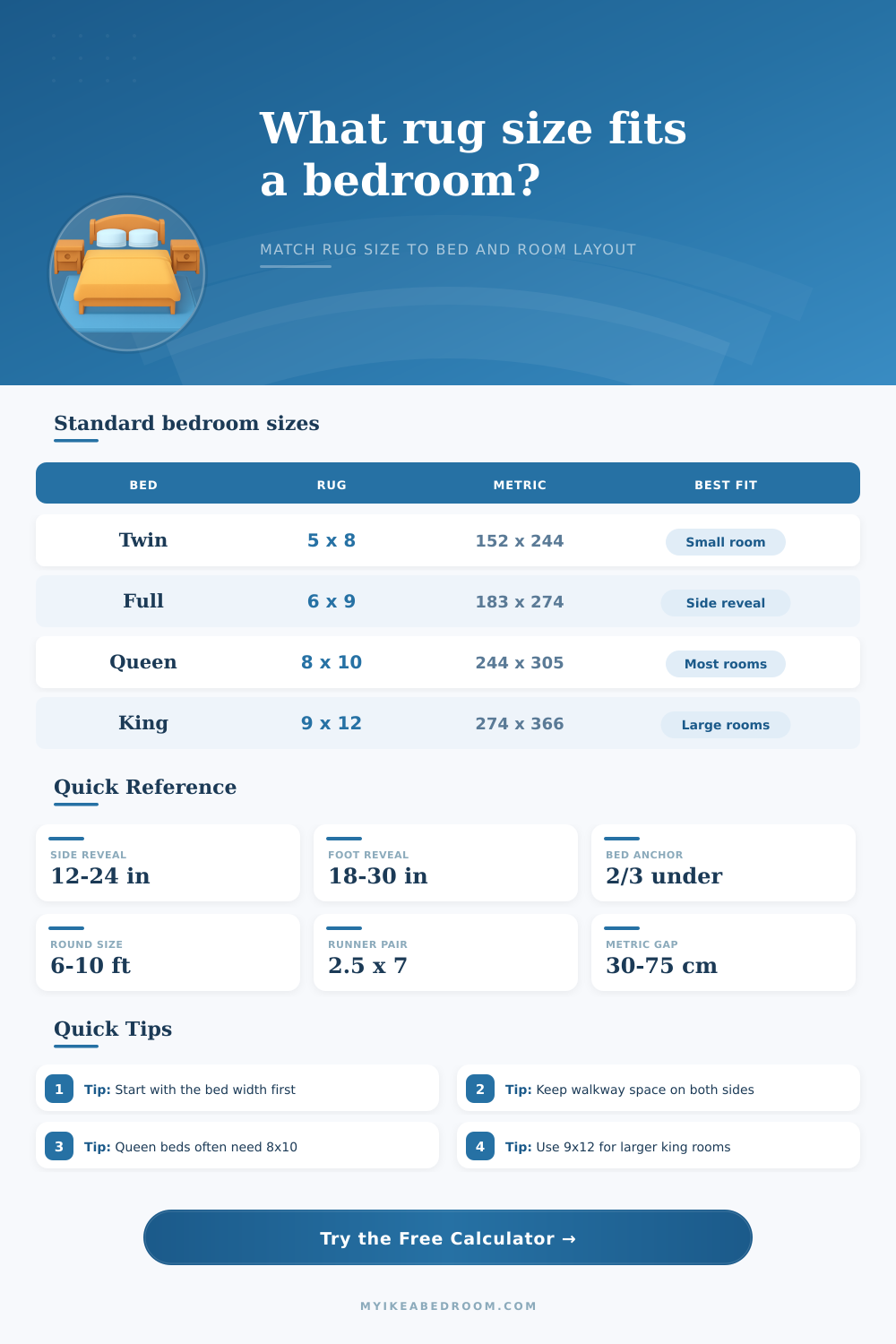
For bedrooms you advocate 5×8 for twin bed, 6×9 or 8×10 for queen bed and 8×10 or 9×12 for king bed. Alternative is lay little carpets at the bed sides, and good size for them is 80×150 cm. Carpet under the bed reduces the risk that it slips.
In dining rooms leave 30 to 60 cm between the table edge and the carpet edge. 9×12 carpet well suits for big tables with 8 to 10 chairs, regardless of the form. 8×10 works most for medium tables with 6 to 8 chairs.
Runner carpets of 2×8 or 2×10 are used commonly in hallways and on staircases.
For outside carpets extend them 24 to 36 inches past the furniture edges. At outdoor carpets less big are not always better. Little carpets under separate furniture give more covering and however show the beauty of the piece.
Room size carpets are between 9 and 15 feet. For big carpets choose low pile. For little you can use higherpile.