📽 Screen Size Calculator for Projectors
Match projector throw, wall width, and seating distance to a screen size that fits your room without guesswork.
📋Projector presets
🔧Calculator inputs
📋Screen surface comparison
📊Reference tables
💡Practical tips
📈Calculation results
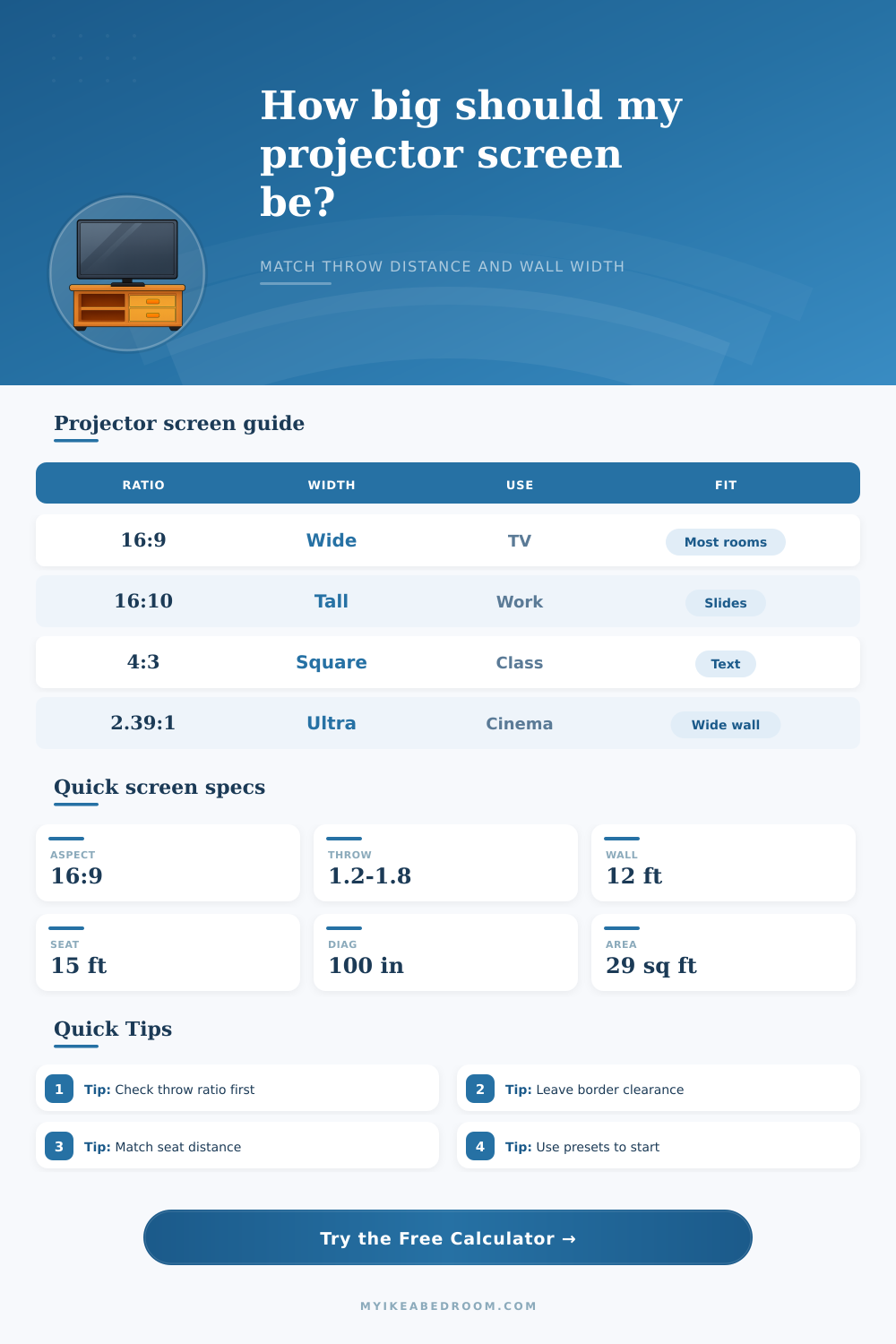
The size of the projector screen is determined by several factors. The first factor to consider is the throw ratio of the projector. The throw ratio is a specific measurement of the distance that the projector need to be from the screen to create the desired size for the screen image.
For example, if you place the projector at a specific distance from the wall, the throw ratio will determine the width of the image that is projected. Additionally, if the projector have a standard throw ratio, the width of the screen image will be a specific calculation based on the distance between the projector and the wall. If you dont take into consideration the projectors throw ratio, then the image might be either too small or too large for the screen on the wall.
How to Choose the Right Projector Screen Size
Another factor to consider is the dimensions of the wall. You cant use the full width of the wall for your measurements. You must subtract the width of the borders for the screen image and for the speakers.
Additionally, you must also subtract the headroom for the screen image to allow for space between the screen and the ceiling in the room. If you do not subtract for these measurements, then the screen image will be too large for the available area on the wall. Another consideration with projector screens is the seating distance for an audience.
If the audience members seats are too close to the screen, there eyes might strain looking at the screen. Additionally, if the audience members seats are too far from the screen, they will have difficulty in reading the details of the screen. The last factor to consider is the aspect ratios of the screen.
The aspect ratios determine the shape of the screen image. For example, a 16:9 aspect ratio is used for streaming shows at home. A 16:10 aspect ratio is used for presentations and spreadsheets.
Additionally, teachers in the classroom use a 4:3 aspect ratio for reading text on the screen. Lastly, a 2.39:1 aspect ratio can be used for films with panoramic views, but it requires a large amount of depth in the room for setup. When choosing an aspect ratio for the display screen, you must choose the aspect ratio that match the content that you want to watch.
The aspect ratio for the screen dictates how the image fill the screen. The distance that the projector lenses project the image, known as the throw distance, is another critical measurement to consider prior to purchasing a projector. The throw distance will dictate whether the image created by the projector can physically fit in the room where it will be used.
If the projector is equipped with a long-throw lens, the image will be too small for the room if the projector is placed too close to the screen. Projectors with short-throw lenses, however, will create large images on the screen if the projector is placed close to the screen. In this case, you can use a projector calculator to determine the size of the screen that the projector will create based on the throw ratio and the throw distance.
The materials that people use to construct the screen in which the projector aims its lens can also have an impact upon the image that is projected onto the screen. For instance, screens with a matte white finish will even distribute the light that is reflected from the screen. Matte white screens are useful for rooms with group of individuals that is situated in a variety of viewing positions relative to the screen.
Screens with a gray finish will increase the contrast of the projected image. Gray screens are useful in rooms that are not completely dark. High gain screens will make the image brighter, but have a narrow viewing angle for the audience.
Finally, screens that are constructed with acoustic materials allow speakers to be placed against the back of the screen without negatively impacting the quality of the sound that is projected from the screen. Finally, there are some mistakes that should of been avoided in the projection screen setup process. For instance, many individuals will measure the dimensions of the screen from corner to corner.
Measuring the dimensions from corner to corner is a mistake in screen measurement because it does not account for the visual viewing space that is needed for individuals to view the screen. Additionally, many individuals will ignore the specifications for the projector throw distance. Ignoring the specifications for the projector will lead to a projected image that does not physically fit onto the screen.
Finally, individuals should consider the amount of ambient light in the room. Ambient light will reduce the effectiveness of the screen; matte screens are better than glossy screens in rooms that contain ambient light. By avoiding these mistakes and correctly measuring the dimensions of the screen and calculating the throw distance for the projector, the image that is projected will fit the screen and all audience members will be comfortabley in their viewing position.