Platform Bed Height Calculator
Estimate finished sleeping surface height, platform base height, mattress stack, underbed clearance, storage fit, sit comfort, and nightstand alignment for a bedroom layout.
Choose a common bed setup, then adjust the base, mattress, floor layers, storage clearance, and target sit height for the actual room.
What this calculator checks
Surface height is the floor-to-top-of-mattress number you feel when sitting down, including platform deck, mattress, topper, rail recess, and rug thickness.
Target range estimates a sit height from the sleeper height and preference, then shows the deck height adjustment needed to reach it.
Clearance fit compares open underbed space with bins, drawers, or robot vacuum height and adds a practical handling gap.
Nightstand match shows whether the table top is below, level with, or above the mattress surface.
| Bed feel | Surface height | Best used for | Watch point |
|---|---|---|---|
| Very low platform | 10 to 14 in / 25 to 36 cm | Floor-like minimalist rooms, futon-style mattresses, very low nightstands. | Standing up can be harder and storage is usually limited. |
| Low modern platform | 14 to 18 in / 36 to 46 cm | Modern bedroom layouts, lower windows, low headboards, thin foam mattresses. | May feel too low for taller users or anyone needing easier transfers. |
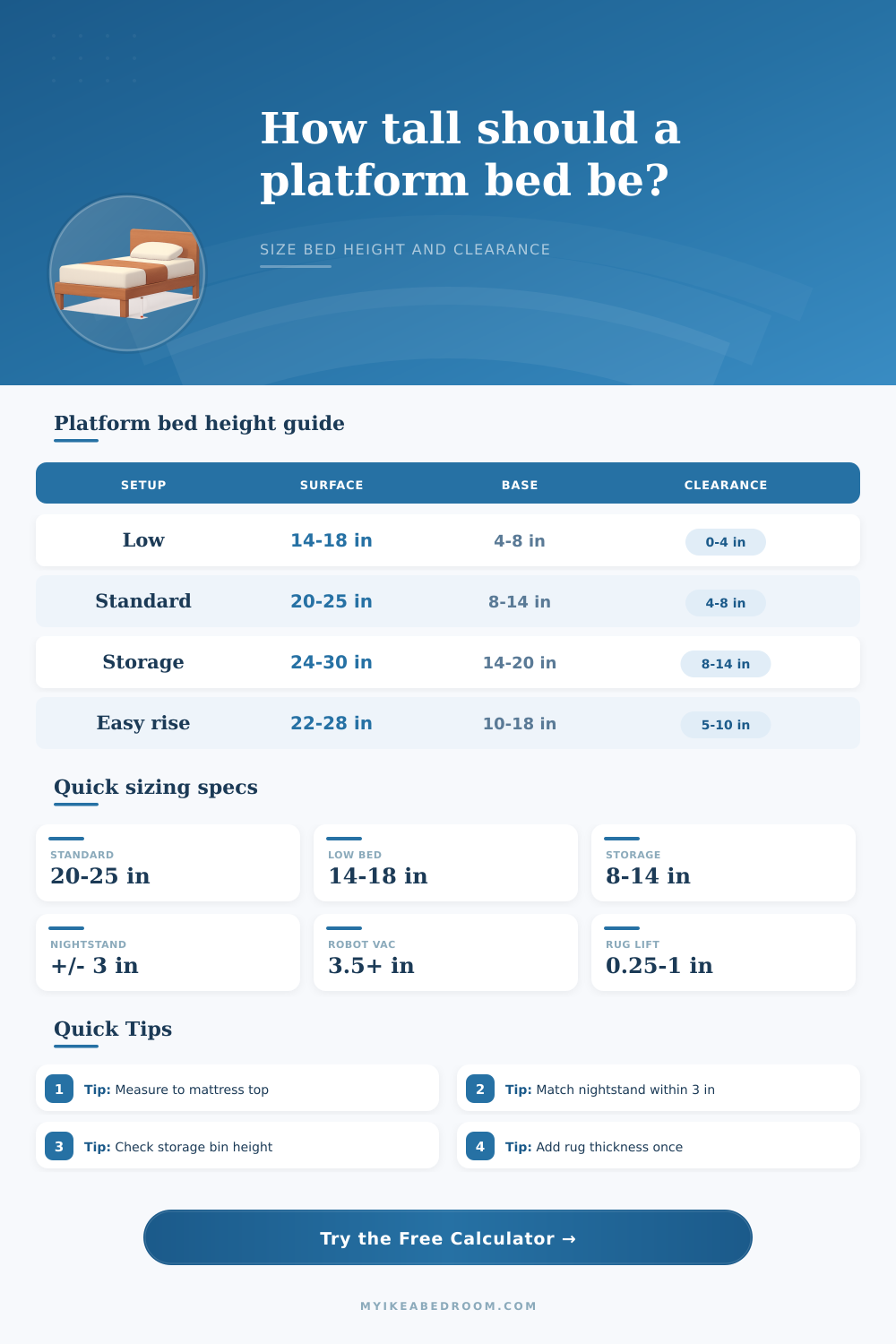
| Standard platform | 20 to 25 in / 51 to 64 cm | Most adult bedrooms, typical nightstands, and everyday sit-and-stand comfort. | Thick mattresses can push this higher than intended. |
| Easy-rise platform | 22 to 28 in / 56 to 71 cm | Taller sleepers, firmer mattresses, and anyone preferring less knee bend. | Shorter users may need a lower deck or thinner mattress. |
| Storage platform | 24 to 30 in / 61 to 76 cm | Drawers, bins, seasonal storage, or raised frames in compact rooms. | Check nightstand height and mattress access before building high. |
| Very tall stack | 30 in+ / 76 cm+ | Deep storage bases or thick luxury mattress stacks. | Often needs a lower mattress, lower deck, or step plan. |
| Target surface | 8 in mattress | 10 in mattress | 12 in mattress | 14 in mattress |
|---|---|---|---|---|
| 18 in low platform | 10 in deck | 8 in deck | 6 in deck | 4 in deck |
| 22 in standard-low | 14 in deck | 12 in deck | 10 in deck | 8 in deck |
| 24 in standard | 16 in deck | 14 in deck | 12 in deck | 10 in deck |
| 26 in easy-rise | 18 in deck | 16 in deck | 14 in deck | 12 in deck |
| 28 in storage/easy | 20 in deck | 18 in deck | 16 in deck | 14 in deck |
| Item below bed | Typical item height | Suggested opening | Planning note |
|---|---|---|---|
| Robot vacuum | 3 to 3.75 in / 8 to 10 cm | 4 to 5 in / 10 to 13 cm | Check cross rails, center legs, and rug edges along the whole route. |
| Low fabric bin | 5 to 6 in / 13 to 15 cm | 6.5 to 7.5 in / 17 to 19 cm | Allow finger room so soft bins do not scrape every time they slide out. |
| Plastic storage tote | 6 to 8 in / 15 to 20 cm | 8 to 10 in / 20 to 25 cm | Use the lid height, not the label height, if the lid crowns upward. |
| Rolling drawer | 7 to 10 in / 18 to 25 cm | 9 to 12 in / 23 to 30 cm | Wheel height and drawer front thickness can reduce usable clearance. |
| Deep seasonal bin | 10 to 13 in / 25 to 33 cm | 12 to 15 in / 30 to 38 cm | This usually creates a tall bed once mattress thickness is added. |
| Offset from mattress top | How it feels | Use case | Adjustment idea |
|---|---|---|---|
| 3 in lower or more | Reach slopes downward from bed. | Fine for low lamps, trays, or small rooms. | Raise nightstand, lower platform, or choose a thicker table top. |
| 0 to 2 in lower | Very comfortable for phone, water, and lamp access. | Most platform bed layouts. | Usually no change needed. |
| 0 to 2 in higher | Still comfortable and can protect items from bedding. | Thick comforters and taller lamps. | Check whether drawers clear the mattress edge. |
| 3 in higher or more | Reach can feel awkward from a low bed. | Intentional tall bedside chests. | Raise bed surface or use a lower bedside table. |
Measure to the deck, then to the mattress top. Platform height alone does not tell you how tall the finished bed will feel once the mattress, topper, rug, and rail recess are included.
Test sit height with stacked books or boxes. A small mockup beside the bed is faster than rebuilding a base that is two inches too high.
Check storage clearance at the lowest obstruction. Center legs, support rails, drawer stops, and rug edges often matter more than the outside rail height.
Align the nightstand to the mattress surface. A bedside table that looked correct with an old frame may sit too low after changing the platform or mattress.
Think of bed height as more of a biomechanical equation than a style statement. The relative position of your knee joint at mattress surface versus floor impact you each and every night, whether climbing into bed or sitting on it. If that ratio is wrong then your body must work harder to get to those pillows. And you’ll start feeling uncomfortably long before you even make contact with the pillows because your body has to work extra hard to get there.
Most people is measuring just the frame of the bed. When they gets an eleven inch memory foam mattress and a two inch mattress topper it looks like a good sized bed, until you climb up onto it. All of a sudden you’re sitting in something with a twenty five inch seat. It’s more like being at dinner than falling asleep.
Why Bed Height Matters for Comfort
The problem is most people base their buying decision on what the frame look like. They don’t figure out what it’s going to feel like as a place to sleep. For instance, consider all layers of material that adds to the overall height. That means considering thickness of a carpet or rug beneath the bed which changes the step up from the floor. It might mean knowing if your mattress is flush against the rail or recessed within the rail. If recessed, it drops the actual surface height by amount recessed. (This could be useful if you think the present set-up is too high but don’t wish to swap out the frame.)
The calculator on this page adjust for the little details. For example, it will take into consideration both the deck height plus the mattress + topper. It also subtracts thickness of a possible rug and whatever portion of the mattress sits inside the rail, if any. In short, it yields the real-world surface height… The one that counts in terms of comfort.
The same tension exist between ergonomics and storage. Seasonal clothing probably goes below the platform bed, right? But when we lift it up so big plastic bin can fit underneath, how high does it go off the ground? If your boxes are deep, do they require a higher drawer or something else like fabric cube storage? You should of check the clearance at the lowest obstruction point. It varies by design as center support legs often blocks more space than expected.
By inputting what you’re using, the calculator show whether it will work before you invest time building or purchasing. You won’t find out too late that your bins won’t slide out because a crossbar is blocking them.
Another design flaw is a perfectly good room ruined by misaligned nightstands. If you’re stretching down from the top of your mattress to reach something, then your bedside table is too low. Your shoulder gets yanked. If your nightstand overshadows your bed, it’s just too much visual weight. It seems like whatever you set down might tumble off at any moment. Try keeping the table top no more than three inches below the top of the mattress. This way everything will be nice and horizontal. It feels right.
Once you’ve made your decision (DIY or purchased), use boxes or books to mock up the height, stacking them on your current frame before committing. Sit down in it; check your hip alignment and knee alignment. Is it too high? Your knees will come to rest pointing sharply upward toward your chest, making it hard to rise. Too low? You’ll feel as if you’re falling into the ground.
This one matters: getting it right can turn a bedroom into a place of refuge… or an obstacle course. Begin with how comfortable it is to sit. Let the style and storage flow from that.