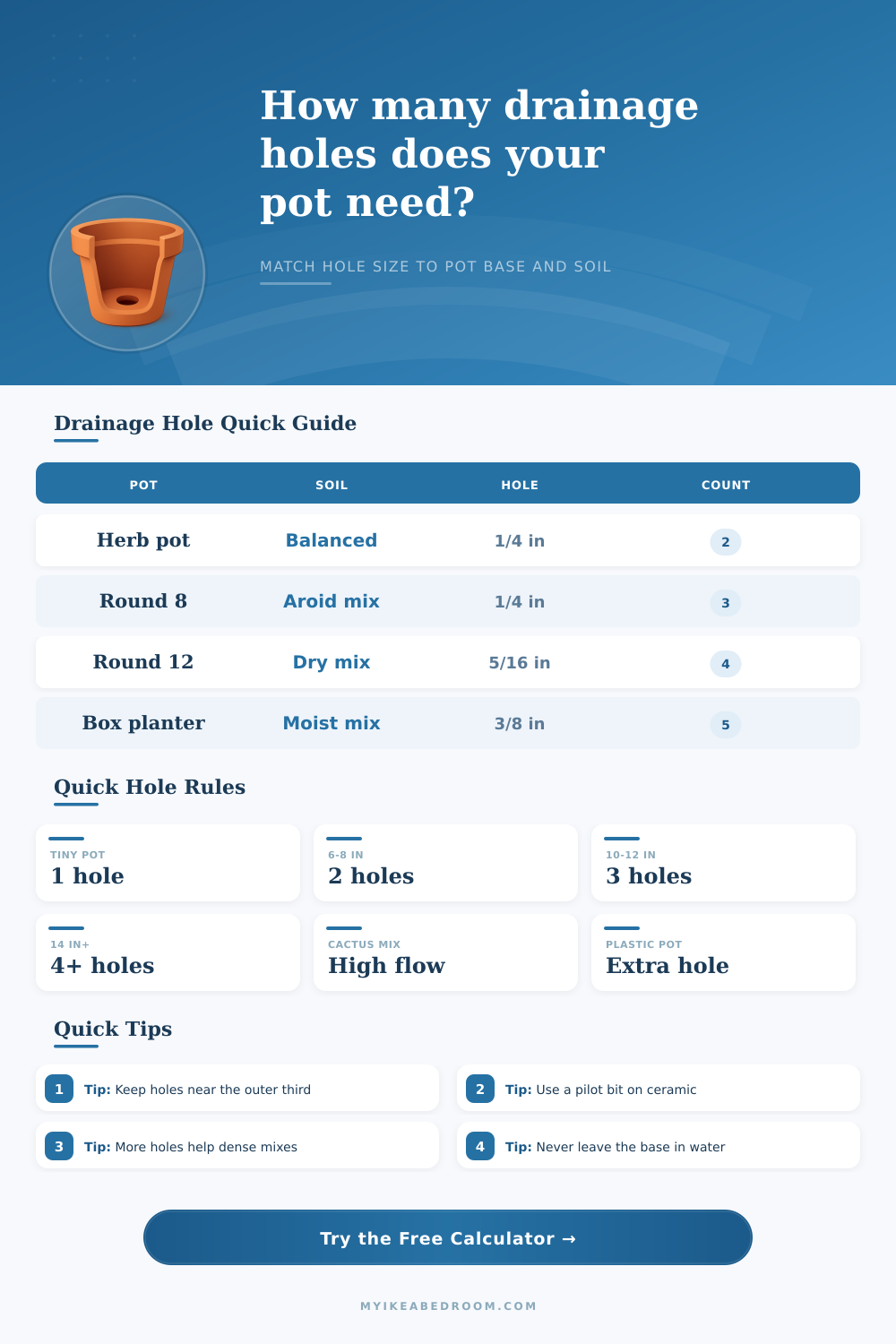
🌱 Plant Pot Drainage Hole Calculator
Match hole size, count, and open area to the pot, soil, and watering style
| Drill bit | Metric | Area | Best use |
|---|---|---|---|
| 1/8 in | 3.2 mm | 0.012 sq in | Seed trays |
| 3/16 in | 4.8 mm | 0.028 sq in | Tiny pots |
| 1/4 in | 6.4 mm | 0.049 sq in | Most pots |
| 5/16 in | 7.9 mm | 0.077 sq in | Large bases |
| 3/8 in | 9.5 mm | 0.110 sq in | Box planters |
| Pot size | Shape | Hole plan | Notes |
|---|---|---|---|
| 4-5 in | Round | 3/16 in, 1-2 holes | Starter pots |
| 6-8 in | Round or square | 1/4 in, 2-3 holes | Balanced houseplant |
| 9-12 in | Mixed | 5/16 in, 3-4 holes | More dry-down room |
| 13-18 in | Box or tub | 3/8 in, 4-6 holes | Big planter or box |
| Soil mix | Factor | Dry pace | Hint |
|---|---|---|---|
| Cactus or orchid mix | 1.22x | Fast | Use more open area |
| Aroid or bark mix | 1.12x | Quick | Chunky media drains well |
| Standard houseplant mix | 1.00x | Balanced | Best all-around default |
| Moisture-retentive mix | 0.86x | Slower | Fewer or smaller holes |
Drainage in potted plants is needed for the good growth of plants. They require water, air and light especially for roots. If the planter has a hole below you avoid overwatering because extra water simply spills.
Just lay a saucer under it to get the water and protect the table
Drainage for Potted Plants
Many decorative pots still do not have drains. For instance, almost any IKEA pot lacks them. Only those with saucers come with holes.
IKEA does not want you to plant directly in them.
The best solution is the method with internal pots. Lay the plant in draining pots, put it in nice exteriors without holes and lift it for water. Those big elegant pots from stores commonly are only covers; inside you lay a plastic pot for good drainage.
A big pot without a hole works well as an exterior cover and drip tray. That mode means you use almost any nice pot.
Plants in pots without holes require more attention to dryness and water amount. More issues enter, but you can entirely well grow healthy and happy plants like this. Snake plants and pothos tolerate without drains, while sensitive ones genuinely require them.
For big planters, fill them with lightweight materials like foam peanuts, plastic bottles or crushed tins, that reduces soil. The planter becomes more lightweight and easy to move, plus helps drainage. You can lay stones below in exterior to collect a bit of water without roots in it.
Modern advice however warns against soil above stones, because that creates perched water. The stone layer is one from the most stubborn myths about houseplants.
Much more important is the soil, whether it is coarse and drains well. Choose good, airy and quickly draining mix. Test the dryness before watering.
Fabric pots are a good alternative, with less risks of rot. Some have little marks below to make holes. Any drill?
Hammer a nail below. Self-watering planters help for plants requiring permanent moisture.