🪴 Plant Pot Drainage Hole Calculator
Calculate the ideal number, size, and total area of drainage holes for any plant pot or container
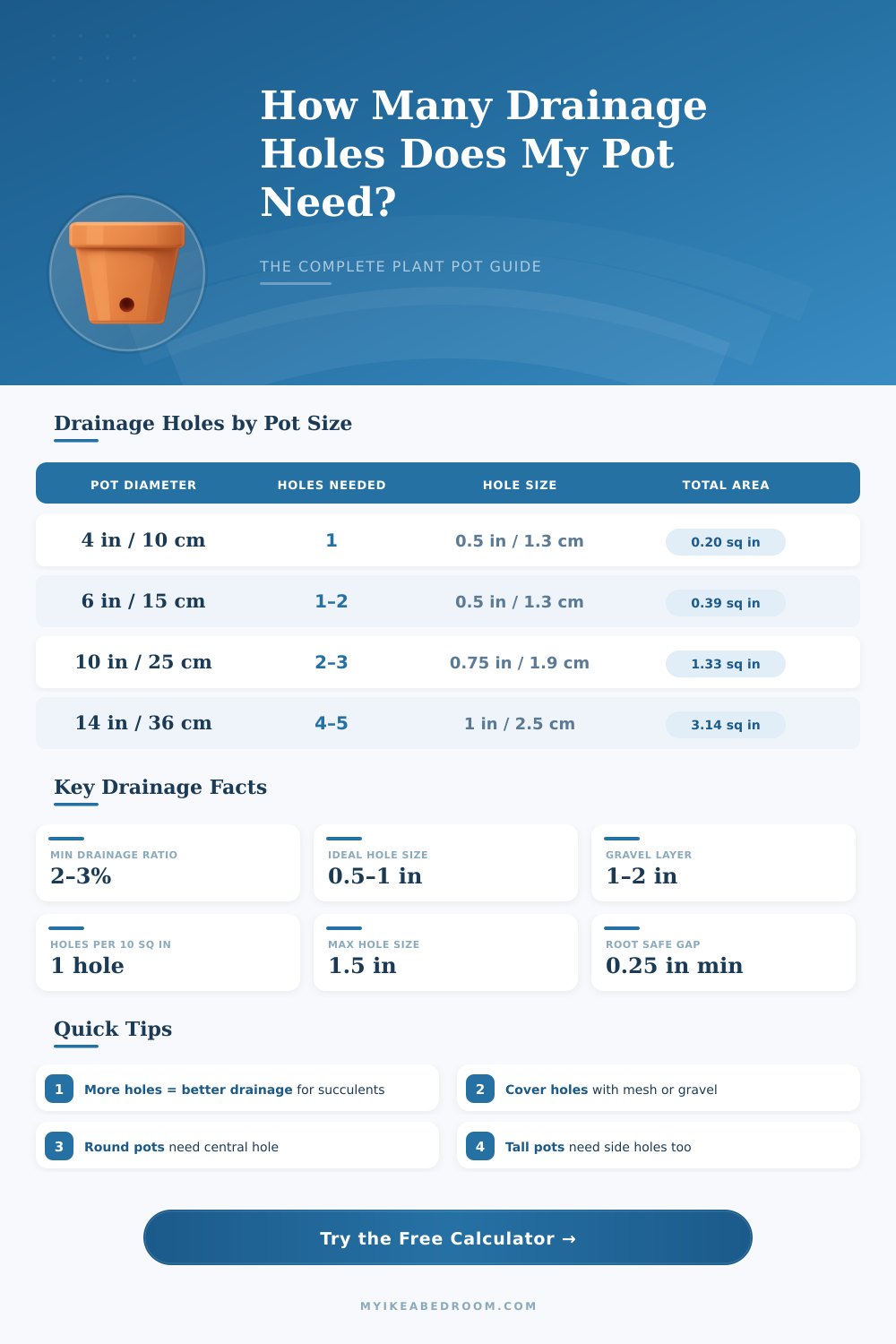
| Pot Diameter | Base Area (sq in) | Min Holes (std mix) | Hole Diameter | Total Drain Area |
|---|---|---|---|---|
| 4 in / 10 cm | 12.6 sq in | 1 | 0.5 in / 1.3 cm | 0.20 sq in |
| 6 in / 15 cm | 28.3 sq in | 1–2 | 0.5 in / 1.3 cm | 0.20–0.39 sq in |
| 8 in / 20 cm | 50.3 sq in | 2–3 | 0.75 in / 1.9 cm | 0.88–1.33 sq in |
| 10 in / 25 cm | 78.5 sq in | 3–4 | 0.75 in / 1.9 cm | 1.33–1.77 sq in |
| 12 in / 30 cm | 113.1 sq in | 4–5 | 1.0 in / 2.5 cm | 3.14–3.93 sq in |
| 14 in / 36 cm | 153.9 sq in | 5–6 | 1.0 in / 2.5 cm | 3.93–4.71 sq in |
| 16 in / 41 cm | 201.1 sq in | 6–8 | 1.0 in / 2.5 cm | 4.71–6.28 sq in |
| 20 in / 51 cm | 314.2 sq in | 8–10 | 1.25 in / 3.2 cm | 9.82–12.27 sq in |
| 24 in / 61 cm | 452.4 sq in | 10–12 | 1.5 in / 3.8 cm | 17.67–21.21 sq in |
| Pot Volume | Recommended Hole Diameter | Hole Area (sq in) | Hole Area (sq cm) |
|---|---|---|---|
| Under 0.5 qt / 0.5 L | 0.25 in / 0.6 cm | 0.05 | 0.32 |
| 0.5–1 qt / 0.5–1 L | 0.5 in / 1.3 cm | 0.20 | 1.27 |
| 1–3 qt / 1–3 L | 0.5–0.75 in / 1.3–1.9 cm | 0.20–0.44 | 1.27–2.85 |
| 3–8 qt / 3–8 L | 0.75 in / 1.9 cm | 0.44 | 2.85 |
| 8–20 qt / 8–19 L | 1.0 in / 2.5 cm | 0.79 | 5.07 |
| 20–50 qt / 19–47 L | 1.25 in / 3.2 cm | 1.23 | 7.92 |
| Over 50 qt / 47 L | 1.5 in / 3.8 cm | 1.77 | 11.40 |
| Plant Category | Examples | Drain Area % of Base | Soil Moisture Pref. |
|---|---|---|---|
| Light drainage (cacti/succulents) | Aloe, Echeveria, Cactus | 1.5–2.5% | Dry – var soil dry fully |
| Medium drainage (most houseplants) | Pothos, Spider Plant, Peace Lily | 2.5–4% | Moist – water when top dry |
| Heavy drainage (tropicals/ferns) | Ferns, Orchids, Vegetables | 4–6% | Consistently moist |
| Very high drainage (bog/aquatic) | Pitcher Plant, Papyrus | No holes or flooded | Standing water OK |
| Use Case | Pot Diameter | Holes (std mix) | Hole Size |
|---|---|---|---|
| Seedlings / Propagation | 2–4 in / 5–10 cm | 1 | 0.25–0.5 in |
| Herbs (indoor) | 4–6 in / 10–15 cm | 1–2 | 0.5 in |
| Succulents / Cacti | 4–8 in / 10–20 cm | 1–2 | 0.5 in |
| Tropical Houseplants | 6–12 in / 15–30 cm | 2–5 | 0.75 in |
| Outdoor Flower Pots | 10–16 in / 25–41 cm | 3–8 | 0.75–1 in |
| Vegetable Containers | 12–20 in / 30–51 cm | 4–10 | 1–1.25 in |
| Large Shrubs / Trees | 16–30 in / 41–76 cm | 6–14 | 1.25–1.5 in |
| Window Box / Trough | 24–36 in long | 8–16 | 1 in every 6 in |
In potted plants the drainage matters for healthy growth. They require water, air and sunshine especially for roots. If the pot has a hole below, you minimize the danger of overwatering.
Excess water simply spills through it. Place a saucer under the pot to receive the water and protect the table
How to Make Potted Plants Drain Well
Here the problem: many decorative pots do not have drainage holes. IKEA pots, for instance, almost always lack them. Only those with saucers usually have drains.
The terracotta material and saucer balance the humidity in the soil, so that kind works well for everyday use, because you can plant directly in it.
Big elegant pots from magazines commonly do not have drains. They serve for decoration, while internal plastic baskets with holes allow the plant to drain. You can keep the plants in nursery in drainage pots and put them in nice pots without holes, that operates surprisingly.
Simply lift for watering. Pairs of stones below in the outer pot give base to the internal basket, easing the dump of the water. It also inhibits eggs of gnats in the sole.
Some pots have little divots below, where you can make holes. Any drill? Hammering a nail below also works.
Good drainage genuinely benefits the overall health of the plant. Drilling in concrete or plastic is possible, but there are break risks.
Plants can live without drainage holes. Snake plants and pothos last that. Even so care about them requires more attention to dryness and water amount each time.
More elements affect, but you however can grow healthy plants. Good soil drains well. Potting mix of good quality, ventilated and quickly draining.
Testing the ground before watering is much more important than many believe.
For big pots use fillers as foam, plastic bottles or broken tins to reduce the soil. That lowers the weight, makes it easy to move and helps drainage. Add stones below in pots without holes does not genuinely save against root rot, new advice shows that gravel layers create water pools.
Self-watering pots work for plants requiring permanent humidity. Shallow trays or saucers under the pots catch excess water, and for heavy ones use metal or heavy plastic to avoid tippingover.