🪴 Plant Pot Drainage Hole Calculator
Find the ideal number, size, and total drainage area for any plant pot or container
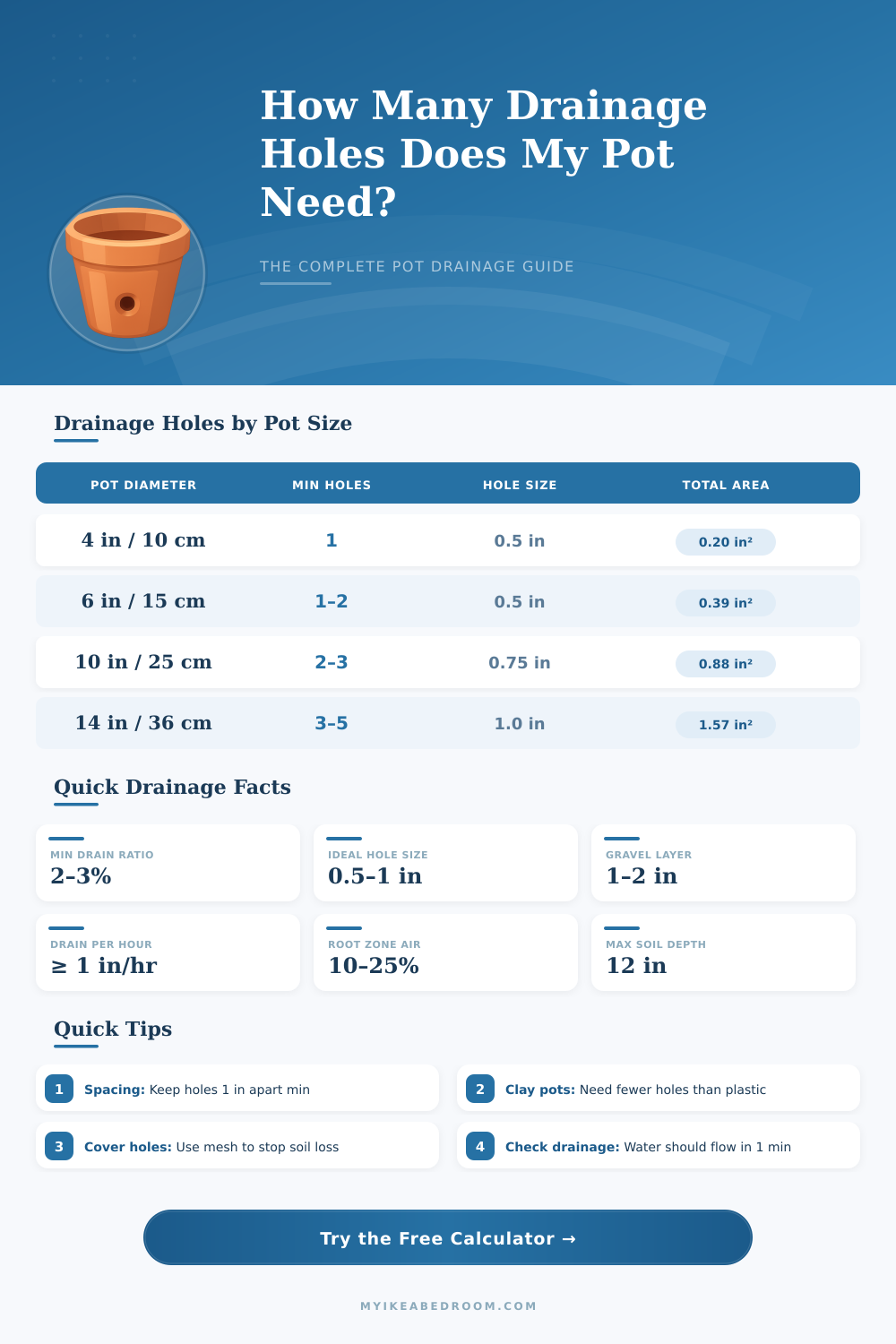
| Pot Diameter | Base Area | Min Drain Area (2%) | Recommended Holes (1/2 in) |
|---|---|---|---|
| 3 in / 7.6 cm | 7.1 in² / 45.8 cm² | 0.14 in² / 0.9 cm² | 1 |
| 4 in / 10 cm | 12.6 in² / 81.1 cm² | 0.25 in² / 1.6 cm² | 1 |
| 6 in / 15.2 cm | 28.3 in² / 182.6 cm² | 0.57 in² / 3.7 cm² | 1–2 |
| 8 in / 20.3 cm | 50.3 in² / 324.5 cm² | 1.0 in² / 6.5 cm² | 2–3 |
| 10 in / 25.4 cm | 78.5 in² / 506.4 cm² | 1.57 in² / 10.1 cm² | 3–4 |
| 12 in / 30.5 cm | 113.1 in² / 729.7 cm² | 2.26 in² / 14.6 cm² | 3–5 |
| 14 in / 35.6 cm | 153.9 in² / 992.9 cm² | 3.08 in² / 19.9 cm² | 4–6 |
| 18 in / 45.7 cm | 254.5 in² / 1641 cm² | 5.09 in² / 32.8 cm² | 5–8 |
| 24 in / 60.9 cm | 452.4 in² / 2919 cm² | 9.05 in² / 58.4 cm² | 8–12 |
| Hole Diameter | Area Per Hole (in²) | Area Per Hole (cm²) | Best For |
|---|---|---|---|
| 3/8 in / 9.5 mm | 0.11 in² | 0.71 cm² | Succulents, cacti, seedlings |
| 1/2 in / 12.7 mm | 0.20 in² | 1.27 cm² | Herbs, small indoor pots |
| 5/8 in / 15.9 mm | 0.31 in² | 1.97 cm² | Medium pots, annuals |
| 3/4 in / 19.1 mm | 0.44 in² | 2.85 cm² | Large pots, tropicals |
| 1 in / 25.4 mm | 0.79 in² | 5.07 cm² | Large planters, shrubs |
| 1-1/4 in / 31.7 mm | 1.23 in² | 7.92 cm² | Extra-large planters, trees |
| Plant Type | Drain Ratio Target | Gravel Layer | Notes |
|---|---|---|---|
| Succulent / Cactus | 4–6% | 1–2 in / 2.5–5 cm | Needs fast-draining gritty soil |
| Tropical / Foliage | 2–3% | 1 in / 2.5 cm | Moist but well-drained soil |
| Herbs / Vegetables | 2–4% | 1–2 in / 2.5–5 cm | Good aeration for roots |
| Annual Flowers | 2–3% | 1 in / 2.5 cm | Moderate drainage needed |
| Shrubs / Perennials | 2–3% | 1–2 in / 2.5–5 cm | Deeper pots need more holes |
| Trees (container) | 3–5% | 2–3 in / 5–7.5 cm | Large gravel layer important |
| Ferns / Moisture-lovers | 1.5–2% | 0.5–1 in / 1.3–2.5 cm | Fewer holes, retain moisture |
| Material | Porosity | Drilling Difficulty | Drainage Tip |
|---|---|---|---|
| Terracotta / Clay | High | Easy (masonry bit) | Wicks moisture; may need fewer holes |
| Plastic / Resin | None | Very easy (spade bit) | Needs adequate holes; fast to add |
| Ceramic / Glazed | Very low | Moderate (diamond bit) | Use water when drilling; go slow |
| Concrete / Cement | Low–medium | Hard (masonry bit) | Pre-soak to avoid cracking |
| Wood / Cedar | Medium | Easy (standard bit) | Add drainage holes on sides too |
| Metal / Galvanized | None | Moderate (metal bit) | Use rust-resistant sealer after |
| Fabric Grow Bag | Very high | N/A (no drilling needed) | Entire base drains; air prunes roots |
| Fiberglass | None | Easy (spade/hole saw) | Lightweight; drill multiple holes |
Putting a houseplant in a nice pot is an excellent way to remember to care for it and its health. Elegant pots with clean lines look great in the family room. The right pot can make the plant and the space much more beautiful
Plant pots come in many different materials. Ceramic and terracotta give a classic look. Strong metal and concrete big outdoor pots are built for long use.
How to Choose the Right Pot for Your Plants
Plastic are more lightweight, while big terracotta pots full of plants and moist soil weigh a lot. Terracotta has the advantage that it less easily tips over in wind. Plastic costs less.
Some plants grow well in clay pots, others like plastic or ceramic. It is best to research the plant to find the best pot.
Stoneware, ceramic, cement and plastic pots are easy to find. There are also weather-proof resin pots with wooden style, like whiskey barrels. Decorative ceramic pots with drainage holes and saucers are popular for inside and outside.
It is important that water can exit from the pot. Clay balls in the soil help keep it moist.
There are many stores to buy pots. Local garden centers and nurseries offer a wide range of ceramic, terracotta and metal. Stores like TJ Maxx, HomeGoods, HomeSense and Marshalls commonly discount big pots.
Dollar stores sell small plastic pots and saucers at a very low price. Hardware stores have basic plastic and concrete pots, and it helps to check the clearance at the end of the aisle. Thrift stores, yard sales and websites like Craigslist or Facebook Marketplace are ideal for finding really cheap or even free pots.
Terracotta saves money when you find it.
IKEA sells ceramic flowerpots, self-watering pots, stands and even fake plants. IKEA does summer and winter sales for old stocks. With a bit of creativity and basic tools you can turn IKEA products into nice hanging plant pots, which adds a natural touch to any room.
One trick uses IKEA pet bowls as a ceramic flowerpot, where cotton string helps the plants receive water when needed. Other simple trick is planting succulents in an IKEA DRAGAN box. Even IKEA hanging light has become a nice plant pot.
Flower boxes with built-in hooks can decorate a deck or porch railing for easy hanging.
Ideal little pots work well for hanging fake plants also. Creative designs, nice shapes and weird pots that go well with the plant… That is what makes picking a pot fun.