Pergola Shade Cloth Size Calculator
Estimate fabric panel size, total shade cloth area, overlap allowance, grommet count, sag length, and effective shade coverage from pergola dimensions, attachment style, panel count, shade percentage, and units.
Each preset loads a realistic pergola size, attachment style, overlap, sag allowance, grommet spacing, shade percentage, and panel count.
Compare common shade cloth densities for pergola tops, dining areas, plant benches, walkway covers, and privacy side panels.
50% cloth
Best for: bright patios, herbs, and breezy walkways.
Estimated shaded area equals half of the pergola footprint.
60% cloth
Best for: walkway pergolas and light afternoon relief.
Keeps more sky brightness while softening overhead glare.
70% cloth
Best for: balcony pergolas and poolside covers.
A balanced pick when airflow and filtered light both matter.
80% cloth
Best for: most patio seating and general pergola use.
The calculator default works well for open dining spaces.
90% cloth
Best for: dining pergolas and strong sun exposures.
Creates dense shade but can feel heavier in low-light yards.
95% cloth
Best for: side screens and privacy panels.
Use careful tie spacing because wind load can rise quickly.
Panel split
Best for: wide pergolas and narrow fabric rolls.
More panels reduce roll width but add overlap and more edge work.
Sag range
Best for: cable, retractable, and softly draped panels.
Two to six percent is a common planning range for pergola cloth.
| Attachment style | Edge overlap factor | Grommet factor | Best use |
|---|---|---|---|
| Top canopy over frame | Full overlap on all outside edges | 100% of panel perimeter | Most fixed pergola roof cloth layouts |
| Inside-frame laced panel | Moderate edge allowance inside beams | 85% of panel perimeter | Cloth tied within the inside opening |
| Retractable cable panel | End hems plus softer length sag | 65% of panel perimeter | Sliding shade panels and cable tracks |
| Vertical side shade | Top and side allowances only | 75% of panel perimeter | Low sun, privacy, and wind-filter screens |
| Track-mounted flat panel | Small edge allowance for tracks | 55% of panel perimeter | Channel-mounted cloth with fewer tie points |
| Sail-edge tensioned cloth | Large edge allowance for reinforced hems | 90% of panel perimeter | Tensioned covers with strong perimeter loading |
| Spacing | Typical use | Count effect | Planning note |
|---|---|---|---|
| 6 to 9 in | Windy edges and side shades | High count | Use when fabric edges need frequent restraint. |
| 12 in | Firm patio canopy edges | Moderate-high count | A common choice for fixed laced shade cloth. |
| 18 in | Balanced pergola tops | Moderate count | Default spacing for typical backyard pergolas. |
| 24 in | Lightweight overhead panels | Lower count | Works best with lower wind exposure and stiff framing. |
| 30 in | Temporary or track-guided cloth | Low count | Use only when attachment hardware carries the cloth well. |
| Panel width result | Good roll width | Panel count cue | Overlap reminder |
|---|---|---|---|
| Under 4 ft | 48 in roll | Often 2 to 4 panels on narrow pergolas | Panel overlap can be a large share of each strip. |
| 4 to 6 ft | 72 in roll | Works for many two-panel patio covers | Add hem allowance before comparing roll width. |
| 6 to 8 ft | 96 in roll | Common for one or two large panels | Check finished width after side overlaps. |
| 8 to 10 ft | 120 in roll | Useful for single broad top panels | Wide cloth may need closer grommet spacing. |
| Over 10 ft | Split panels | Increase panel count until width is workable | Each split adds one shared overlap allowance. |
| Project | Starting size | Typical cloth setup | Shade coverage note |
|---|---|---|---|
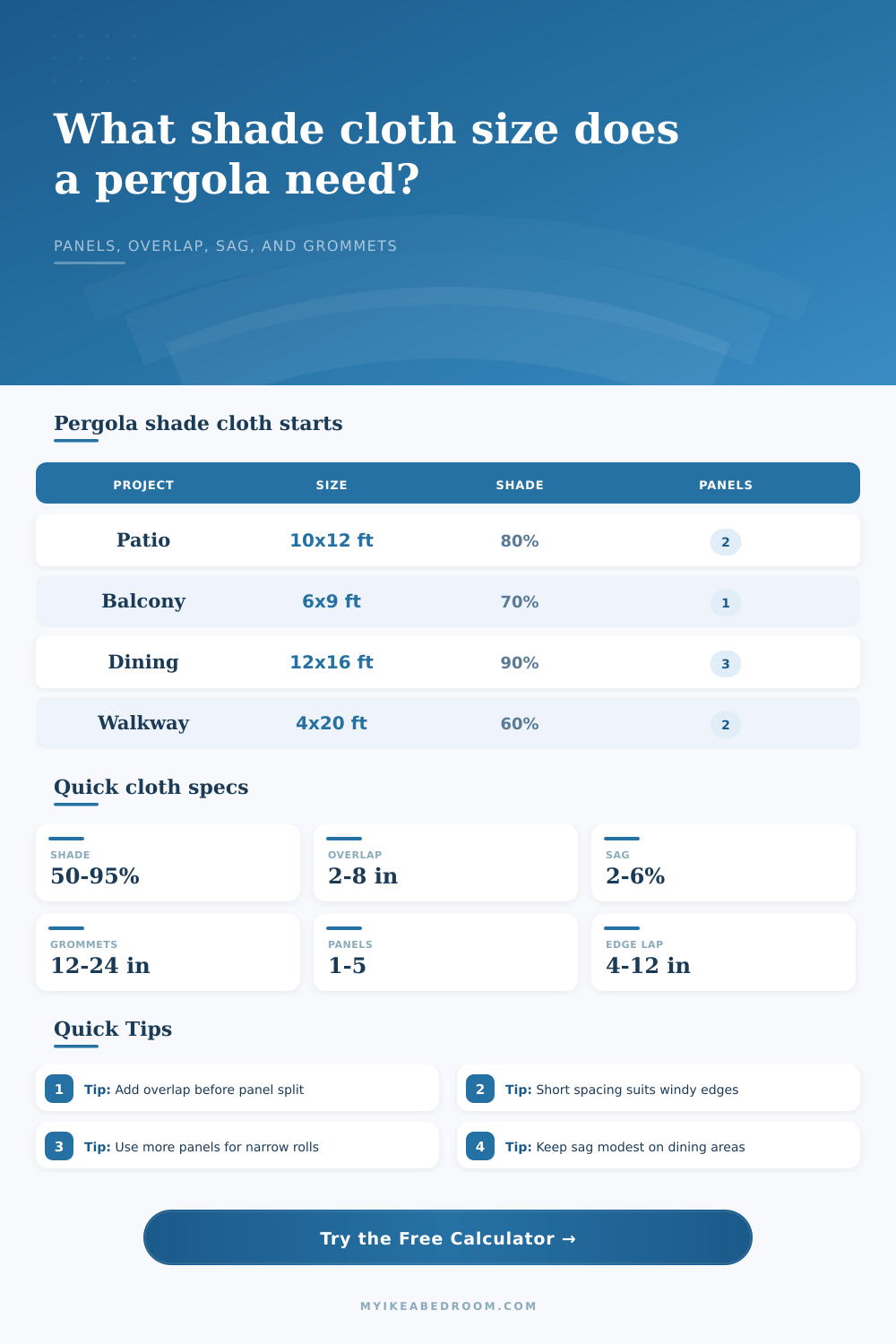
| Compact balcony pergola | 6 ft x 9 ft | One 70% panel, track or inside-frame mount | About 38 sq ft effective shade before style factor. |
| Backyard patio pergola | 10 ft x 12 ft | Two 80% top canopy panels | About 96 sq ft effective shade from the footprint. |
| Outdoor dining pergola | 12 ft x 16 ft | Three 90% panels with 4% sag | Dense shade over table and chair pullout area. |
| Narrow walkway pergola | 4 ft x 20 ft | Two 60% long strips | Filtered shade without making the path feel closed in. |
| Large patio cover | 16 ft x 20 ft | Four panels with shared overlap seams | Panel splits keep roll width manageable. |
| Side shade screen | 8 ft x 10 ft | One vertical 95% shade panel | Best treated as a wind-filtering side surface. |
Add edge overlap, shared panel overlap, and sag before checking roll width. A pergola footprint that looks simple can need substantially more fabric once hems and tie-downs are included.
Dense side cloth catches more wind than overhead shade. If the calculator shows high grommet counts, keep the spacing close and confirm the frame can take the extra tie points.
If I were to ask most folks who have built a pergola what size they bought for shade cloth, they would say “I measured my pergola, and then I ordered a sheet of fabric the same size.” This seems logical enough. But it also lead you to end up with a tarp that flaps like a loose sail or hangs limp in the center.
Knowing your fabric weight and knowing how it will handle wind is what make the difference between a nice clean install and something more raggedy looking. It’s about geometry almost as much as it is about coverage: you’re buying geometry along with your coverage. Once you have your dimensions, the calculator does the rest (above), so no more guesswork on coefficients.
Tips for Choosing Shade Cloth
But before you push that “calculate” button, a little background on what those parameters mean wouldn’t hurt. First, look at the basic shape, the length and width of the structure itself. This is your base footprint. Next: How many panels will you run? Breaking down a large piece of cover into, say, two or three strips feels like overkill…but it also makes them manageable, and lets you line up the fabric grain along the primary span for improved drape.
Most estimates don’t consider overlap, which is where they fall short, since joining sections of shade cloth will result in less overall effective coverage. That’s why the tool automatically assumes an overlap factor based off number of panels, it’s like overage insurance for light leaks. To achieve a continuous appearance, however, you could bump up that overlap a bit.
You’ll also have to plan for a little sag; a fully stretched-out sheet puts undue stress into the grommet holes that can easily rip out in wind. A little bit of sag means that the fabric has somewhere to go (reducing the load on attachment hardware) and it looks like it’s meant to last. It is not rigid but durable.
The same applies with grommet spacing, the further apart they are, the fewer tie-downs there is to spread out the wind load. It is all spelled out in the table of references on page. This table covers various types of attachments, such as sail edge tension versus a simple canopy top. Because side panels catch wind on their sides, you’d want tighter spacing for grommets used to secure vertical side panels. Wider hole spacings are okay overhead where gravity also holds things down.
It’s not just about how bright something is, darker shade cloths (closer to 100%) are good at blocking out UV rays, but they’ll retain more heat unless there’s any sort of air flow. If you have a spot like a dining space with people seated for awhile, you may want something less dense, say between sixty and seventy percent, which would allow a breeze through (and filter some of the sun). It lets more light in and it actualy feels cooler!
The percentage is what the calculator uses to adjust for the actual shade coverage, so you’ve got an idea of how much of the patio is realisticly going to be shaded. Before you make your purchase, check the minimum width of the roll compared to your panels size. It’s annoying to find out later that your calculated panel won’t fit on one piece of fabric and you have to adjust by adding more panels or sewing a seam.
Make sure your frame can handle the amount of grommets expected, particularly if you live somewhere where weather can suddeny shift gears. Including extra space ensures a good fit, which makes the installation look easy because you did all the planning ahead of time. The cloth doesn’t just hang there by accident; it hangs on purpose when you get the math right, creating a comfortable outdoor room that lasts many seasons.