Pedestal Table Base Size Calculator
Size a pedestal, disc, cross, or plate base for a round, square, oval, or rectangular tabletop. The calculator checks footprint, overhang, top weight, lean load, chair clearance, and tipping margin.
Start with a real table scenario, then adjust the top, base, load, and clearance details to match your room.
Pedestal sizing summary
The calculator compares the tabletop span with the base footprint in the weakest direction.
It estimates the top weight from area, material, and thickness, then checks edge-load tipping margin.
Use the result as a planning check before ordering a base or adding ballast.
| Round tabletop diameter | Light coffee use | Dining base range | Heavy top range | Typical overhang |
|---|---|---|---|---|
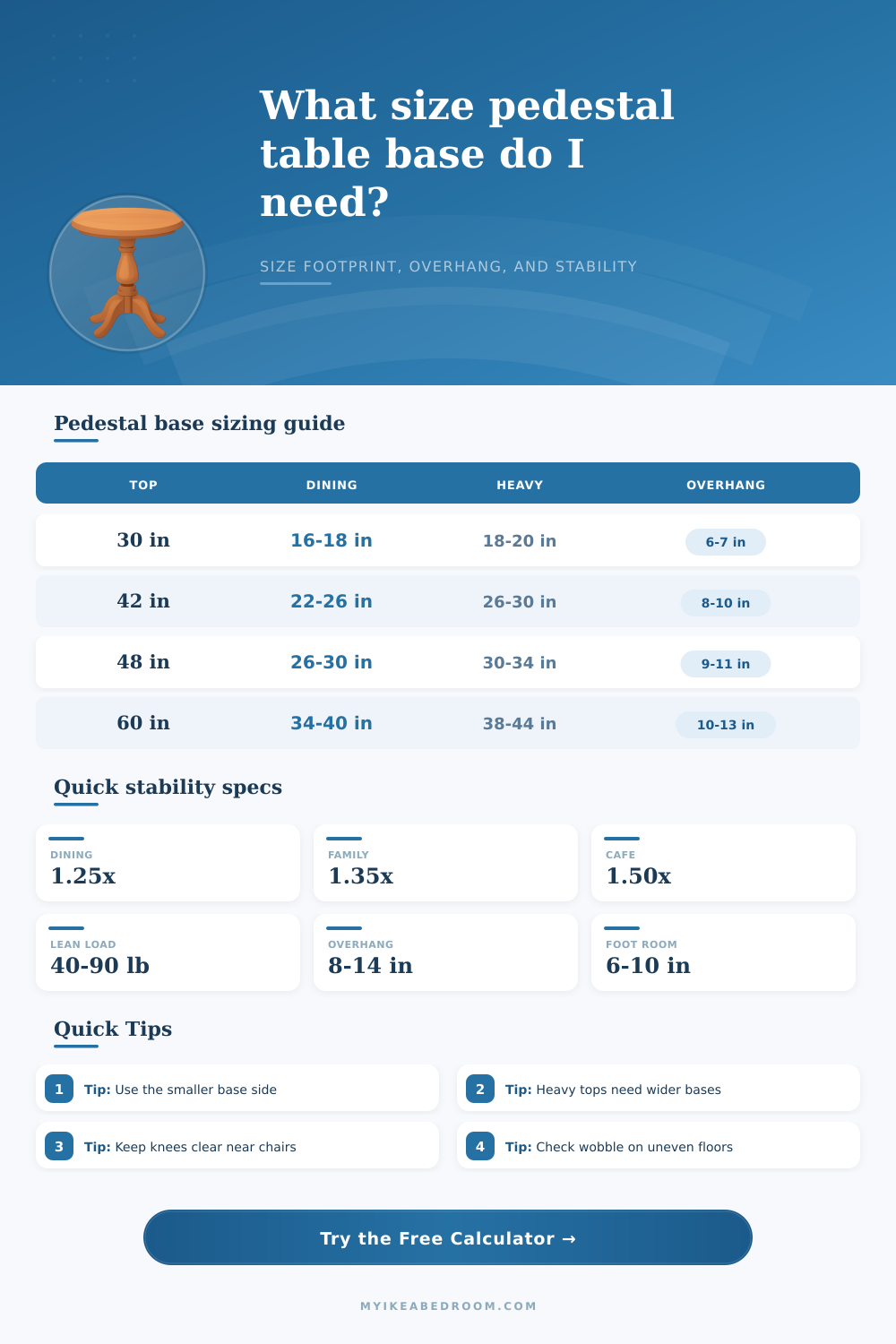
| 24 to 30 in top | 12 to 16 in base | 16 to 20 in base | 18 to 22 in base | 5 to 7 in per side |
| 36 to 42 in top | 18 to 22 in base | 22 to 28 in base | 26 to 30 in base | 7 to 10 in per side |
| 44 to 48 in top | 22 to 26 in base | 26 to 32 in base | 30 to 36 in base | 8 to 11 in per side |
| 54 to 60 in top | 30 to 34 in base | 34 to 40 in base | 38 to 46 in base | 10 to 13 in per side |
| 66 to 72 in top | Use twin pedestal | 44 to 52 in support span | 48 to 58 in support span | 10 to 14 in per side |
| Material type | Estimated load | Thickness basis | Base sizing effect | Planning note |
|---|---|---|---|---|
| Hollow-core or thin laminate | 2.5 to 4 lb/sq ft | About 1 in | Can use a smaller weighted base | Still check wobble at the column. |
| Veneered MDF or particleboard | 5 to 7 lb/sq ft | About 1 in | Moderate footprint and ballast | Common for apartment dining tables. |
| Solid wood | 5 to 9 lb/sq ft | About 1.25 in | Needs balanced overhang | Weight varies by species and apron design. |
| Tempered glass | 7 to 11 lb/sq ft | About 0.5 in | Needs strong centered support | Use pads and verify attachment style. |
| Stone, quartz, marble | 18 to 24 lb/sq ft | About 1.25 in | Needs wide base and high ballast | Confirm limits with the fabricator. |
| Concrete or terrazzo-look | 20 to 28 lb/sq ft | About 1.5 in | Usually needs engineered support | Check floor capacity for very large tops. |
| Use case | Edge load to test | Target factor | Result meaning | Common adjustment |
|---|---|---|---|---|
| Low coffee table | 25 to 40 lb | 1.15x | Light leaning and casual use | Keep overhang modest. |
| Normal dining table | 45 to 65 lb | 1.25x | Meals, elbows, and daily seating | Add ballast before narrowing base. |
| Family activity table | 60 to 85 lb | 1.35x | Kids, homework, and shifting loads | Use broader base or heavier foot plate. |
| Cafe or shared space | 75 to 110 lb | 1.50x | Frequent leaning and moving chairs | Choose commercial-grade weighted bases. |
| Stone or glass top | 60 to 100 lb | 1.40x plus | Heavy top with high consequence | Confirm fastening and base rating. |
| Table setup | Top size | Usual base footprint | Base weight cue | Best use |
|---|---|---|---|---|
| Bistro cafe table | 28 to 32 in round | 16 to 20 in round disc | 35 to 55 lb | Two seats or small nook |
| Apartment dining round | 40 to 44 in round | 22 to 28 in round or square | 55 to 85 lb | Three to four seats |
| Family dining round | 46 to 54 in round | 28 to 36 in round/drum | 75 to 130 lb | Four to five seats |
| Large stone round | 54 to 60 in round | 38 to 46 in heavy base | 140 lb plus | Formal dining |
| Oval pedestal table | 66 to 78 in long | 40 to 55 in support span | 100 lb plus | Six seats with twin pedestal |
Measure the weakest direction of the base. A rectangular or cross base may look large from one angle but tip toward the shorter foot if someone leans on the tabletop edge.
Balance stability with chair clearance. A wider foot improves tipping resistance, but the chair-side overhang still needs enough knee and toe space for comfortable seating.
Add weight low, not high. If the base footprint cannot grow, ballast works best when it is fixed inside the lowest part of the foot plate or drum.
Check attachment stiffness. A base can pass the footprint check and still wobble if the column, mounting plate, or tabletop fasteners are undersized.
If you’ve ever felt uneasy about sitting down at a pedestal table because you think it might wobble, this is for you (and probably why you noticed a small vibration in your mug). While it removes the need for four legs and takes up less floor space, it do require that one leg bear all weight of both top and people who sit on it. With this design, the tabletop rests on the base, which counters their weight. Use our calculator to figure them out before you build one so you know whether or not table will topple over the next time someone gets up quickly.
The primary issue is usualy overhang. Most folks think that a heavy stone top will just stay in place due to its own weight. That’s not true. A heavy top keeps the table down, and the wide base keep the table from falling over. What happens when you lean back or put your elbow on the corner? You start putting torque on the table which turns the table about the base. The wider the table top the longer that lever arm. This is where the calculator comes into play and compares the overturning force of the load different than the stabilizing force of the base.
Why Pedestal Tables Wobble
Stability depend heavily on materials. Lighter MDF tops might be okay with a light metal base while thicker, heavier materials like stone or solid wood (walnut) will weighs it down considerably. Because of their density and lack of forgiveness, stone tops is especially challenging. Without a heavy and wide enough base to balance this load, the table would of been unstable even when nobody is sitting in it. Depending on thickness & material of top, the tool calculates how much it weigh so you can see how much weight the base must support. Know whether your base is static or fighting gravity all day long.
And then there’s usability: how much clearance do you need under the table? On one end of the spectrum you can create a very wide base so that it will never tip over, but then no chair will fit under the table. With pedestal tables we’re trying to clear some space, not block more of it. The calculator checks chair clearance and stability. In other words, how far does the base take up your knee room while still feeling safe? It’s about finding a happy medium between comfort and security. You want something that doesn’t get in the way of your legs but still feels stable.
Stability can be surprising, It turns out flooring can make all the difference. While something might work great on a solid flat surface like table on glass, floors are rarely flat and even if yours is it’s probably covered in some rug, carpet, slightly slanted wood, etc. Even with the right size base, an unstable floor will make it feel uncomfortably. The tool takes into account what kind of floor you have and adjust how much stability it needs from the base. For example, if your house has sloped floors you might need some sort of adjustable glide or heavy foot plate.
The page includes reference tables that indicate typical base sizes for common table top diameters. For example, if you are planning to buy a 42-inch round table for dining, it is likely to have a base from 22-26 inches in diameter. In practice, people often exceed those average numbers: big meals, kids running around with chairs, lots of leaning…all add extra stress to the middle column. The calculator lets you run your own situation and gives you a personalized recommendation; based off what you actualy do (not just some generic guideline).
When selecting a pedestal table, trust the pedestal. It doesn’t matter whether it’s polished stone or wood grain. If the base makes you uneasy, you shouldn’t buy it. The right-sized base eliminates that fear. Suddenly, your balancing act becomes a solid surface where you can actualy relax. You don’t want to worry about toppling over and you don’t even think about the wobble anymore.