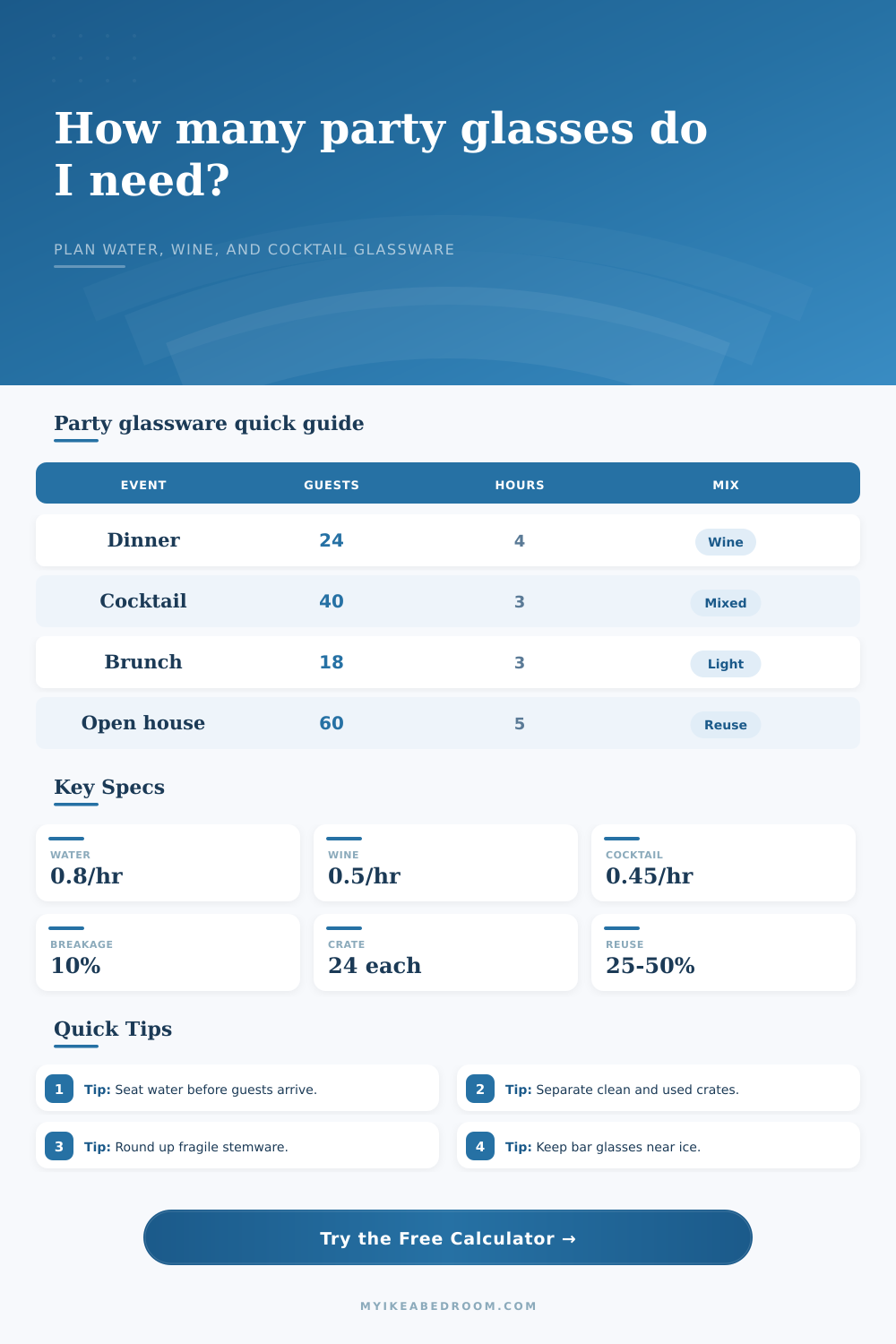
Party Glassware Quantity Calculator
Estimate water, wine, and cocktail glasses from guest count, event length, drink service, reuse, dishwasher cycles, breakage, and storage crate capacity.
Choose a real event pattern, then adjust the serving and washing details for your own table, bar, or open-house flow.
| Drink Service | Hourly Rate | Peak Share | Best Use |
|---|---|---|---|
| Light water station | 0.45 glass per guest hour | 45% | Short indoor mingling |
| Standard water | 0.70 glass per guest hour | 70% | Most parties and buffets |
| Seated water | 0.80 glass per guest hour | 100% | Dinner tables and place settings |
| Warm weather water | 1.05 glasses per guest hour | 100% | Patio, garden, or summer events |
| Toast wine | 0.20 glass per guest hour | 80% | One toast or sparkling pour |
| Standard wine | 0.50 glass per guest hour | 55% | Dinner and buffet wine service |
| Mixed cocktails | 0.45 glass per guest hour | 45% | Home bar or signature drinks |
| Reuse Plan | Typical Rate | Dishwasher Help | Planning Note |
|---|---|---|---|
| No collection | 0% to 15% | None | Plan one clean glass for each expected serving wave |
| Tray clearing | 25% | One cycle | Good for family dinners and small buffets |
| Bar return point | 40% | One to two cycles | Useful when guests know where to set empties |
| Staffed station | 55% to 70% | Two or more cycles | Best for longer open-house service |
| Crate Size | Holds | Best For | Handling Note |
|---|---|---|---|
| Small divided crate | 12 glasses | Stemware or coupes | Easy to lift and label by type |
| Divided bin | 16 glasses | Mixed bar glassware | Good for fragile shapes |
| Standard crate | 24 glasses | Water tumblers | Efficient for pantry or closet storage |
| Large tote | 36 glasses | All-purpose tumblers | Use padding layers between rows |
| Event Pattern | Guest Range | Likely Driver | Useful Buffer |
|---|---|---|---|
| Seated dinner | 12 to 36 | Water place settings plus wine peaks | 10% for resets and late arrivals |
| Cocktail party | 30 to 80 | Bar glass turnover | 15% for misplaced glasses |
| Open house | 40 to 100 | Long duration and staggered arrivals | Reuse and dishwasher cycles matter most |
| Toast or shower | 15 to 45 | Wine or sparkling glass peak | Round stemware by the dozen |
Eventually, you’re going to run out of clean glasses. There’s twenty-two people at your party and you’ve got three clean glass. Sure, everyone’s having a good time, but that means there is a bunch of empty tumblers sitting on the table. This means you aren’t pouring anyone else drinks because you’re chitchatting with your guest. It also means you’ll be getting water from kitchen for the next hour while they chat amongst themselves.
No one cares. It’s just a minor inconvenience, but it break the flow. A party can only be as good as its glassware supply will let it be.
Why You Need a Glass Calculator
Hosts typicaly use a hunch (i.e. “I’ll just grab whatever’s in the cabinet”). There’s no room for error! A single missed dish cycle or turn-over can throw off your inventory, but the calculator figure all that in for you. Simply enter the number of guests and time frame, and it tells you how many items is needed. It removes the guesswork, forcing you to think through all the factors that most people ignore… until it’s too late.
First, consider the water service level. Most folks underestimate here. In warmer months, when everyone’s sweating, water use shoot up, and who can predict that? You can set a heavy usage setting on the tool to take that into account. Don’t go cheap here. An empty glass shows you are out of touch with your guest’s needs. And a dehydrated guest = an angry guest.
Second, wine/cocktail glasses is also different: they’re typicaly used once per customer, but then re-used within the same service period. The customer has a few sips of white wine, then wants more. She doesn’t reach into the pile of glass and take out a new, sparkling-clean version; instead she rinses what’s in her hand or waits for it to be refilled. Enter the reuse rate input. This reflect how many glasses are reused (kept circulating) versus retired (sent to the sink). When you have someone dedicated to clearing glass or when there is a clearing station/bar staff, your reuse rate increase a lot. The same physical glass become several drinks. Fewer total glasses is needed. And the tool accounts for this efficiency. No need to purchase stemware you’ll never use.
The wildcard are breakage. Glasses get pushed off an irregular surface, tables gets bumped, people drop stuff. Ten percent isn’t being pessimistic- it’s insurance. That little bit takes care of all the moments where someone inevitably shatters a coupe on your hardwood floor. If that’s not part of the plan, then you’re banking on perfect behavior. That never occurs at a drinking party with music and moving bodies.
There’s another constraint: storage. Maybe you own plenty of glasses, but maybe those glasses aren’t available to you. For example, how much does it matter if your standard crate holds 24 glasses (a convenient number to pack/unpack by) different than if you require 50, but your crates can only accommodate 12? That means you’re making double the trips from the pantry. The calculator estimates how many crates you’ll need based off how many glasses you have, helping you visualize the practical problem of turning inventory into physical movement.
Dishwasher cycles provide a lifeline for long events, provided they’re scheduled properly. An “end-of-cycle” two hours after the crush won’t help much. This tool prompts you to enter realistic dishwasher capacity (because no one wants to bank on clean glasses that will never materialize). It require you to realistically assess how many dishes can flow through your kitchen.
That’s not to say we want X many bottles or X many glasses. We want X many glasses in the right place at the right time. After you do the math, there’ll be a number on your screen. It is just an arbitrary number. But when the time comes, you will feel calm.
There will be no more kitchen runs. No more running around with empty hands. There is just the sound of a well-stocked bar and the comfortabley assurance that the host did his homework down to the last detail. The party can carry on as planned, without interruption or change.