Tray Size for Ottoman Calculator
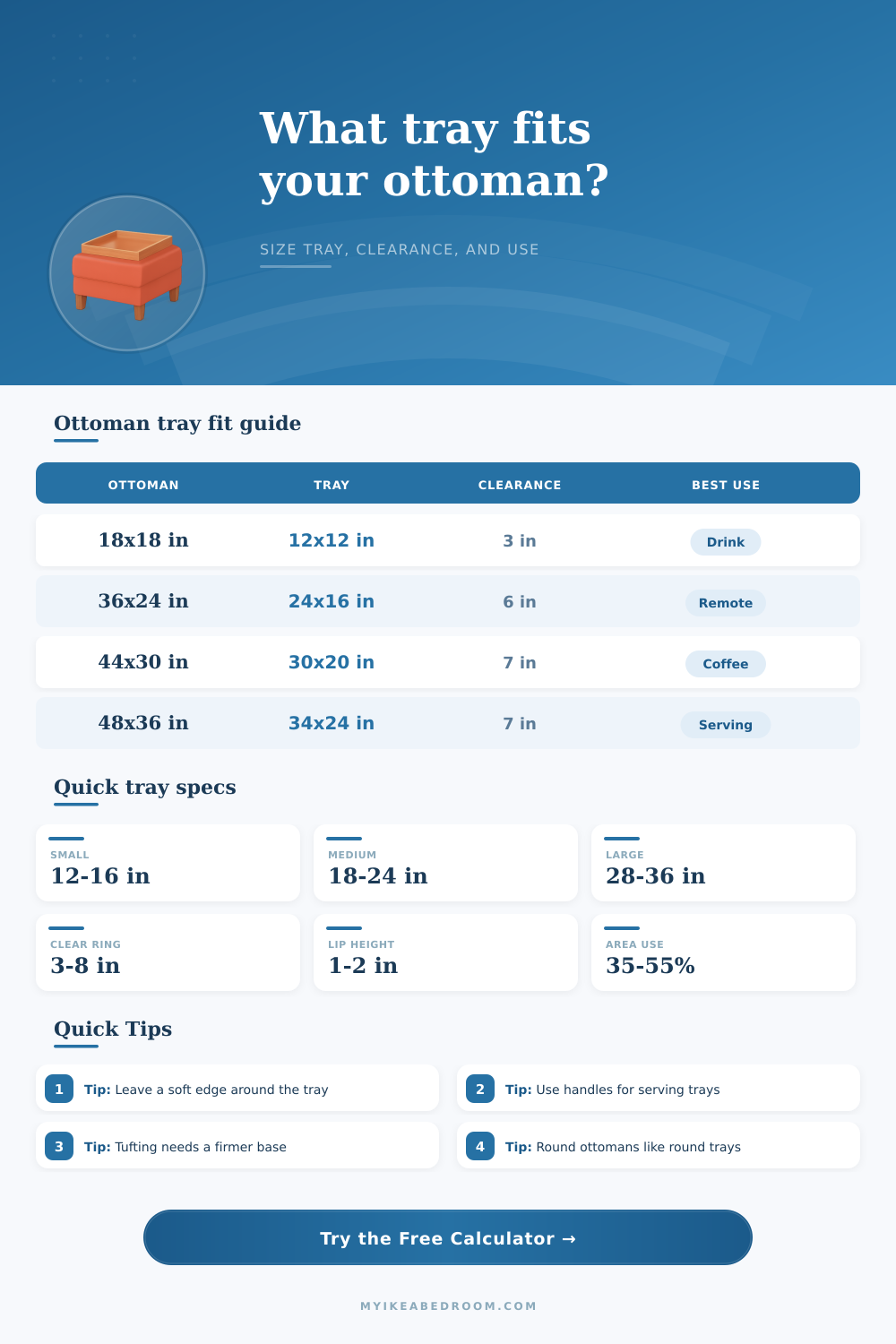
Find a practical tray size for square, rectangular, round, or oval ottomans using edge clearance, tray purpose, lip height, cushion softness, and usable surface area.
Choose a common ottoman situation, then adjust the tray purpose, shape, handles, and clearance for your room.
How the calculator sizes the tray
Step 1: it converts your ottoman dimensions to inches internally, then estimates the usable top area for the selected shape.
Step 2: it chooses a target tray coverage from your use priority, purpose, and coverage setting.
Step 3: it applies minimum edge clearance for cushion softness, handles, lip height, and lift-off comfort.
Step 4: it rounds to practical half-inch sizes and scores the final tray against coverage, clearance, and stability.
Compact Tray
Best for drinks, remotes, keys, and a small candle. Usually covers 25% to 35% of the ottoman top.
Feels light and easy to lift, with the most room left for feet or blankets.
Balanced Tray
Best for everyday living rooms. Usually covers 40% to 55% of the ottoman top.
Keeps a table-like center while preserving a soft perimeter around the tray.
Wide Tray
Best when the ottoman often replaces a coffee table. Usually covers 55% to 68% of the top.
Needs firmer upholstery, good lip height, and enough clearance at handles.
Serving Tray
Best for carrying items in and out. Size should leave finger clearance beyond handles.
Stability improves with rubber feet, a flat bottom, or long runners under the tray.
| Ottoman top | Compact tray | Balanced tray | Wide tray | Clear edge target |
|---|---|---|---|---|
| 18 x 18 in cube | 10 x 10 to 12 x 12 in | 12 x 12 to 14 x 14 in | 14 x 14 in max | 2 to 4 in per side |
| 30 x 20 in storage ottoman | 16 x 10 to 18 x 12 in | 20 x 12 to 22 x 14 in | 24 x 15 in max | 3 to 5 in per side |
| 36 x 24 in bench ottoman | 20 x 12 to 22 x 14 in | 24 x 16 to 28 x 18 in | 30 x 18 in max | 4 to 6 in per side |
| 44 x 30 in coffee ottoman | 24 x 16 to 26 x 18 in | 30 x 18 to 34 x 22 in | 36 x 24 in max | 5 to 8 in per side |
| 54 x 36 in sectional ottoman | 30 x 20 to 34 x 22 in | 36 x 24 to 40 x 28 in | 44 x 30 in max | 6 to 10 in per side |
| Ottoman shape | Best tray shape | When to change shape | Clearance note | Visual balance |
|---|---|---|---|---|
| Square | Square or round | Use rectangle for books or remotes | Keep all four sides similar | Centered shape looks intentional |
| Rectangle | Rectangle | Use round for decor-only trays | Long ends can have more clearance | Match tray ratio to ottoman ratio |
| Round | Round | Use square only if much smaller | Use diameter clearance evenly | Round-on-round feels calmest |
| Oval | Oval or rectangle | Use round for compact drink trays | Watch the narrowest side first | Soft corners echo the ottoman |
| Condition | Add clearance | Why it matters | Good pairing | Watch point |
|---|---|---|---|---|
| Firm flat top | 0 to 0.5 in | Tray sits level with less fabric movement | Flat wood or lacquer tray | Protect fabric from sharp corners |
| Medium cushion | 0.5 to 1 in | Fabric compresses when loaded | Felt pads or broad tray base | Do not size to the exact edge |
| Soft pillow top | 1 to 2 in | Tray can tilt when cups are near corners | Large flat bottom with rubber feet | Avoid very tall narrow trays |
| Deep tufting | 1.5 to 3 in | Buttons and channels interrupt support | Tray with runners or wide base | Test if the tray bridges tufts |
| Wide handles | 1 to 2 in | Hands need space to grip and lift | Serving tray with rounded handles | Measure handle width, not inner base |
| Use case | Tray coverage | Lip height | Base style | Best result |
|---|---|---|---|---|
| Two mugs and remotes | 30% to 45% | 1 in or higher | Flat or felt pads | Easy reach without crowding feet |
| Coffee table substitute | 45% to 60% | 1.25 to 2 in | Flat bottom or rubber feet | Books, cups, and snack bowls stay grouped |
| Serving from kitchen | 35% to 55% | 1.5 in or higher | Rigid tray with handles | Comfortable lift-off and landing |
| Decor centerpiece | 25% to 40% | 0.5 to 1.5 in | Any stable bottom | Leaves upholstery visible around decor |
| Kids room catchall | 30% to 50% | 1.5 to 2 in | Rubber feet or grippy base | Small items stay contained |
Measure the tray outside dimensions. If the tray has handles, raised grips, or a thick rolled rim, size by the widest outside point. That is the dimension that actually needs ottoman clearance.
Use the softest part of the top. On tufted or pillow-top ottomans, set the tray where it will live and press gently at each corner. If it rocks, choose a wider base or leave more edge clearance.
Lay a tray atop an ottoman, then set down your coffee, and watch it slide off, oops! Why? Because good-looking furnitures doesn’t always become great-looking systems.
Today’s ottomans are more than footstools; they’re catchalls for remote controls, and sometimes even impromptu tables. On movie night, they can be your only nearby spot. But here’s the issue: Wood resists compression, whereas fabrics collapses. Add weight (a hefty tray) to that soft pillowed top, and things gets wonky. The corners cave, the middle tilts, spilling your beverage.
How to Choose the Right Tray for Your Ottoman
The tray size for ottoman calculator matches the right tray with the right ottoman shape, lip height, soft-edge clearance, handles, and day-to-day use. It replaces guessing based off geometry. Now let’s get started with the basics: edge clearance. Most folks purchase a tray that matches the outside perimeter of top of their ottoman. This will be a disaster in the making.
1. Fabric has memory. It moves. So when the tray is touching the very edges, the tiniest movement or shift in weight from cushion below will push the tray right off the side.
2. Use the estimator above (it does the math for you after you input your measurements), you’ll save time estimating the decorative vs. This is the functional space.
I always recommend adding a little bit of wiggle room in the estimate because there should of a buffer zone between the tray and edge of the ottoman. This is your safety margin in case your furniture is especially squishy. If you have a loose pillow insert or a super deep tufted top on your ottoman it needs more clearance than sitting directly on a tight-wrapped, firm frame. The estimator takes all of this into consideration and adjust the suggested tray size to match.
You’d be surprised how much the shape makes a difference. A square tray on top of a round ottoman is going to waste space in the corner and feel disjointed. A rectangular tray on top of a square footstool will tend to feel more long and be dangerously near edge of the stool. You’ll find the best success when you mirror the shape: if the ottoman is round, get a round tray (or maybe just a little smaller, with equal margins around all sides). If the ottoman is rectangular, make sure the tray is proportionate so it will sit centered, not loom over shorter ends. Visual balance is important here, because if there’s something off center about this setup (like an off center tray) it will draw your eye to the mistake each time you enter the room.
What will be placed on top? What kind of tray do I need? Jewelry and keys can go on one with less stability than a surface holding hot beverages. Lip-height matter for drinks. A minimum one-inch rim prevents cups from sliding as you move the ottoman back and forth underfoot, and it also catches any drips. Food, plates? Those change everything, requiring handles. To calculate for handles, we add extra clearance on edge of the ottoman. This ensures that once your fingers are on the tray, you won’t touch the furniture. And the calculator takes into account the widest part of the tray (not just its bottom).
Another option is coverage. If you cover the entire top of the ottoman, it will no longer have that soft edge where you might throw a blanket or rest your feet. About half usually hits the sweet spot… Enough flat surface to hold what you need without completely eliminating the fact that this is still a seat. Too big and it becomes an inflexible table, undoing the whole reason why we chose to upholster something softly to begin with.
It’s all laid out nicely in their reference tables on the page to show which tray size matches which ottoman size (i.e. Narrow, wide, etc.). I like these, they’re great for a quick check. But if you need to get more detailed (depending upon your needs) use the calculator. It doesn’t matter if you’re looking for a tray to serve drinks with a large sectional, or a small cube ottoman for drinks. The rule is the same: measure carefully, consider how much the fabric can compress, and allow breathing room. A properly sized tray will look intentional, stay in place, and keep your coffee where it should be.