Nightstand Height to Mattress Calculator
Compare bedside table height to the finished mattress top, estimate ideal nightstand range, calculate riser or trimming needs, and check lamp, outlet, drawer, and pillow clearances.
Pick a common bed and bedside setup, then adjust the actual mattress top, nightstand, rug, lamp, and clearance measurements from your room.
How to measure the height
Mattress top: Measure from the finished floor to the top of the mattress at the bed edge, with topper and pad installed.
Nightstand top: Measure to the usable surface, then add or subtract any rug difference between the bed feet and stand feet.
Loaded feel: A soft mattress can compress at the edge, so the calculator checks both static height and reachable height while lying down.
Adjustment: Positive adjustment means raise the nightstand. Negative adjustment means the stand is higher than the target.
| Mattress top height | Best nightstand range | Common setup | Planning note |
|---|---|---|---|
| 16-20 in | 15-21 in | Low platform or kid room | Short tables and floating shelves often fit best. |
| 21-25 in | 20-26 in | Standard bed and mattress | Most 22-26 in nightstands align well. |
| 26-30 in | 25-31 in | Storage bed or thick mattress | Check lamp switch reach and drawer height. |
| 31-35 in | 30-36 in | Very tall frame or risers | Consider a taller chest-style bedside piece. |
| Nightstand offset | Reading | Best for | Possible fix |
|---|---|---|---|
| -4 in or lower | Low beside bed | Clean sightline only | Add risers or use a taller stand. |
| -3 to -1 in | Slightly low | Modern low profile | Usually fine if lamp reach is good. |
| -1 to +2 in | Ideal match | Everyday reach | No adjustment usually needed. |
| +2 to +4 in | Slightly high | Reading and charging | Confirm pillow and drawer comfort. |
| +4 in or higher | Tall beside bed | High beds only | Lower stand or use a lower lamp base. |
| Check | Typical target | Why it matters | Measure from |
|---|---|---|---|
| Water glass reach | 0-3 in above | Easy to reach without sitting up fully. | Mattress top to tabletop. |
| Lamp switch reach | 18-24 in above | Comfortable for reading in bed. | Mattress top to switch. |
| Drawer swing | 2-4 in side gap | Prevents bedding from blocking drawers. | Bed edge to stand side. |
| Pillow overlap | 1-3 in allowance | Keeps top surface visible and usable. | Pillow edge to tabletop. |
| Scenario | Mattress top | Nightstand top | Result |
|---|---|---|---|
| Low platform room | 18 in | 19 in | Good, slightly high. |
| Standard queen room | 24 in | 24 in | Level, ideal reach. |
| Storage bed | 29 in | 26 in | Usable but low. |
| High adjustable base | 30 in | 31 in | Good if lamp is reachable. |
Measure after bedding changes. A new topper, mattress pad, rug, or adjustable base can shift the useful height by enough to make a nightstand feel too low or too high.
Check both sides separately. Uneven floors, area rugs under only one table, or mismatched bedside pieces can create different offsets on each side of the same bed.
Say you get a nightstand because it’s handsome beside the bed, but then at some point you notice there’s no way to reach across to grab your water glass. Then you flop on the pillow, extend an arm, and discover that the table surface sit too high, or maybe just too low. Now the whole morning ritual goes down in flames, and you haven’t even woken up yet.
To save yourself from such remorse, use the calculator to find the right nightstand height for your mattress, which uses all those numbers about your bedroom size to make sure they align. It measures the difference between your mattress’ finished surface and the top of bedside table, and takes into consideration anything from memory foam compression to thick area rugs.
How to Find the Right Nightstand Height
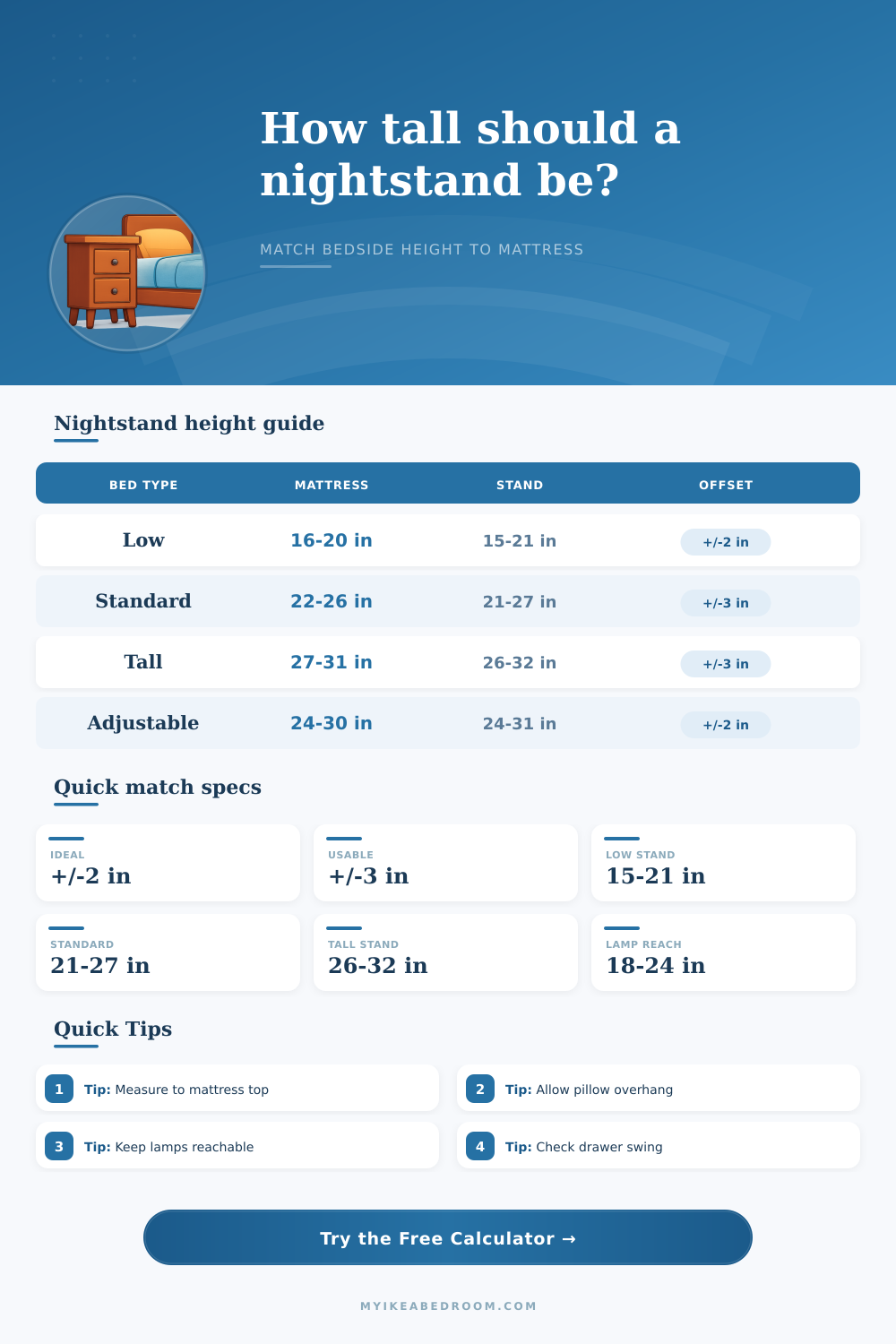
The idea is basically about alignment. According to interior design experts, the height of the nightstand should be between two inches above and two inches below the level where the mattress rests. That maintains a nice visual line, and intuitively helps you reach for things while lying down. But a nightstand that’s too tall will make it seem like you’re reaching upwards, as if it were a shelf. Too short, and you’ll have to strain your shoulders and crane your neck downward.
The tool takes all that into account and figures out the distance, but then again: What happens when you actualy lay down on the bed? How does the mattress sink under you? Most DIY measurements stop there: they tell you how tall something is from the ground. But if I have a very thick topper on my bed and then I put all my body weight on the corner, well… that thing drops like a rock! That’s why the calculator lets you specify this compression so you can get a more accurate idea of what you’ll end up touching in the dark of the night. It’s not a matter of static height. It’s a matter of functional height when it’s actualy loaded.
Enter the thickness of whatever mattress you’re buying and any other pads you intend to stack above it, and the system recalculates target range based off that. So now the recommendation really reflects how you sleep, rather than just being a simple measurement taken from the ground with a tape measure on an empty frame.
Another key factor sometimes neglected is lamp reach. Maybe the nightstand is positioned just right for the surface area of your mattress. But its lamp’s on/off switch is located beyond arm’s length, forcing you to grope around blind until you find it. With the tool you can indicate how far above the tabletop the lamp switch is located. That’ll help establish whether the entire setup lies within a reachable eighteen to twenty-four inch stretch from where your head rests on the pillow.
In some cases your lamp is big and heavy, but your stand is squat, meaning the switch could wind up out of easy reach. The mismatch flag shows up here so you can modify lamp selection, or perhaps alter the furnitures height, prior to purchase.
Next, think about how far away from the table the bed sits. If there aren’t enough inches between them, the drawers may be blocked by sheet loops or the mattress edge as they swing out. The side clearance input lets you see exactly how much space exists, so that functionality isn’t compromised with a snug fit. Two inches seems nice & narrow in pictures, but may prove maddeningly hard to reach into when trying to grab something at the very back of a drawer. With both inputs (side gap and drawer projection) you’ll know if it’s feasible before you build rather than after.
After plugging in your numbers, the results page will show the right height for your stand and how much you need to adjust it to reach that sweet spot. So if you’re sitting at a table that’s too low, maybe it’ll recommend a riser. Too high? Maybe it’ll tell you how many inches might need to come off. And yeah, it can mean the difference between a half-inch and yes, it makes all the difference. But you don’t have to guess, which is always nice.
There are also some quick reference tables on the page so you know roughly how high various standard bed types should sit. However, the custom calculation is where this thing really shines. After all, we each combine our own specific combo of mattress, frame and decor preferences. The truth is, there’s no hard-and-fast rule for finding the right height; instead, you need to know how it relates to other things in your room. If you have a low platform bed, it requires one type of setup; if you’re working with a high storage frame, another. You can use this tool to do the math while you concentrate on coziness.
It transforms that vague feeling of “something is off” into something measurable, something actionable. After all, a bedroom is meant to be somewhere where everything is done effortlessely. When you get the height correct, reaching for your phone or lamp won’t feel like a chore, and a sense of smooth intentionality will return to your nightly routine.