🌿 Mulch Coverage Calculator
Estimate mulch volume, bag counts, coverage, and weight for beds, rings, borders, and custom landscape shapes.
📋Landscape presets
🔧Calculator inputs
📋Mulch density grid
📊Reference tables
💡Practical tips
📈Calculation results
Calculating the correct amounts of mulch is a necessary task for anyone who has a garden or landscape to manage. If you put to little mulch in the garden bed, the plants will be exposed to elements. If you put too much mulch in the garden beds, you will have excess mulch that you will have difficulty moving.
Mulch help to keep the soil moist and to prevent weed from growing in the garden beds. In order to know how much mulch to add to the garden beds, you must determine the volume of mulch that the plants will require. The volume of mulch that you will need will depend on the area of the garden bed that you are using and how deep you want the mulch to be.
How Much Mulch You Need for Your Garden
In order to determine the volume of mulch for your garden bed, you first must measure the area of the garden bed. Garden bed come in a variety of shapes. Each shape will have a different calculation to determine the area.
For instance, if the garden bed is in the shape of a rectangle, you can find the area by multiplying the length of the rectangular garden bed by the width of the garden bed. If the garden bed is in the shape of a triangle, you find the area by multiplying the base of the triangle by the height of the triangle and dividing that value by two. For circular garden beds, you must use a different formula to calculate the area of the garden bed.
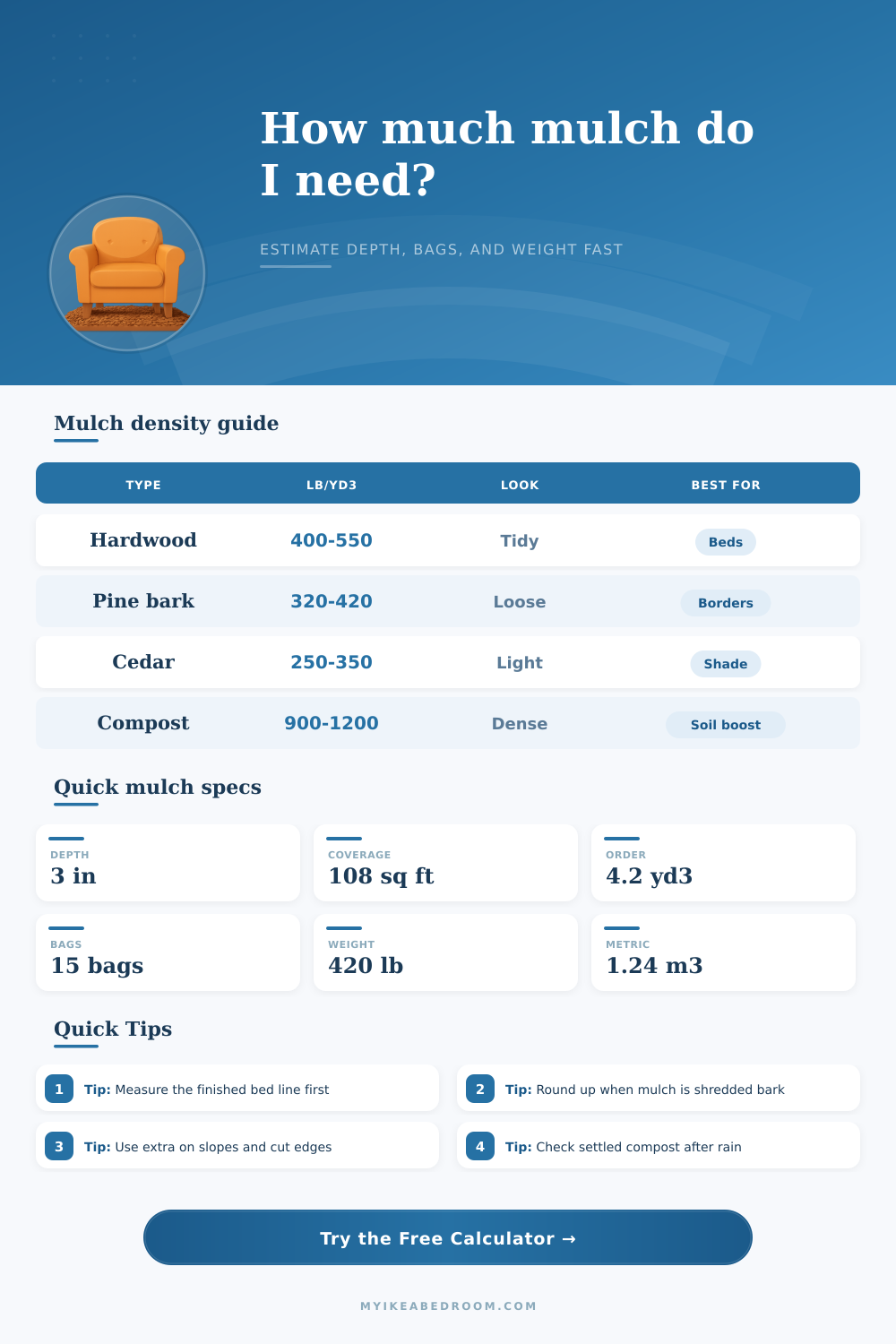
Once you have calculated the area of the garden bed, determine the depth of the mulch. Three inches are the standard depth for most garden beds. However, it is possible to use a depth that is less than three inches for border gardens or deeper for shrubs.
However, remember that as mulch settles into the soil over time, it will take up less space. Therefore, ensure that you account for this by adding around ten percent to the total amount of mulch that you calculated for your garden bed. The type of mulch that you use will also play a role in the weight and volume of the mulch that will be used in the garden beds.
For instance, cedar mulch is relatively light in weight. Other mulch like compost is very dense and therefore will weigh alot. Hardwood mulch sit somewhere in the middle in terms of the density of the mulch.
Rubber mulch is very heavy. It is important to consider the weight of the mulch for two main reason. First, it will help you calculate how much mulch you can carry.
Second, it will help you calculate how much mulch the delivery truck can transport to your garden. Furthermore, different types of mulch accomplish different tasks in the garden. Therefore, you must also consider the purpose that the mulch will serve in your garden to decide on the best type of mulch for that area of the garden.
Mulch can be purchased in bag or in bulk. Mulch that is bagged comes in three-cubic-foot bags. One bag of three-cubic feet will cover approximately twelve square feet of garden bed at a depth of three inches.
Bulk mulch is sold in cubic yards. One cubic yard of mulch contain twenty-seven cubic feet of mulch. Bagged mulch is better for smaller gardens or projects.
Bulk mulch is better for larger projects as it is less expensive to buy in bulk than in bags. However, you must also consider the delivery fees for bulk mulch as these can be higher than delivery fees for bagged mulch. You should not estimate the amount of mulch that you need for your garden.
You should measure your garden bed to determine the amount of mulch needed. When measuring your garden bed, take note of any curves in the garden bed. Also note any slopes in the bed as you will need more mulch to fill in any slopes as the mulch will slide down the slope.
Additionally, organic mulches such as compost will shrink in size when they become wet. Therefore, you should account for this in calculating the amount of mulch you need for your garden bed. By following these steps, you can ensure that you will have the correct amount of mulch for your garden beds and that there will be no bare spots in your garden beds.