Kitchen Lighting Layout Calculator
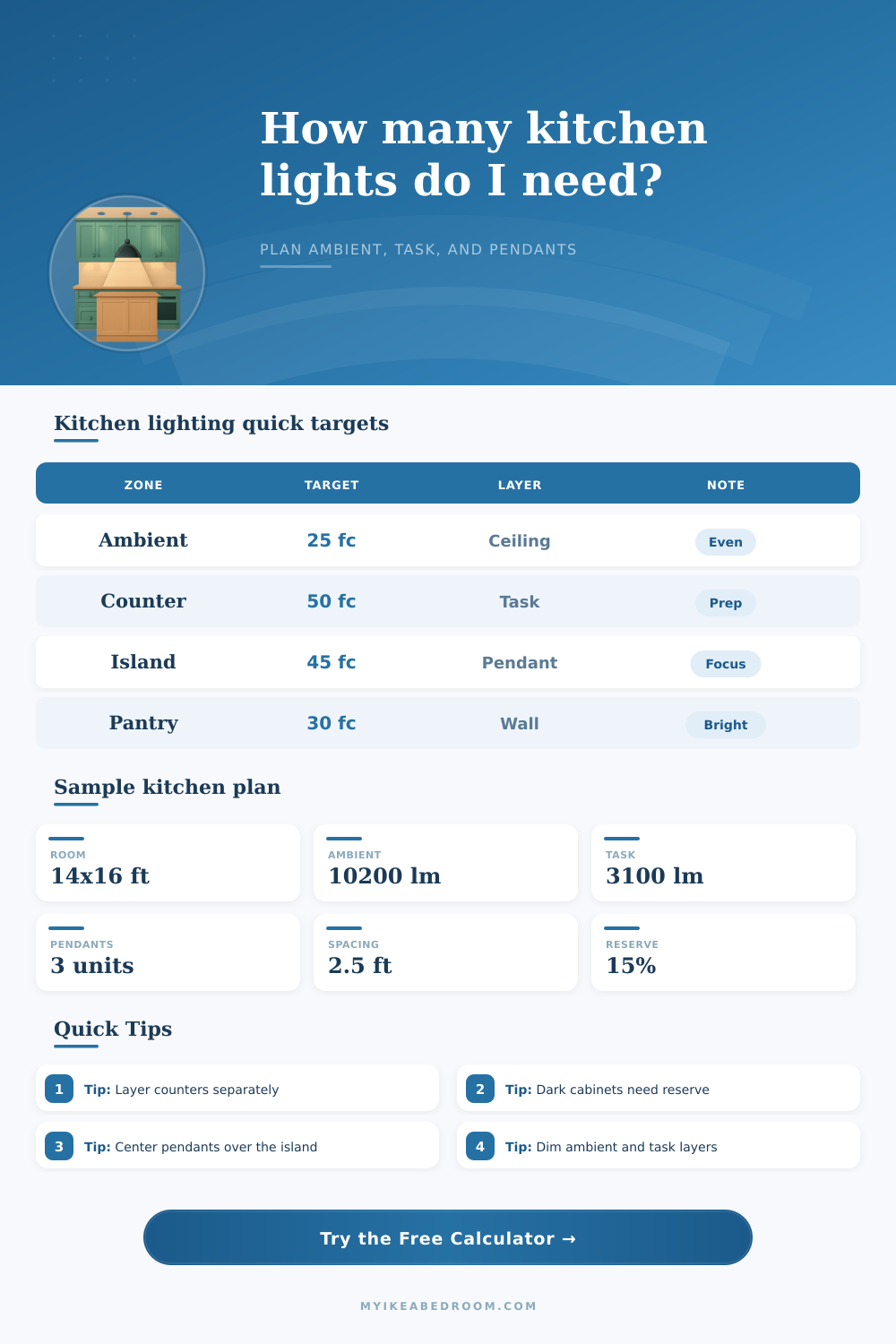
Plan a whole-kitchen lighting layout from room dimensions, ceiling height, ambient fixtures, counter task zones, island pendant count, under-cabinet length, reflectance, target foot-candles, and dimming reserve.
Load a kitchen layout, then tune the fixture lumens, target light levels, pendant count, under-cabinet run, cabinet reflectance, and reserve.
Layer balance: A kitchen can meet the room average and still feel dim on counters. Keep ambient fixtures, under-cabinet strips, and island pendants as separate layers with their own dimming range.
Dark finishes: Dark cabinet doors, matte counters, and deep pantry walls absorb useful light. Use the reserve and absorption inputs before trimming fixture count or under-cabinet length.
Kitchen lighting is a system that requires careful planning because typicaly, there is going to be one source of light that will fail to illuminate all of the workstation within the kitchen. Many people make the mistake of only installing one bright ceiling light within the kitchen. However, that one bright ceiling light will not be able to provide light to every specific area within the kitchen where the chef have to work.
The kitchen must be lighted in such a way that the light sources is placed into the area where the chef hands are working to minimize the creation of shadows. Lighting a kitchen is not about filling the kitchen with light. Instead, lighting a kitchen is about providing light to the specific areas within the kitchen where the chef work.
How to Plan Kitchen Lighting
A properly lit kitchen will have three different layer of lighting: ambient light, task light, and accent light. Ambient lighting will allow the chef to move throughout the kitchen without tripping over anything. Task lights will allow chefs to perform specific task within the kitchen, like chopping food.
Accent lighting is used to make the kitchen feel like a home. Each of these light layers must be balanced with each other so that the kitchen is lit appropriate throughout it’s cooking areas. The reflectance of the kitchen’s surfaces will impact the lighting needs within the kitchen.
For instance, if the surfaces within the kitchen is predominantly white, the light will reflect off of those white walls and cabinets. The reflection of light off of these surfaces will make the kitchen feel bright. However, if the surfaces in the kitchen are dark colors, like navy blue walls or charcoal colored cabinets, those dark surfaces will absorb the light instead of reflecting it.
Because of this, kitchens with predominantly dark colors will require more light fixture than kitchens with predominantly white colors. One way to calculate how many light fixture are needed within the kitchen is to use a kitchen light fixture calculator. These calculators consider factors like the height of the ceilings within the kitchen and the absorption of light by the kitchens surfaces to calculate the amount of lighting that will be required within the kitchen.
When planning the kitchen lighting, it is recommended that chefs use a unit of measurement referred to as foot-candles. Foot-candles are a unit of measurement for the amount of light that lands on a specific area of the cooking kitchen. For instance, there will need to be very little light for places like the walkways within the kitchen.
However, there will need to be a higher amount of foot-candles within the food preparation zone within the kitchen so that chefs can easily distinguish between ingredient like salt and sugar. Task lighting is essential within the kitchen, but it is often provided incorrect. For instance, if only ceiling lights are used for task lighting, the chef’s body will create shadows on the countertops.
Under-cabinet lights can help to minimize these shadows. Under-cabinet lights can be created with LED strip or puck lights. These types of lights should be installed under the countertops so that there are no shadow on the countertops.
Kitchen islands will also require specific lighting within them. Islands often have pendant light installed within them. These pendants should be spaced appropriately so that the island is lighted proper.
If the pendant lights are too far apart from each other the island may have dark spots. If the pendant lights are too close to each other, the island may look too crowded. The spacing of the pendant lights will depend upon the length of the island and the width of the shade of the pendant lights.
These lights should be installed so that they provide focused light to those who use the kitchen island for specific task. Many people will center the placement of the light fixtures in the middle of the kitchen. However, this type of placement will result in the dark spot towards the edges of the kitchen.
Instead, the kitchen fixtures should be aligned with the work triangle in the kitchen. The work triangle is comprised of the sink in the kitchen, the stove in the kitchen, and the main food preparation area in the kitchen. By aligning the lighting in the kitchen with the work triangle, the areas that are the brightest will be the sink, the stove, and the food preparation area.
The walkways in the kitchen dont require as much light as the work triangle areas. Finally, ensure that there is a dimmer switch for each layer of lighting in the kitchen. As the time of day changes, the lighting needs within the kitchen will change.
For instance, the lighting needs of a kitchen at 7:00 AM will be different than the lighting needs of the same kitchen at 8:00 PM. A dimmer switch will allow the prep area to be lighted for the chef to easily see their cooking tasks while the ambient and accent lighting is dimmed to reduce light pollution in the kitchen. Finally, ensure that the kitchen lighting layout is laid out prior to the installation of the kitchen drywall.
By planning the kitchen lighting layout prior to the installation of the drywall, the installation of lighting fixtures will be prevented.