Half Drop Wallpaper Calculator
Estimate strips, roll count, repeat-matched cut length, and the extra waste created by alternating half-drop pattern starts.
✅ Half-Drop Wallpaper Estimate
| Roll type | Typical width | Typical length | Best use |
|---|---|---|---|
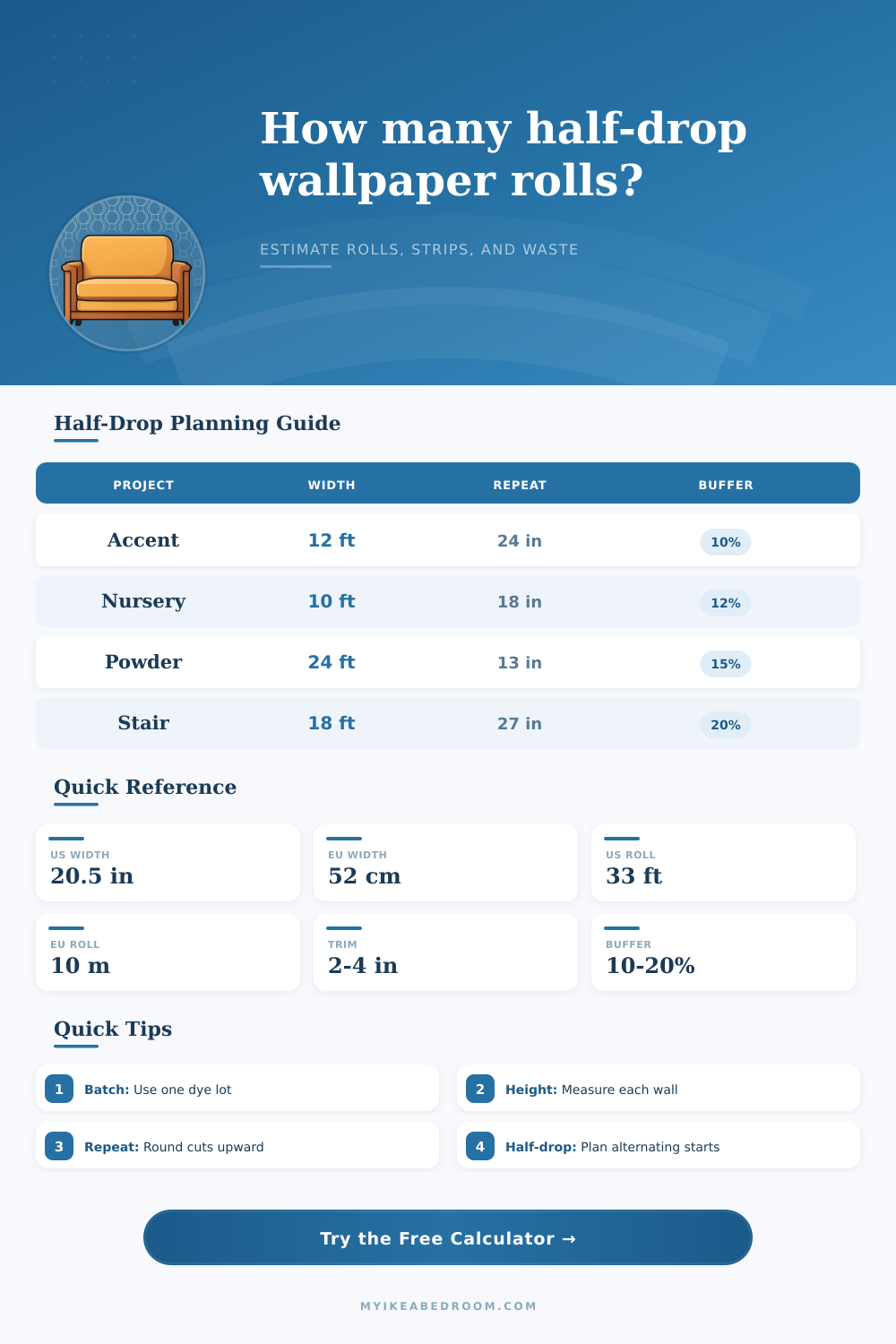
| US single roll | 20.5 in | 33 ft | Bedrooms and feature walls |
| European roll | 52 cm | 10 m | Metric labels and imported papers |
| Wide designer roll | 27 in / 68 cm | 27-33 ft | Fewer seams on large motifs |
| Peel-and-stick roll | 24 in | 18-20 ft | Small accent areas |
| Pattern direction | Repeat handling | Waste behavior | Calculator setting |
|---|---|---|---|
| Random texture | No repeat rounding | Lowest waste | Random texture / no match |
| Straight match | Every strip starts alike | Repeat rounding only | Vertical straight match |
| Half-drop match | Alternating strips shift down | Offset on every other strip | Vertical half-drop match |
| Railroaded repeat | Pattern runs sideways | Width and length must be checked | Railroaded horizontal repeat |
| Vertical repeat | Trim allowance | Straight cut | Half-drop alternate |
|---|---|---|---|
| 12 in | 2 in each end | 108 in | 114 in with offset |
| 18 in | 2 in each end | 108 in | 117 in with offset |
| 24 in | 2 in each end | 120 in | 132 in with offset |
| 27 in | 2 in each end | 108 in | 121.5 in with offset |
| Project | Typical width | Wall height | Buffer choice |
|---|---|---|---|
| Bedroom headboard wall | 10-14 ft | 8-9 ft | 10% |
| Powder room | 20-28 ft total | 8 ft | 15% |
| Bay wall | 12-18 ft total | 8-9 ft | 15% |
| Tall stair wall | 12-20 ft | 10-14 ft | 20-25% |
Half drop wallpaper patterns require that the wallpaper repeat at specific distance in inches, but the following strip of wallpaper starts halfway down the repeat of the distance. Because the strip starts halfway down the wallpaper repeat, every other strip of wallpaper will have to start at a different point along the wallpaper strip than the others. As a result, every other strip will require more length than the standard wallpaper strips.
The wallpaper calculator assist the homeowner in determining how much wallpaper is needed by calculating the length of wallpaper that is required for both the standard strips as well as the offset strips. Thus, the wallpaper calculator does not just calculate how many strips of wallpaper are needed for the room, but also takes into account the difference in length between the strips. Wall height is one of the primary measurement of wallpaper needs.
How to Calculate Wallpaper for Half-Drop Patterns
However, the homeowner has to compare the height of the wallpaper to the vertical repeat of the wallpaper design to determine how much wallpaper is required for each wall. For instance, if the vertical repeat of the wallpaper is 24 inches but the height of the wall is 96 inches, then the length of wallpaper required for each strip if the wallpaper is to be installed in a straight match pattern would be 112 inches of wallpaper (when trim is account for). In the case, however, of a half-drop pattern, the alternate strips of wallpaper could require 112 + 12 = 124 inches of wallpaper.
Because there are many drops of wallpaper that are required to cover the area that is to be wallpapered, these additional inches of wallpaper add up to a significant length of wallpaper. The wallpaper calculator tracks these difference in lengths of wallpaper to ensure that the customer dont have to perform the ceiling math for themselfs to determine how much wallpaper is required. Another of the measurements of wallpaper that are required is the width of the wallpaper rolls.
The width of the wallpaper roll will determine how many drops of wallpaper are required to cover each wall. Using narrower wallpaper rolls will result in more seam in the wallpaper that is applied to the wall. Thus, there will be more instances of the wallpaper needing to be offset to half drop patterns.
Using rolls of wallpaper that are wider in width will result in fewer seams in the wallpaper that is applied to the wall. Thus, fewer strips of wallpaper will be needed to cover the area of the wall, but the rolls of wallpaper that are wider in width tend to cost more money. Therefore, the customer can use the wallpaper calculator to test both roll widths to determine if the cost of the wider rolls justifies the reduction in the number of seams that must be create.
The third of the main measurements for wallpapering is the size of the windows and doors in the room. Windows and doors will remove square footage from the area that is to be wallpapered. However, wallpaper will still be required for the doors and windows because the wallpaper is required on both side of the casing for the windows and doors.
Therefore, the wallpaper calculator includes a setting to determine how much area will be deducted based on the number and size of the windows and doors in the room. For instance, if the homeowner choose a conservative setting, the wallpaper calculator will account for small areas of windows and doors. However, if the homeowner chooses the area-based setting, the wallpaper calculator will provide more credit to the homeowner if the windows and doors are larger and located in the center of the walls.
In either case, the homeowner must decide which setting will result in the best wallpapering for the home. In some cases, it may be better to have an extra roll of wallpaper than to run short on wallpaper during the installation process. In other cases, however, it may not be desired to have an extra roll of wallpaper.
An additional setting within the wallpaper calculator is for adding a waste buffer to the wallpaper calculations. A waste buffer can be used to provide for the fact that wallpaper rolls may not always be applied perfectly to the wall. For most rooms, a ten percent waste buffer may be all that is necessary.
However, in homes and wallpaper designs that have corners, electrical boxes, or designs that wish to incorporate bold motifs in the wallpaper, a waste buffer of 15 or 20 percent may be required. The waste buffer does not account for the mistake that may be made during the application of the wallpaper rolls. Rather, the waste buffer accounts for the fact that the walls in the rooms may not be perfect rectangles, and that each roll of wallpaper may come in different dye lots.
Therefore, there may be the need for a strip or two of wallpaper of the same dye lot as the remainder of the wallpaper rolls that will be applied to the walls to ensure that there are no color differences between the wallpaper strips. Planning is necessary before the installation of half-drop wallpaper patterns. Each strip of wallpaper should be numbered prior to the purchase of the wallpaper rolls to ensure that each strip is marked with either a standard height for the strip of wallpaper or an offset wallpaper height.
By marking each strip with an offset or standard wallpaper height, it will be prevented from making the error of purchasing two length of wallpaper of the same length. The wallpaper calculator helps the customer to determine the length differences between the standard strips and the offset strips of wallpaper, providing the homeowner with an understanding of how the wallpaper will waste when it is being applied to the walls. If wallpapering stairs or walls that are especially tall in the home, more wallpaper will be required to cover those areas.
Because the height of the wallpaper strips will change in these areas, each strip of wallpaper will have to be of a different length than the others. Thus, many half-drop wallpaper installations use a 25% waste buffer to account for these changes in height. The wallpaper calculator allow for these percentages to be entered so that it can provide an accurate indication of how many wallpaper rolls will be needed to completely wallpaper the entire area.
Another of the benefits of the wallpaper calculator is that it allows the customer to compare the costs of various wallpaper patterns prior to purchasing the wallpaper. For example, random textures for wallpaper usually do not require as much additional length beyond the height of the walls and the trim for the wallpaper strips. Straight match wallpaper patterns may require the length of wallpaper to be rounded to the height of the walls (additional length) for the wallpaper to be installed.
Half-drop wallpaper patterns are both rounded to the height of the walls for the strips of wallpaper to be installed, as well as the length of wallpaper strips have to be offset to allow for the installation of the next strip of wallpaper. Thus, by comparing each type of wallpaper pattern, the customer can decide whether the visual appearance of the half-drop wallpaper pattern is worth the additional cost of the wallpaper rolls. Another of the suggestions for the customers is that each wall within the area that is to be wallpapered should be measured separately.
An average of the heights of the walls might make it seem as if there will be enough wallpaper rolls to cover the area that is to be wallpapered. However, because wallpaper rolls usually come in specific lengths of wallpaper, if there are any shortage of wallpaper, it will be impossible to purchase additional wallpaper of the same length later on in the wallpapering process. Furthermore, most older homes have walls of different heights by fractions of inches.
Therefore, using the tallest of any of these heights to determine the wallpaper length will ensure that the wallpaper will be applied to the walls, but it will create shortages of wallpaper rolls of the length that may be required. Finally, the number that is determined by the wallpaper calculator is simply a planning figure. The planning figure is based upon assumptions of the ability of the wallpaper to be applied correctly to the walls of the home, as well as by the assumption that only one dye lot of wallpaper will be used in the entire installation process.
However, there may be other variables in the home that are beyond the calculations of the wallpaper calculator, such as the need to change dye lots of wallpaper to accommodate for variations in the color of the walls of the home. Furthermore, there may also be other variables to the wallpaper rolls that could lead to shortages in wallpaper rolls during the installation of the wallpaper. Thus, the wallpaper calculator figure is simply a planning figure, and most wallpaper professionals recommend to order at least one additional roll of wallpaper with the calculation of the calculator.