Foot Candle to Lux Calculator
Convert foot-candles and lux, estimate required fixture lumens, choose a target task category, and check the margin after area, beam loss, reflectance, work plane height, and unit mode adjustments.
Load a room or task target, then adjust measured light, area, fixture output, work plane height, beam loss, and reflectance.
Work plane check: Measure or plan at the surface that matters. A hallway can use the floor, a dining room can use tabletop height, and a kitchen task zone should use counter height.
Margin check: A small positive margin is useful for dimming and lamp aging. A large negative margin usually means the area needs more fixture lumens, better reflectance, or a closer task light.
Illuminance are the measurement of the amount of light that lands on a specific surface. While many peoples feel that the brightness of the lights or the wattage of the bulb are the most important measurement of the light that the bulb provides, the wattage of the bulb are only a measurement of how much energy the bulb use. To determine the amount of light that lands on a specific area, foot-candles or lux must be used.
Foot-candles and lux is the two most common unit of measurement for illuminance. A foot-candle is a unit of measurement for illuminance in the imperial system. A foot-candle is the amount of light that a one candle flame located one foot from the area that is to be illuminate provides.
How to Measure Light with Foot-candles and Lux
A lux is a unit of measurement for illuminance in the international system. One lux is equal to one lumen per square meter of area. Because one square meter is larger than one square foot, one lux is a larger unit of measurement than a foot-candle.
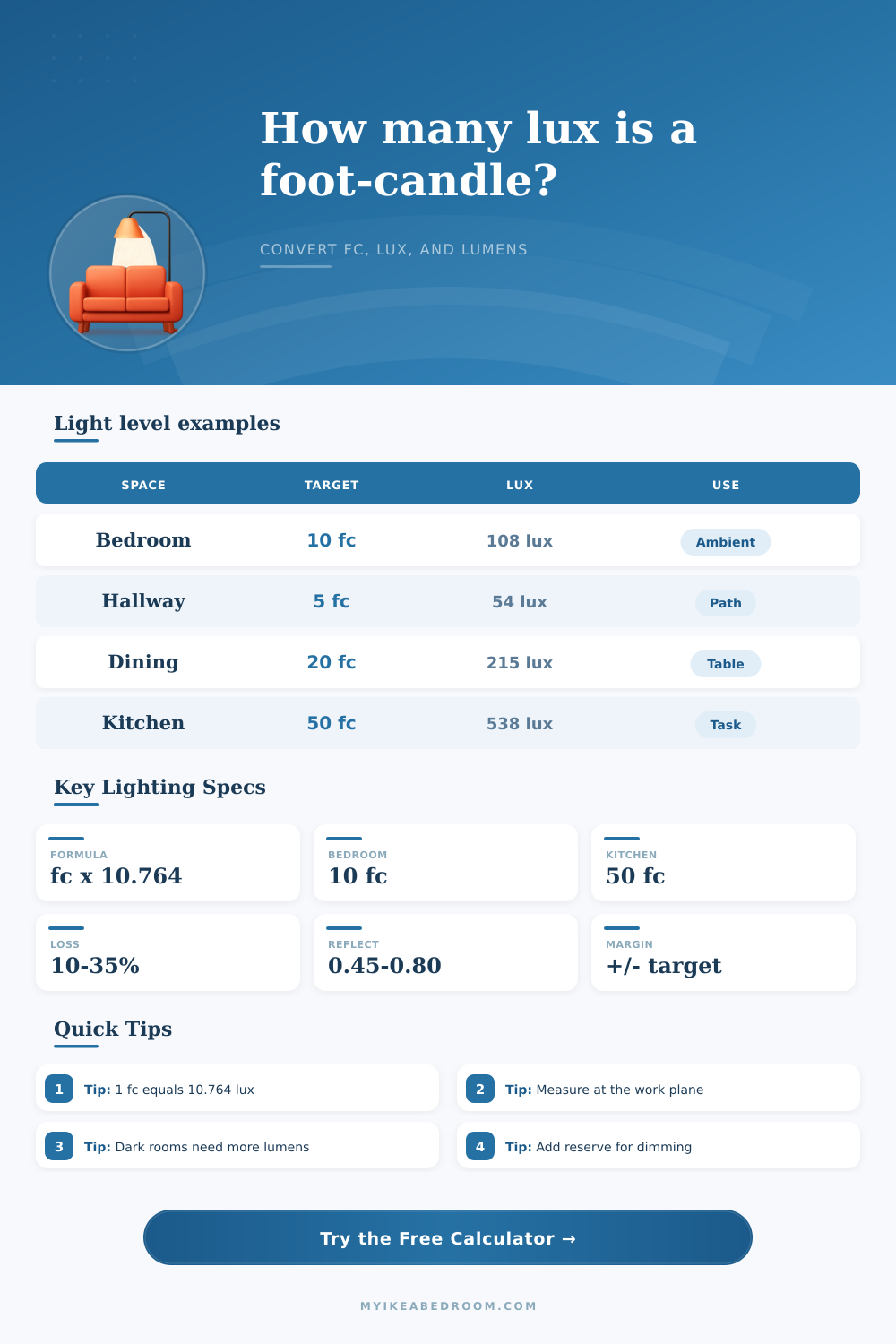
One foot-candle is equal to approximately 10.76 lux. Converting from foot-candles to lux or lux to foot-candles are often necessary in different technical document. The level of illuminance required for a specific task can differ from another task.
For instance, the level of illuminance required for a bedroom might be less than the amount of illuminance required for a kitchen counter to assist in cooking task. To determine the proper level of illuminance for a task, the task must be determine