Duvet Size for Bed Calculator
Find a duvet insert and cover size from bed dimensions, mattress thickness, platform exposure, side drop, foot drop, fold-back style, tuck allowance, and shared-sleeper pull.
Start with a common bed setup, then adjust the drop, tuck, fold-back, and cover dimensions to match the way the bed is actually made.
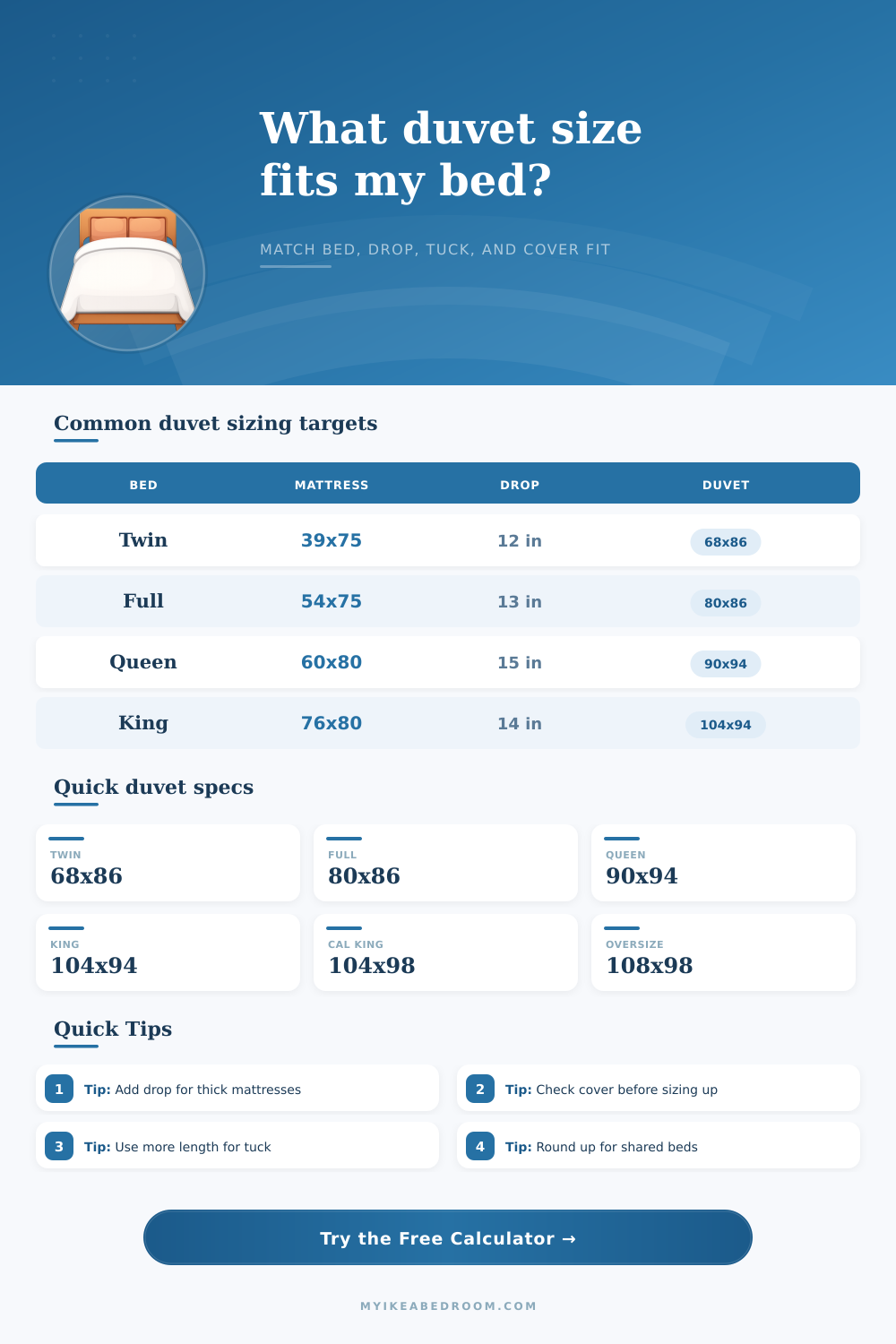
| Bed size | Mattress top | Common duvet insert | Best when |
|---|---|---|---|
| Twin | 39 x 75 in | 68 x 86 in | Single sleeper, modest side drop, low to medium mattress. |
| Twin XL | 39 x 80 in | 68 x 90 in | Dorm or adjustable bed where length matters more than width. |
| Full | 54 x 75 in | 80 x 86 in | Guest room with limited foot tuck and a fitted look. |
| Queen | 60 x 80 in | 90 x 94 in | Everyday queen bed with balanced side and foot coverage. |
| Oversized queen | 60 x 80 in | 98 x 98 in | Thick queen mattress, shared sleepers, or fuller side drape. |
| King | 76 x 80 in | 104 x 94 in | Standard king with medium mattress and moderate side drop. |
| California king | 72 x 84 in | 104 x 98 in | Longer mattress needing extra length at the foot. |
| Oversized king | 76 x 80 in | 108 x 98 in | Thick king mattress, hotel fold, or two active sleepers. |
| Mattress profile | Thickness | Useful side drop | Notes |
|---|---|---|---|
| Low profile | 8 to 10 in | 10 to 12 in | Keeps a platform bed neat without overwhelming the frame. |
| Standard | 11 to 13 in | 12 to 15 in | Works well for most fitted sheet and duvet pairings. |
| Thick | 14 to 16 in | 15 to 18 in | Often benefits from oversized queen or oversized king. |
| Pillow top | 17 to 20 in | 18 to 22 in | Check floor clearance before choosing maximum drape. |
| Cover fit | Width clearance | Length clearance | Result |
|---|---|---|---|
| Snug | -2 to 0 in | -2 to 0 in | Insert fills corners firmly; harder to shake into place. |
| Normal | 0 to 3 in | 0 to 3 in | Balanced fit for most covers and medium-loft inserts. |
| Loose | 3 to 6 in | 3 to 6 in | Easier insertion, but may shift if corner ties are weak. |
| Too large | More than 6 in | More than 6 in | Insert can bunch, especially after washing or folding. |
Use controlled drop. Platform frames look best when the duvet clears the floor and exposes a little structure.
Width matters first. Add side drop for thickness before worrying about a decorative fold at the head.
Add pull allowance. Extra width reduces tugging, especially on queen beds used by two people.
Compare the cover. A great insert size still needs a cover within a practical clearance range.
Measure the dressed mattress. Toppers and thick pads change duvet drop more than the bed-size label does.
Check length separately. A queen duvet can be wide enough but still too short if you like a foot tuck.
Match insert to cover. Oversizing the insert inside a smaller cover creates puff, but too much difference can warp corners.
Round up carefully. Choose the next standard size when the calculator is close, but avoid floor sweep on low beds.
When choosing a duvet size, there is several specific measurements that you must consider to ensure that the duvet properly cover the sleeping surface. A duvet that is the wrong size for the bed will either hang too short on the sides of the mattress, pile up at the foot of the bed, or the sleeping person will pull it on one or both sides of the mattress. These issue can generaly be avoided when purchasing a new mattress and new duvet cover, but can occur after mattresses or duvet covers has been purchased.
The most common reason that mattresses and duvet covers become mismatched is due to the thickness of the mattress, the preference of the side drop of the duvet, and the number of people that sleeps on the bed. The thickness of the mattress are one of the primary factor to consider in selecting the proper size for a duvet. For instance, if one purchase a duvet that is sized for a mattress that is twelve inches in thickness, that same duvet will not provide enough coverage for an eighteen-inch thick mattress.
How to choose the right duvet size for your bed
The thicker the mattress, the less side drop that the duvet will provide. The thickness of the mattress impact the target width of the duvet necessary to provide coverage to the sides of the sleeping persons bed. An additional factor to consider are the side drop preference for the duvet.
Those who prefer their duvet to have a twelve inch drop on each side of the bed may have different preferences than those who would prefer a sixteen-inch or eighteen-inch drop on each side of the bed. The side drop will impact the visual appearance of the bed that the sleeping person(s) construct, as well as the size of the duvet required to provide the desired side drop. A calculator can be used to determine the actual side drop that each type of standard-sized duvet will provide.
Another consideration is the foot coverage provide by the duvet. Those who wish for the duvet to be tucked under the footboard of the bed will require a duvet with more additional length than those who wish for the duvet to be folded over the sleeping pillow. These two different preferences work in opposite directions from one another, therefore, requiring a decision by the prospective duvet buyer to select their preference regarding foot coverage.
Additionally, the number of individual that sleep on the bed will impact the required width of the duvet. Should two individuals sleeps on the bed, it is likely that each will pull on the sheets and duvet towards their own side of the bed. Should the duvet be provided with additional width, this could prevent the two individuals from continually pulling the duvet away from each other.
However, an excess width could create a sloppily sleeping appearance for the duvet when the sleeping individuals on the bed make it. The final consideration in purchasing a duvet is the fit of the insert to the cover. The insert of the duvet should match the size of the cover to which the insert will be placed.
For instance, if the insert is slightly smaller than the cover, the edges of the duvet may appear softly at the corners. However, if the insert is much smaller than the size of the cover, the insert may bunch at the edges within the cover after the duvet is wash. Matching the dimensions of the insert to the dimensions of the cover will ensure properly functioning of the duvet.
Platform beds has some specific considerations regarding their requirements of the duvet. For example, many who use platform beds wish for the bed’s frame to be visible when the bed is made. Thus, platform beds may require short side drops to the bed frame.
Calculators that determine the proper size for a duvet can provide for this type of customization by platform beds. The tables that are provided on this page list examples of mattress of different thicknesses and sizes of duvets. These tables is a starting point for individuals to consider the different options available to purchase mattresses and duvets.
However, these tables dont account for the thickness of an individual mattress or the side drop that they would like their duvet to have. Thus, individuals should of use the calculator to enter the dimensions of their mattress and their personal preference for side drop to determine the size of their required duvet.