🎨 Drywall Primer Calculator
Estimate primer gallons for bedroom walls, ceilings, patch islands, and stain-blocking touch-ups with imperial or metric input.
📋Bedroom shell presets
🔧Primer inputs
📋Primer family cards
📊Coverage tables
💡Practical tips
📈Primer summary
When you are preparing to paint an bedroom with new drywall, you must first apply drywall primer to the drywall surfaces. New drywall is absorbent, and the new drywall will soak up the liquid from the topcoat paint if you dont treat the drywall with drywall primer first. Furthermore, if you choose to skip an application of drywall primer to the walls, the topcoat paint wont apply evenly to the new drywall.
Additionally, the topcoat paint will create dull spot on the walls. The type of drywall primer that you use also has an effect on the amount of drywall primer you need to purchase for the job. For example, people use PVA primer on raw gypsum board.
How to Prime New Drywall Before Painting
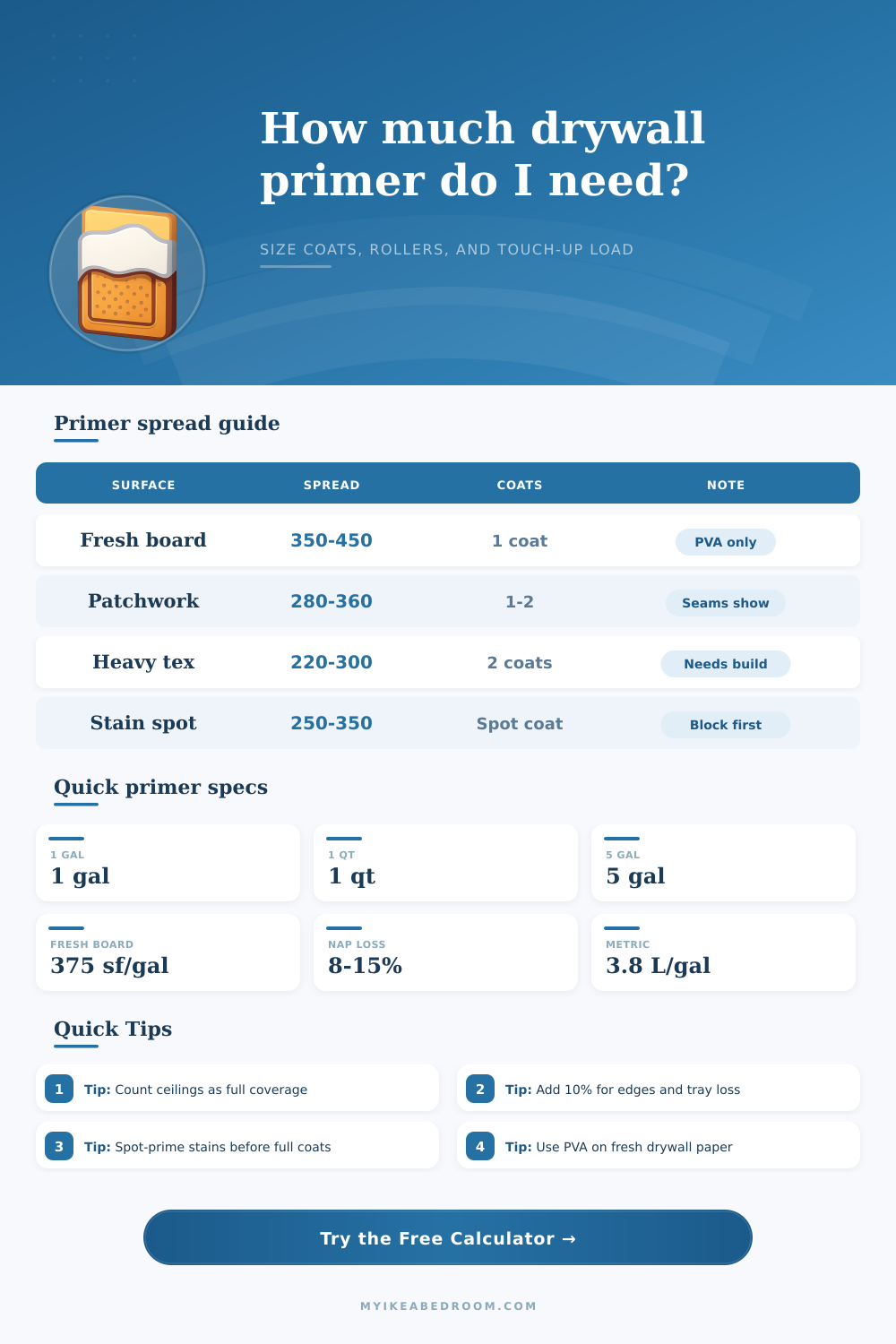
High build drywall primer is used on textured paint surfaces to fill the valleys of the texture. All-purpose drywall primer is used on most jointed drywall surfaces and dries quick so that you can complete the next step in the drywall process, painting, the following day. Stain-blocking primer is used on the walls to even out any water mark on the drywall so that the water marks will not show through the topcoat paint.
Finally, bonding drywall primer are used on glossy drywall surfaces since the paint will otherwise peel from those glossy surfaces. To calculate the amount of drywall primer that you need to buy, calculate the total square footage of the bedrooms walls and ceiling. For instance, for a bedroom that has four walls that are twelve feet in width and fourteen feet in length and ceilings eight feet in height, calculate the total square footage of the four walls.
You will subtract the square footage of the windows and doors in the walls from the total square footage of the walls. However, you will add the area of any repair islands on the walls to the total square footage of the walls. Repair islands are patches on the drywall that were applied to repair damage to the drywall.
Additionally, add a percentage of drywall primer to the total square footage that represents the waste that may occur during the drywall primer application process. For instance, ten percent of the total area may be wasted during the drywall primer application process. The method that you use to apply the drywall primer will have an effect on the amount of drywall primer that you need to purchase.
For instance, if you use a roller to apply the drywall primer, the nap of the roller will impact the amount of drywall primer that you will use. If you use a sprayer to apply the drywall primer to the walls, you will apply the drywall primer at a faster rate then if you used rollers. However, you will have to mask the area that you are treating with drywall primer to ensure that the primer doesnt get wasted due to overspray from the sprayer.
Additionally, round up the amount of drywall primer to the nearest whole can so that you dont run out of drywall primer before you complete the application process. Some common mistakes when applying drywall primer include using too little drywall primer or applying the drywall primer in an incorrect manner. For example, some may choose to skip applying drywall primer to the ceiling of the bedroom.
However, if you dont apply the drywall primer to the ceiling of the bedroom, shadows may appear under the lights in the bedroom. Additionally, some may fail to apply extra drywall primer to repair islands. As mentioned, the patches to the drywall will absorb more drywall primer than the rest of the drywall surfaces.
Applying PVA primer to drywall while the drywall is still wet may trap moisture between the paper and the drywall. This moisture may cause the drywall to bubble while drying. Therefore, allow the drywall primer to dry before continuing to the next step in the drywall process.
To complete the drywall and paint the bedroom, follow the steps in a specific order. First, apply the joint compound to the drywall. Allow the joint compound to dry.
Sand the drywall. Allow the drywall to dry. Apply the drywall primer.
Allow the drywall to dry. Apply the topcoat paint. Feather the edges of any repair islands to ensure the new drywall matches the remainder of the walls.
By following these steps, and using the proper type of drywall primer for your type of drywall surface, the drywall will be properly sealed and ready to be painted. You should of checked your measurements carefully so you dont buy alot of extra primer.