
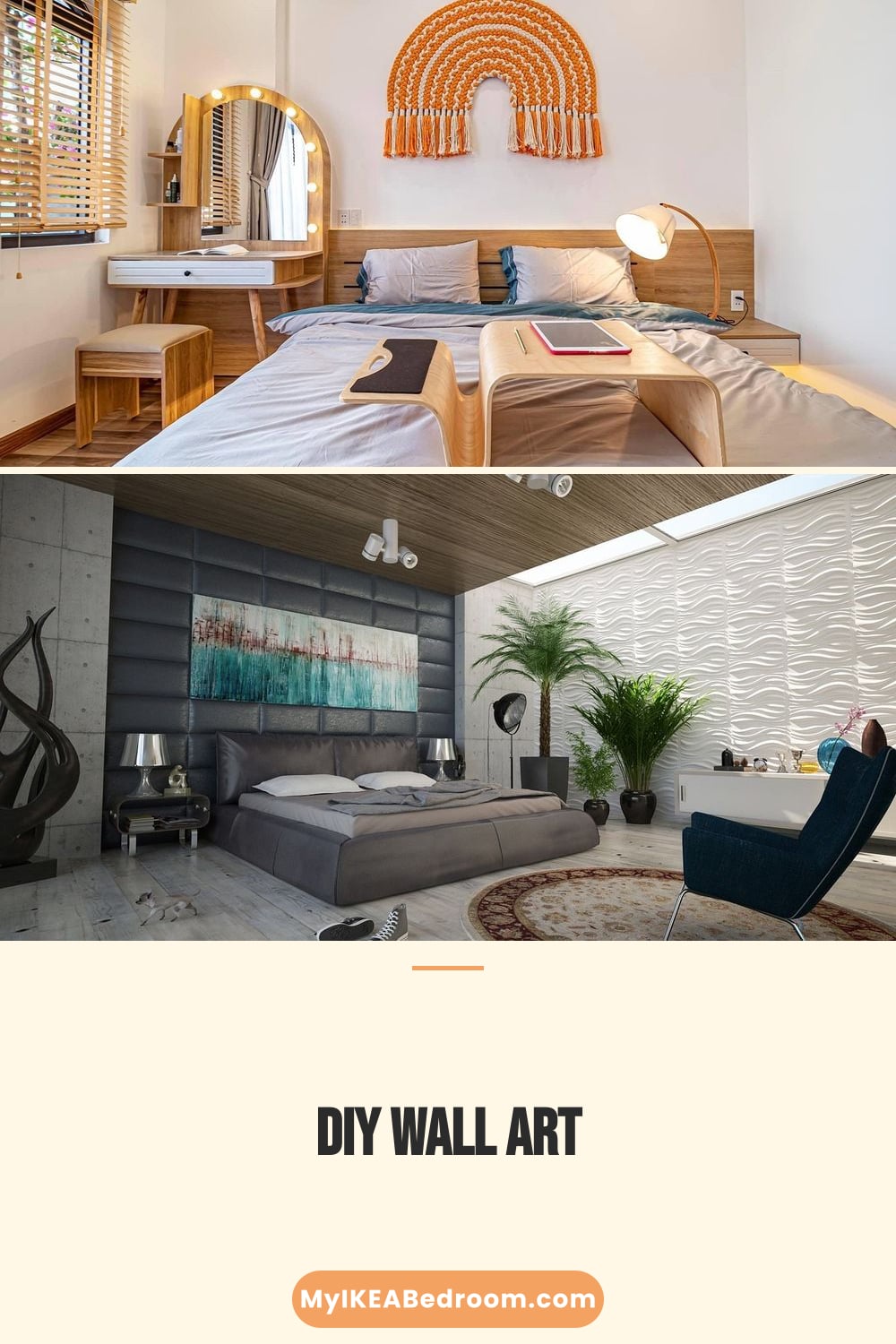
Creating your own wall art allows you to transform a blank wall into a space that reflect who you are and what is meaningful to you. Using your imagination and basic supplies, you can create stunning art pieces that you can proudly claim as your owns. Many peoples struggle with store-bought art that is either too expensive or that fails to stand out from the art that others in their community own.
However, by following the projects listed below, you can create your own art masterpieces. These projects will allow you to learn a new skill while also acquiring a finished art project that you can proudly show off in your home. Gallery walls are often challenging because the frames do not work well together.
Creative DIY Wall Art Projects To Try
1. Gallery Walls
To create the perfect gallery wall, you have to place every frame on the floor in the way that you want them to hang on the wall. You then take measurements of the total width and height of the frame and mark that same measurement onto the wall with painter’s tape. By doing this simple step, you can avoid the frustration of having to create a gallery wall that isnt centered on the frame.
Once the painter’s tape marks is set up perfectly on the wall, you can hang the center piece first and then continue to hang the others in order.
2. Framed Fabric
Framed fabric is one of the easiest art project you can complete. Whether you choose to use a piece of vintage bark cloth, an African print fabric, or a cherished scarf from someone special in your life, you can stretch the fabric on a wooden frame and staple it onto the back of the frame.
The fabric will add depth to the art piece without the need for painting. Three identical pieces of framed fabric can be hung vertically above a console table. Another benefit of using framed fabric is that you can change the framed fabric piece whenever you like your art to change, without buying a new frame.
3. Pressed Botanical Art
Pressed botanical art involves taking plants from your garden and placing them between sheets of parchment paper within a heavy book. This book can then be weighted on top of the plants for two weeks to allow the botanicals to dry. Once the botanical art is dry, you can place the pressed botanicals onto acid-free paper and frame them within glass.
When pressing the botanical art, leave alot of white space around the plants to allow their shapes to become the focal point of the art project. Botanical art works best in bathrooms or kitchens, as the humidity in these rooms will help preserve your botanical art projects. Over time, the botanical art will fade to soft sepia tones.
These sepia tones adds to the vintage feel of the pressed botanical art.
4. String Art
String art is a project that has taken on a retro reputation over the years. To create string art on a wall, you must first place nails into the wall in a geometric design or the outline of a mountain range.
You can then wrap colored string from nail to nail. The negative space in the project is the image in the string art project. Use a limited color palette for your string art project so that your project is not too busy like much of the string art from the seventies.
String art projects can be large and hung on the wall above a sofa. Such projects will cost you less than twenty dollar but will recieve compliments from others in your home.
5. Painted Wooden Signs
Painted wooden signs used to include the cursive lettering of the phrase “Live Laugh Love.” To create your wooden art project, you must sand down a wooden plank until it is smooth to the touch.
Once the wood is smoothed, you can apply a base coat of chalk paint to the wooden plank. Wait for the chalk paint to dry and then use a stencil of your choice to add lettering to the wooden plank. The secret to making a good wooden sign is to sand the edges of the sign again after you have finished painting the sign so that the wood shows through the paint.
This creates the effect of an aged wooden sign rather than a brand new piece of art. Wooden signs with short and meaningful phrases work well in entryways and above kitchen sinks. It is important to keep the wording on the sign to be spare and minimal because the contrast between the wood and the painted letters add to the overall art of the wooden sign.
6. Abstract Plaster Textures
Abstract plaster textures can be created by first mixing plaster of Paris with water until the texture is as thick as yogurt. Then, the artist applies the plaster to a wooden panel. While the plaster is wet, the artist can press in a variety of objects into the plaster, use a comb to carve lines into the plaster, or even embed scraps of metal screen into the plaster.
Once the plaster has dried to become as hard as stone, the stone-like plaster can be painted with watercolor or gouache or even house paint that has been thinned with water. Because plaster is heavier than canvas when painted, plaster art pieces should be hung with a French cleat hanger.
7. Monochrome Embroidery
Monochrome embroidery on a stretched canvas is a more understated form of art in comparison to prints that can be very loud. To create this form of art, an individual should first transfer a line drawing to a light fabric. Then, the design can be stitched onto the fabric using black or deep navy thread. Because the embroidery is understated and minimal in design, it will coordinate well with almost any color scheme for the decor.
Additionally, if four of these embroidered canvases are grouped together in a square arrangement, they will act as one painting rather than four separate art pieces, each with potentially an intimidating price tag for the art collector.
8. Salvaged Wooden Beam Art
Another type of art that can be salvaged from old wooden beams is to create art pieces in which you replace the glass within the salvaged wooden frames with mirrors, fabric, or even hand-painted panels on the wooden frame. Many wooden beams with glass can be found at salvage yards.
Once you obtain the wooden beams, they can be cleaned. Then, each individual can decide what type of art they would like to create within each pane of the salvaged wooden beam. Some may choose to paint landscapes on each section of the salvaged wooden beam, others may choose to stretch fabric of a coordinating color within the wooden beam.
Once completed, the wooden beam can be hung as it is, or it may be leaned against a shelf for the mantel so that the shadow of the wooden beam becomes part of the decor.
9. Wall Murals
The last type of art to discuss is creating a mural directly on the wall. This is the most ambitious type of art to create within the options listed.
An individual should choose a bold and striking image to be represented on the wall. The artist can enlarge the image and project it onto the wall to allow for tracing of the image with paint. Use of latex paint is recommended for the creation of the mural because it is available in a variety of colors.
Additionally, details can be added after the application of the base layer of paint. Even if an individual does not have the best drawing skills, the size of the mural will ensure it makes a strong impact on the surrounding area. The additional benefit to painting a mural directly on the wall is that the mural is part of the architecture of the home.
Should an individual move into a new home, the mural can be blanked out by using a few coats of primer to prepare the wall for future art ideas. Regardless of the type of art that is selected for the individual’s walls, there is always satisfaction in knowing that the individual created the art on the walls. Each type of art requires few materials yet yields the most creative skills of the individual who creates the art for their walls.
The walls will no longer be a background for the individual but will be the medium through which their story is told. Thus, all an individual needs to create these art pieces for their homes is one afternoon and a few supplies.
