Curtain Header Tape Calculator
Estimate header tape length, roll count, gathered fullness, flat curtain width, fabric widths, turnbacks, hook spacing, and top allowance for pencil pleat, pinch pleat, wave, goblet, and tailored bedroom curtains.
Choose a real curtain scenario, then adjust the track width, fullness, tape width, panel count, roll length, and allowances to match your window and header style.
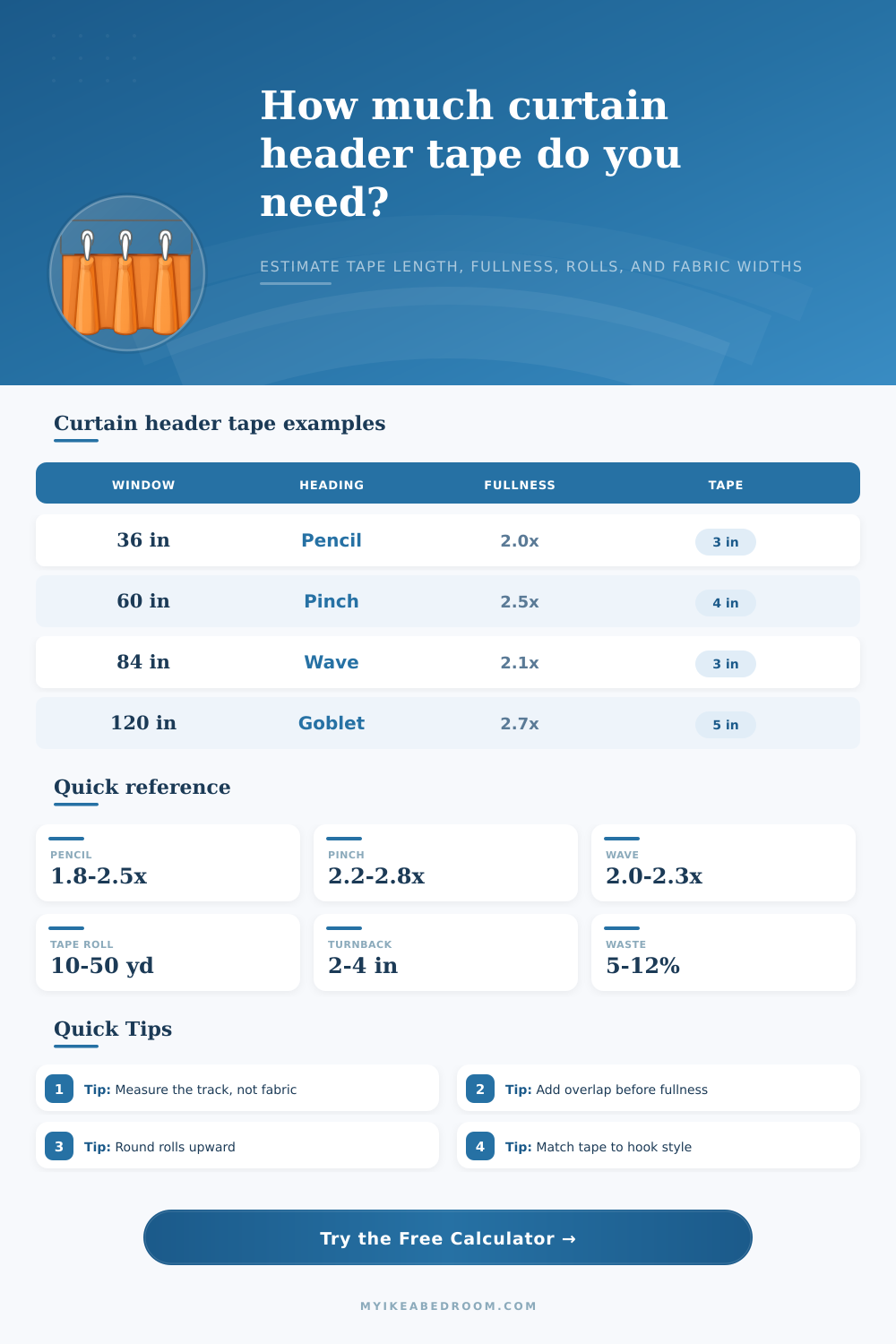
| Heading type | Common fullness | Typical tape width | Best use |
|---|---|---|---|
| Pencil pleat tape | 1.8x to 2.5x | 2.5 to 6 in | Adaptable bedroom curtains, sheers, and lined panels |
| Double pinch pleat tape | 2.2x to 2.6x | 3.5 to 4.5 in | Tailored pairs on rings, hooks, or tracks |
| Triple pinch pleat tape | 2.5x to 3.0x | 4 to 6 in | Formal full-length drapes with strong vertical folds |
| Wave or ripple tape | 2.0x to 2.3x | 3 to 4 in | Ceiling tracks, modern bedrooms, and room dividers |
| Goblet or buckram tape | 2.5x to 3.0x | 4 to 6 in | Decorative stationary or lightly operated drapery |
| Cartridge or smocked tape | 2.3x to 2.8x | 3 to 5 in | Soft gathered headings with regular vertical texture |
| Roll length | Length in feet | Length in meters | Useful check |
|---|---|---|---|
| 5 yd sample pack | 15 ft | 4.57 m | Small cafe curtain or one narrow panel |
| 10 yd roll | 30 ft | 9.14 m | Many bedroom pairs with moderate fullness |
| 25 yd roll | 75 ft | 22.86 m | Multiple windows or one wide treatment |
| 50 yd roll | 150 ft | 45.72 m | Whole-room projects and repeated panels |
| Hardware span | Fullness | Flat heading width | Approximate tape before buffer |
|---|---|---|---|
| 36 in small window plus 4 in return | 2.0x | 80 in | 86 in for two panels with turnbacks |
| 72 in bedroom track plus 8 in overlap | 2.2x | 176 in | 188 in for two panels with turnbacks |
| 96 in sliding door plus 10 in return | 2.0x | 212 in | 224 in for two panels with turnbacks |
| 144 in wide wall track plus 12 in return | 2.1x | 327.6 in | 351.6 in for four panels with turnbacks |
| Fabric type | Suggested fullness | Tape consideration | Planning note |
|---|---|---|---|
| Sheer voile or lightweight linen | 2.2x to 3.0x | Pencil, wave, or smocked tape | Extra fullness helps soft fabric look intentional |
| Medium cotton or linen blend | 2.0x to 2.5x | Pencil, pinch, or wave tape | Works with most standard bedroom headings |
| Lined blackout fabric | 1.8x to 2.3x | Deeper pencil or pinch pleat tape | Lower fullness prevents a bulky stacked edge |
| Velvet or interlined drapery | 1.8x to 2.2x | Strong deep tape or buckram | Use sturdy hooks and avoid over-tight gathering |
Measure the hardware span first. Header tape follows the flat fabric width needed to cover the track after returns and overlap, not the visible glass width alone.
Keep tape and hooks compatible. Wave tape needs the matching glider spacing; pinch and pencil tapes need pockets that suit your hook height and finished drop.
Short ribbon is the start of most sewing mistakes. It is not a structural failure, but it make for a rushed, poorly finished product where the pleats is wrong and the hem does not look right.
Knowing what header tape will do BEFORE you purchase it are the difference between a tailored look and a mass-produced one.
How to Measure for Your Curtain Tape
How much fabric is there over the window? Of that amount, how much is used for hems, fold-backs, and so on? That’s where this tool comes in: Enter your track width (the span of your hardware rather than the glass opening), plus a margin if the rod stops short at a wall; enter your desired fullness ratio (how lusciously gathered you desire your curtain to appear); and voila… The rest are handled by the math. Those two numbers is converted into total flat width. From there, we deduct allowances for hemming and any tape or other embellishment you’ll use on the tops. That becomes the exact amount of linear yardage required, no more guesswork!
Everything else on your project depend on which heading style you choose. If you’re new to curtains, or prefer a relaxed feeling to your bedroom, try pencil pleat tape, it’s forgiving and flexible. Try pinch pleats for a deeper heading. This require more precision and a deeper tape because hooks must be inserted into specific tape pocket to form its structure. For the smooth S-curve look popular in today’s interiors, use wave tape, but this will demand a continuous run of tape without joins (if possible) and careful spacing between glider.
All have an appetite for tape depth and amount of fabric. The tables on page show the differences in each style. For example, you can see that goblet headings may be better with wider tape then other heading styles to hold up their formal folds.
The most common error I see over and over is that folks forget about the turnbacks. You must fold down another inch or two at each end of a panel, then apply some more tape to nicely close edges. It seems minor, but you might be sewing the last seam and find your tape stop right where the fabric stops, leaving no place for even a tiny stitch. That’s why it calculates those allowances based off the number of panels.
It can help you determine how much header tape to purchase as well. Those comes in normal lengths such as ten or twenty five yard rolls. Knowing ahead if your project will need one full roll or just part of another saves both time (half a trip to the fabric shop) and money.
The size of the tape depend on fabric weight; a light curtain, such as sheers, can be beautifullyly made with three-inch pencil pleat tape, while a heavier fabric (such as a blackout lined drape) would of collapsed under its own weight. I use deeper tapes (four to six inches) for those heavier fabrics which provide adequate hook leverage and prevent the heading from sagging over time.
How much fabric do you need? The calculator helps with this question if your fabric is wide (like five-foot width). It affects not only cost but also location of vertical seam placement. An awkward looking piece is one that has a seam smack-dab in center of a pleat. Plan the width early to avoid awkward piecing later on.
The one thing that is most crucial, before purchasing your tape, is measuring! With measurement in hand, along with a sense of how much fullness you like, everything else fall into easy math. And the calculator above will do all the math for you, even factoring in waste and buffer so that you don’t end up running out of fabric mid-sewing session.
Sewing great curtains doesn’t require math skills; it simply requires someone who is willing to measure twice and cut with purpose. Drapes are not about fancy fabrics, they are about understanding the geometry of the folds. The right amount of fullness, cut properly on the tape makes the results feel purposeful instead of slapped together. Pulling open a perfectly gathered drape and getting that satisfying “ahhh” feeling is well-worth any time you spend doing math upfront.