
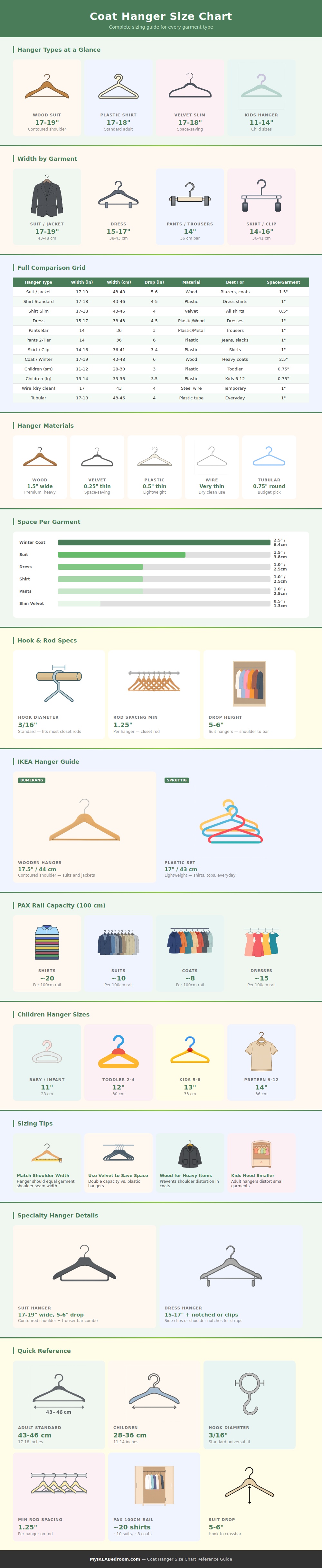
To maintain the quality of the clothing, the size and type of clothing hanger that you use must match the type of clothing that will be stored. If the hanger dont fit the garment, the clothing may stretch and develop dimple. Furthermore, if the garment are stored on a hanger that does not fit the clothing, the clothing will suffer permanent damage to its shape.
Therefore, the type of hanger that you should use for different type of clothing is based off the weight, width, and material of the clothing. Suit jacket need to be stored on thick and contoured hangers. If the hanger is too narrow for the suit jacket, the suit jacket may develop puckering on the armholes.
Pick the Right Hangers for Your Clothes
If the hanger is too wide for the suit jacket, the shoulder of the suit jacket may droop. People often store suit jackets on wooden hangers, as wooden hangers are often contoured to the shape of the suit jacket and is sturdy enough to support the weight of wool clothing. Button-down shirts can be stored on plastic hangers, but the silky fabric of the button-down shirts may slide off of the plastic hangers.
Velvet hangers can prevent the clothing from slipping off of the hanger, which is an advantage of use velvet hangers for button-down shirts. Additionally, velvet hangers are thinner than plastic hangers, which allows clothing store to store more clothing in there closets. However, the width of the velvet hanger must be appropriate for the shirt.
Dresses and skirts require different type of hangers than other types of clothing. Dresses with thin strap require hangers with notches and clips to prevent the straps from slipping off of the dress. Full skirts tend to have grippy end on the hangers to which they are stored.
Pants should be stored on hangers that feature a bar to allow the pants to be fold on the hanger without creating creases along the legs of the pants. The material of a hanger will determine the amount of space that a hanger will occupy and the amount of weight that a hanger can take. Wooden hangers are best for heavy coat because they are heavy and sturdy.
However, wooden hangers will take up more space on a closet rod. Plastic hangers are lightweight and cheap, so they are best for clothes that are not worn every day. Velvet hangers are slim, so they will allow you to increase the amount of clothing that can be store in a closet.
Wire hangers are the thinnest and are best used for clothing that is place within a dry cleaning bag. Children’s clothing need to be stored on smaller hangers because hangers for adults are far too large for children’s clothing. If an adult hanger is use on children’s clothing, it may stretch the shoulders of the clothing.
Using smaller hangers will preserve the proportion of the clothing. As the child grow, the size of the hangers should also be increased to suit there growing clothing. The thickness of the clothing hangers that you choose will limit closet space.
If the clothing that you have in your closet include winter coats, the hangers for the coats should be thick enough to provide space between the coats. Shirts, on the other hand, can be placed closer together on the closet rod. The thickness of the hangers will have to be taken into consideration when determining the capacity of the closet.
To avoid jamming your closet rod, use the information that the hanger dimension provide you to map out your closet rail. Many people make the mistake of buying hangers in bulk without first measuring the clothing that they have in their closet. Using a measuring tape to determine the width of the shoulder seam of the clothing and the width of the hangers will allow you to buy the correct size of hanger.
Separate your hangers according to the type of clothing that you have in your closet. For instance, use wide and sturdy hangers for your suit and slim hangers for your shirts. Using the appropriate hanger for each type of clothing will allow the clothing to maintain it’s shape and your closet will be more efficient.
