Changing Table Height Calculator
Estimate a comfortable changing surface height, base deck height, pad effect, rail clearance, caregiver compromise, and floor-space fit before placing a dresser-top or standalone nursery changing station.
Choose a realistic nursery setup, then adjust caregiver height, pad thickness, furniture height, rail clearance, and aisle space.
What the calculator is balancing
Work height: The target is based on estimated standing elbow height, then lowered for a natural changing posture.
Actual surface: The top of the pad matters more than the hard table deck because that is where the baby rests.
Shared users: If two caregivers use the table, the calculator blends their target heights and reports the compromise range.
Room fit: Front aisle, table depth, pad overhang, and side rail height are checked alongside the height result.
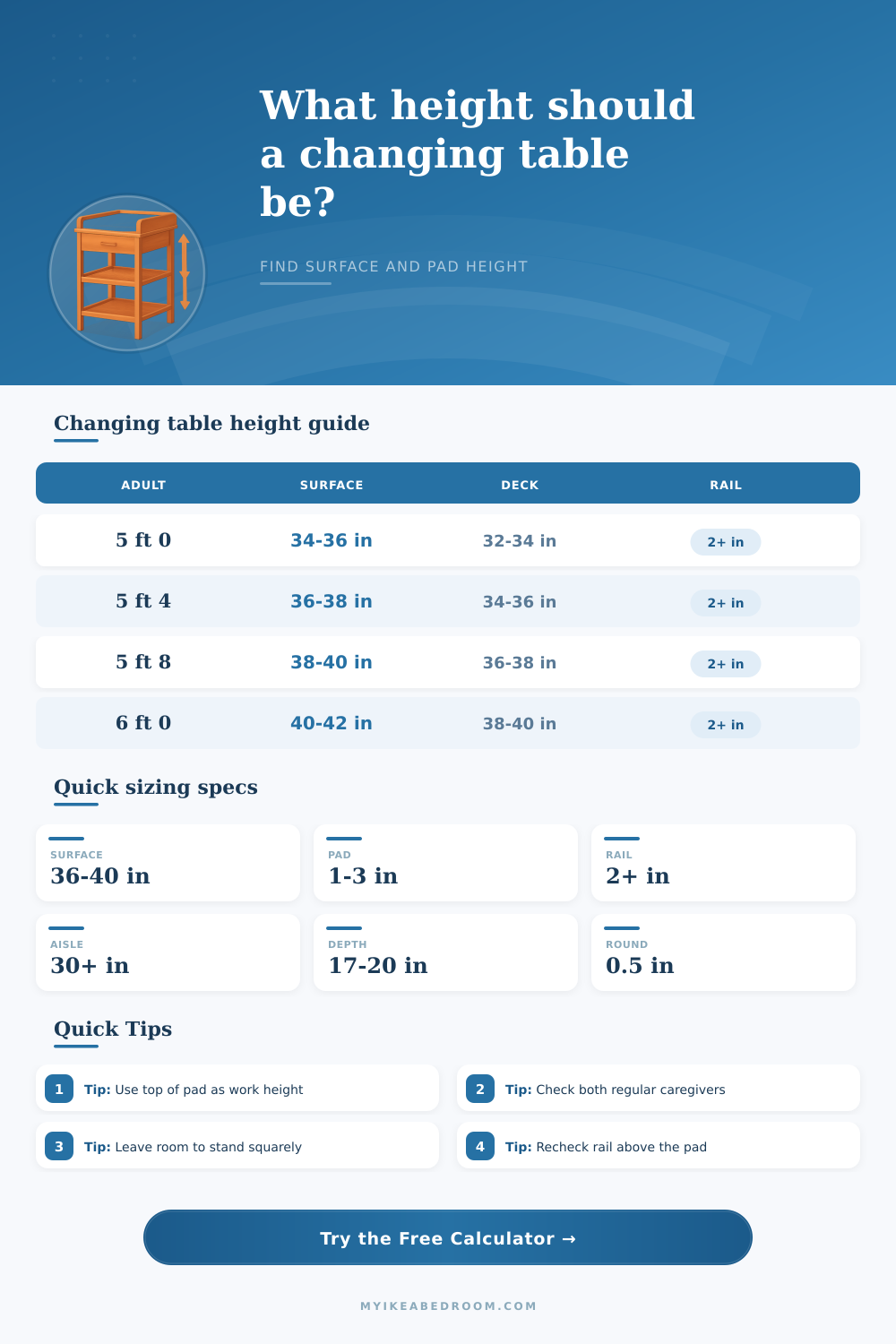
| Caregiver height | Estimated elbow | Typical surface band | Deck with 2 in pad | Notes |
|---|---|---|---|---|
| 5 ft 0 in / 152 cm | 37 in / 94 cm | 32 to 35 in | 30 to 33 in | Often needs a lower table or thinner pad. |
| 5 ft 4 in / 163 cm | 40 in / 101 cm | 35 to 37 in | 33 to 35 in | Fits many dresser-top setups. |
| 5 ft 8 in / 173 cm | 42 in / 107 cm | 37 to 39 in | 35 to 37 in | Usually comfortable on taller nursery furniture. |
| 6 ft 0 in / 183 cm | 45 in / 113 cm | 39 to 42 in | 37 to 40 in | May need risers or a taller dresser deck. |
| 6 ft 4 in / 193 cm | 47 in / 119 cm | 41 to 44 in | 39 to 42 in | Check rail and top-heavy furniture stability carefully. |
| Input | Low value | Typical value | High value | Calculator effect |
|---|---|---|---|---|
| Pad thickness | 1 in | 2 in | 3 in | Raises work surface and lowers rail-above-pad. |
| Rail above deck | 2 in | 4 in | 6 in | Must remain useful after the pad is added. |
| Front aisle | 24 in | 30 in | 36 in | More aisle lets the caregiver stand square to the table. |
| Table depth | 16 in | 18 in | 22 in | Depth should hold the pad without front overhang. |
| Supply reach | 48 in | 56 in | 64 in | Compared with the caregiver's comfortable reach zone. |
| Adjustment | Usual range | Best use | Watch point | Calculator reading |
|---|---|---|---|---|
| Thinner pad | 0.5 to 1.5 in | Surface is slightly too high. | Pad still needs a secure fit. | Reduces current surface height. |
| Furniture levelers | 0.25 to 1 in | Small height or floor corrections. | Keep all feet fully supported. | Good for small positive changes. |
| Stable riser feet | 1 to 3 in | Surface is too low for caregiver. | Do not make furniture unstable. | Good for moderate positive changes. |
| Different dresser | 3+ in | Target height is far away. | Confirm anchors and surface depth. | Best for large changes. |
| Scenario | Caregiver | Current surface | Likely target | Common result |
|---|---|---|---|---|
| Dresser-top pad | 5 ft 6 in | 37 in | 37 to 39 in | Usually close with a 2 in pad. |
| Compact table | 5 ft 2 in | 35 in | 34 to 36 in | Often comfortable without adjustment. |
| Tall caregiver | 6 ft 1 in | 37 in | 40 to 42 in | May need taller furniture. |
| Two caregivers | 5 ft 3 and 6 ft | 38 in | 37 to 40 in | Compromise height works if both can stand close. |
| Thick pad setup | 5 ft 4 in | 39 in | 35 to 38 in | May feel high if deck is already tall. |
Measure the actual pad top. Foam pads compress slightly, but the uncompressed pad top is the cleanest planning height for comparing setups.
Stand where changing happens. A table can be the right height and still feel awkward if a drawer, crib, or wall keeps you too far back.
Check the raised edge after the pad. A thick pad can reduce the useful side rail height more than expected.
Anchor and stabilize furniture. Height changes should not make the dresser, table, or changer less stable.
The changing table: Because your ability to tolerate bad angles diminishes quickly, set it up so it’s right for your body rather then adjusting your posture to match the furniture.
Many new parents purchase something that fits with their home decor. Bad idea! You’ll end up straining your shoulders and back, and your posture will suffer.
How to Set Up Your Changing Table Correctly
Set it up so your spine is straight and your arms are close to 90-degree angles at your elbow. The tool figures out what that target would of be for you (based off how tall you are when standing and what kind of pad thickness you’re using). Why? Because the pad contributes actual height to the surface. Two inches of padding make a big difference. Without accounting for that, you’ll have no choice but to slouch forward and turn what was meant to be a short task into a strain event.
The general-purpose dresser is typically about 35″ tall, which suits those who stand five feet four to five feet eight. Shorter adults often find themselves craning upward or lifting the baby awkwardly. Taller folks, of course, can end up bending down as well. You would never know it because their backs seems so straight while they do it.
The calculation takes into account your overall height and then deducts an estimate for the “posture drop.” That’s the buffer zone so you’re resting on the item instead of having to reach for it. A little bit of tweaking the inputs makes a big difference in comfort over time.
The trick gets more interesting when there’s two caregivers who are both tall or short (or one tall and one average). Maybe try going halfway? Well, no. Ergonomics isn’t like that; it’s actualy better to aim slightly higher than average. Well, no. Ergonomics isn’t like that. If one person is taller and one is average, better shoot for above-average height since it’s easier on your lower back to reach downward than upward. The tool puts all of this together and shows you where the middle ground is.
This isn’t about making everybody happy; it’s about preventing injury.
Sometimes, it’s because of space: It’s either a deep dresser that pushes the pad too far back or a small changing table with a lower surface different than you’d like. Or perhaps a crib is in the way, preventing you from standing squarely on the surface, so even if it were the ideal height, it wouldn’t feel right. As this reference data illustrates, horizontal distance (front clearance) matters as much as height. And you want enough space to get your feet planted solidly without having to lean forward.
Lastly, inspect those side rails. Sometimes the pad adds so much bulk that the side rail isn’t as tall as you think. After laying down the pad, always go around to see how much is left. A single inch more between you and the ground makes all the difference in the world when things gets crazy.
This isn’t just about having a place to change diapers but managing friction… And the appropriate height will help your body move instead of hinder. Years after the baby has outgrown this station, your back will thank you.