
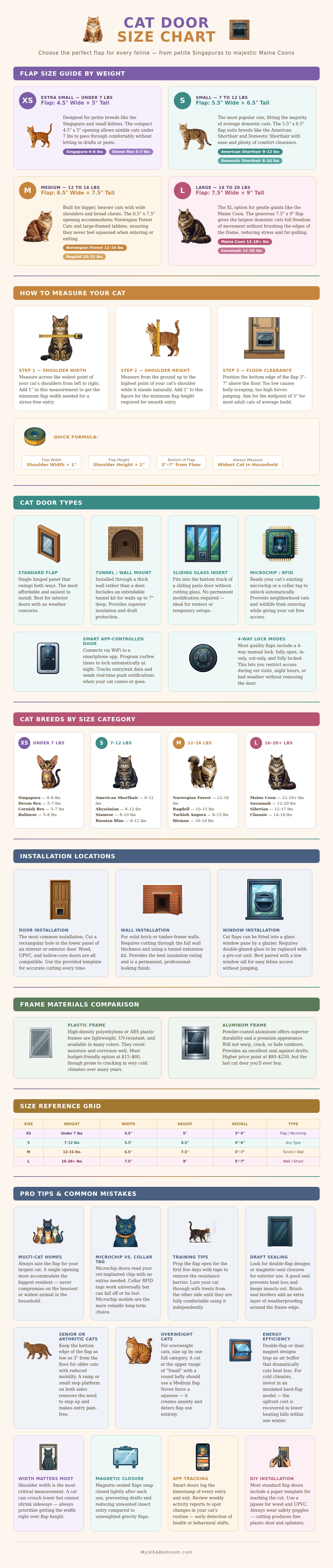
When an person is selecting a cat door for a home, the person must ensure that the cat door is the correct size for the specific cat that will use the cat door. If a cat door is too small for the cat that is to use the door, the cat may struggle to move through the cat door, or it may refuse to use the cat door altogether. A cat door is to allow a cat to pass through a barrier in the home, so the cat door must be sized appropriately to allow the cat to pass through the door without difficulty.
A person can use a weight chart in the selection of the correct sized cat door for a specific cat. The weight chart includes four standard size of cat door flaps and the weights of cats that are covered by each size. The weight chart can help a person remove the guesswork involved in purchasing a cat door.
How to Choose the Right Cat Door
Many cats falls into the middle two size categories indicated on the weight chart. Consequently, these two sizes of cat door tend to sell out at stores. The smallest size of cat door is for the breed of cat that is considered to be the smallest or for kittens under seven pound.
The largest size of cat door is for the large breed of cat. The middle two sizes of cat door are for the majority of domestic cats, and these sizes allow the cat to walk through the door without having to duck or twist its body. A person should use the weight chart to select the size of the cat door for there cat.
However, the person should also measure the cat. Weight does not necessarily indicate the size of the cat. For example, a cat may have broad shoulders, but not weigh much.
The person should measure the widest part of the cats shoulders and add one inch of clearance. Additionally, the person should also measure the height of the cat from the floor to the top of the cats shoulders. Adding one inch of clearance to the measurement of the width of the cats shoulders will ensure that the cat is not brushing against the frame of the cat door.
Preventing a cat from brushing against the frame will prevent the cat from becoming hesitant to use the cat door. The bottom edge of the flap of the cat door should be several inches above the floor to prevent the cat from scraping its belly against the floor, but not so high that the cat will have to jump through the flap of the cat door. A person must decide what type of cat door will work in the home.
For example, a person can purchase a cat door that is to be used for interior doors of the home, or a cat door that is to be placed on walls or patio tracks of the home. Additionally, some cat doors provide for better insulation of the home than others, some allow for better security of the home, and others can be installed more permanently than others. For example, a microchip or RFID cat door allows a person to control which cats enters the home, since the microchip cat door will permit only that specific cat to enter the home, but prevent the other cats in the neighborhood from entering the home.
The material of the cat door can be another factor that a person should consider when purchasing a cat door. For instance, plastic cat doors are less expensive and easy to find, but they may break in cold weather. Aluminum cat doors cost more money, but last longer and maintain a better seal for the home over many years.
If the cats in the home use the cat door during the winter months, the energy efficiency of the aluminum cat door may be more important than the energy efficiency of a plastic cat door. After a person has determined the size of the cat door needed for the cat, the person must train the cat to use the cat door. For example, leaving the cat door flap open for a few days will allow the cat to become accustomed to using the cat door.
After the cat has become accustomed to using the cat door, the person can begin to lower the flap to the point at which it will swing open the door. Additionally, using treats to encourage the cat to walk through the cat door may help the cat to learn to use the door, although some cats may only need a few days to become accustomed to the existence of the cat door. Senior cats or overweight cats require special consideration by the person that is purchasing the cat door.
For instance, older cats may have stiff joints, so a lower height for the flap of the cat door may be more appropriate. Additionally, some homes may have a step near the cat door to accommodate the joint issues of the older cats. Additionally, the size of the flap of a cat door may need to be larger for an overweight cat than a leaner cat of the same weight.
Finally, a person should never force a cat through a cat door; if the cat begins to feel any anxiety associated with the cat door, it will refuse to use the cat door. Therefore, use the weight chart to select a size for a cat door, but also measure the cat and consider in which part of the home the cat door will be placed. Additionally, it may be necessary to consider other cats in the home that may have different weights or sizes.
The correct cat door will allow a cat to move through the door without any friction; the incorrect cat door will create friction for a cat whenever it passes through the door.
