Carpet Seam Length Calculator
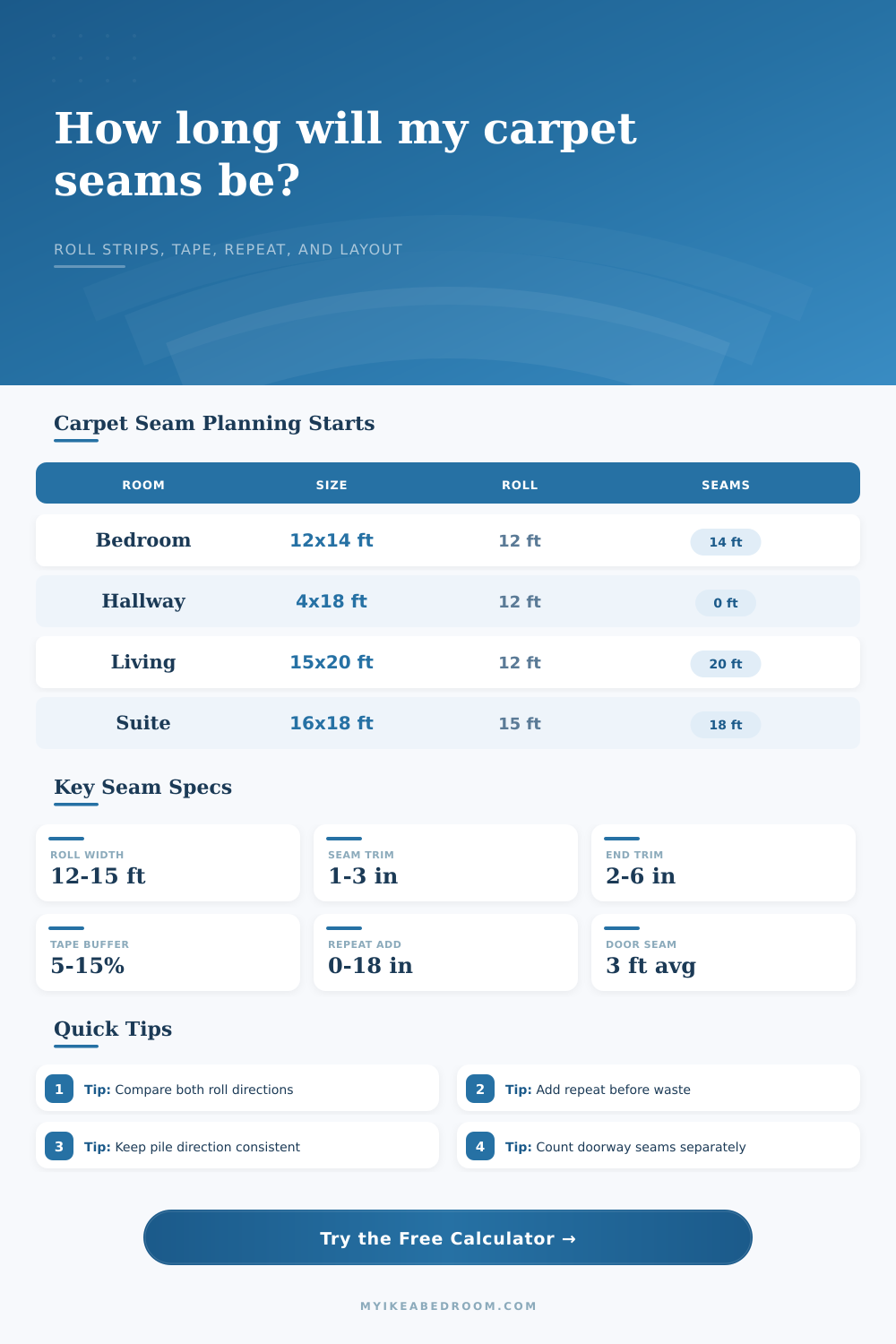
Estimate carpet strip count, interior seam length, seam tape length, roll yardage, pattern-repeat allowance, and the cleaner roll direction for bedrooms, halls, suites, stairs landings, and open rooms.
Each preset loads a real room size, roll width, seam allowance, pattern repeat, transition count, tape buffer, carpet construction, and preferred roll direction.
Carpet seam results
Cut pile plush
Seam visibility: moderate, especially across light sources.
Planning factor: keep pile direction identical on every strip.
Berber loop
Seam visibility: higher when loop rows drift.
Planning factor: use more seam trim and avoid tiny filler strips.
Patterned carpet
Seam visibility: depends on repeat match.
Planning factor: pattern repeat can add length to each strip.
Commercial low pile
Seam visibility: lower texture, but directional shading matters.
Planning factor: minimize cross-light seams in open rooms.
| Nominal roll width | Metric width | Room span with no interior seam | Typical use |
|---|---|---|---|
| 12 ft | 3.66 m | Up to 12 ft in one piece | Bedrooms, halls, many apartments |
| 13 ft 6 in | 4.11 m | Up to 13.5 ft in one piece | Wider bedrooms and small living rooms |
| 15 ft | 4.57 m | Up to 15 ft in one piece | Large bedrooms and open rooms |
| 6 ft goods | 1.83 m | Up to 6 ft in one piece | Specialty runners and modular cuts |
| Allowance | Common range | Metric range | Calculator role |
|---|---|---|---|
| Seam trim | 1 to 3 in | 2.5 to 7.6 cm | Adds extra width for each joined strip edge |
| End trim | 2 to 6 in | 5.1 to 15.2 cm | Adds length at both ends of every roll strip |
| Doorway seam | 30 to 36 in | 76 to 91 cm | Adds separate tape length for room transitions |
| Tape buffer | 5 to 15% | Same percent | Rounds up tape needs for cuts and positioning |
| Pattern repeat | Repeat in metric | How strip length is rounded | Best planning use |
|---|---|---|---|
| 0 in | 0 cm | No pattern rounding | Solid, heathered, or random texture |
| 6 in | 15.2 cm | Round each strip up to 0.5 ft | Small geometric repeats |
| 12 in | 30.5 cm | Round each strip up to 1 ft | Medium pattern or stripe match |
| 18 in | 45.7 cm | Round each strip up to 1.5 ft | Large repeats and visible motifs |
| Room plan | Finished size | 12 ft roll result | 15 ft roll result |
|---|---|---|---|
| Bedroom | 12 ft by 14 ft | 0 ft seam if width fits roll | 0 ft seam either direction |
| Wide bedroom | 14 ft by 16 ft | 16 ft seam length | 0 ft seam if 14 ft span fits |
| Living room | 15 ft by 20 ft | 20 ft seam length | 0 ft seam if exact 15 ft width works |
| Family room | 18 ft by 24 ft | 24 ft seam length | 24 ft seam length, less filler width |
Roll direction: a layout with slightly more roll length can still be cleaner when it removes a long seam from the main sightline or doorway path.
Pattern repeat: add end trim first, then round each strip up to the next repeat; doing it once for the total roll can undercount matching waste.
Most people believe that all they have to do when buying carpet is measure out their square footage and order however many yard will fit the space. But then there’s the fact that carpet is sold as fixed width rolls (typically 12 or 15 foot) which means that for most room, you’re going to be joining some number of strips together. And the place where that join happens…that’s your seam.
If not done carefuly, a poorly placed seam can trip you up with ripples underfoot, show a dark line across your floor, or simply fail after a few month of use. Before you even pick up a pair of scissors, this page’s carpet calculator lets you see how those seams will turn out in your room. From the length of the join to how much waste and tape you’ll need, it takes an abstract set of room dimensions and turns them into real steps towards getting the carpet installed.
How to Plan Your Carpet Seams
First up: How will your carpet rolls be oriented? Will they go down a hallway cross-wise across the room, or will they run parallel to its length? Each orientation require a certain amount of carpet (and yields a slightly different number of seams), so this is the first big choice.
Usually running with the room’s grain reduces the number of seams, but leaves you with longer skinny filler strips that’re hard to find matches for. On the other hand, running against the grain could mean more waste from the carpet, but will yield larger main pieces and cleaner cuts overall. Because the tool auto-computes both options, it can shows you where fewer joins fall into areas that see higher traffic. This is another little savings, but it is an important one for the end result.
Don’t forget to add seam allowance, that’s not excess carpet destined for the trash heap, but the space left by the installer to cut off rough edges evenly. Most plushes requires two inches on each side, though some tight-loop berber may call for as much as three due to its stiffer weave, which is less forgiving when it was cut wrong. Underestimating this cushion could result in the installer having to steal some from elsewhere in the roll to complete a cut-on-the-short-end. This means you could lose your pile direction or pattern matching. To prevent this, the calculator includes this trim amount in total length so you have enough material for real-world fabric cutting.
Those patterned carpets add some layers of complexity. Unlike their solid color counterparts, each time you cut a strip there’s a good chance you’ll lose part of the pattern repeat at the end of the roll. You lose real yardage that you will never see on your floor again. To account for this, the calculator includes a field for the length of the pattern repeat which lets the system round up your strip needs to the next full motif. Otherwise, you may find halfway through your install that you are three feet short of making the corner look just right. Better to know in advance.
Seams through doorways and other transitions need consideration as well. Don’t plan on having a seam smack-dab in the middle of the doorway that will get shoes kicked across every day. Typicaly, installers will run the join a few feet inward from the doorway so that the path of travel stays uncluttered with seams. The tool adds an allowance for any transition seams you may have between rooms or flooring materials. This is typically just enough for tape and carpet to fill in the gap and maintain strength along the edges, but it doesn’t add visible clutter to your major living areas.
To wrap up, planning ahead is the best way to get good carpet. Instead of getting stuck with the uncomfortable call back to the salesman because you ran out of yardage or the seams aren’t lining up correctly, run the math before heading into the store. You’ll be ready to know how many strips you need, where the tape will go, and what to allow for waste. Once you get going with the cut, it won’t change the math. But it’ll sure make you confident knowing what you’re in for. You should of measured twice, add the seams, and let the installer loose on it without any surprises.