Bed Runner Width Calculator
Calculate finished bed runner width, runner length, side drop, foot drape, cut size, binding, shrinkage allowance, fabric panels, and visual coverage for a custom or ready-made bed runner.
Choose a bed setup, then adjust the measured mattress, runner style, drop, foot drape, shrinkage, and fabric width.
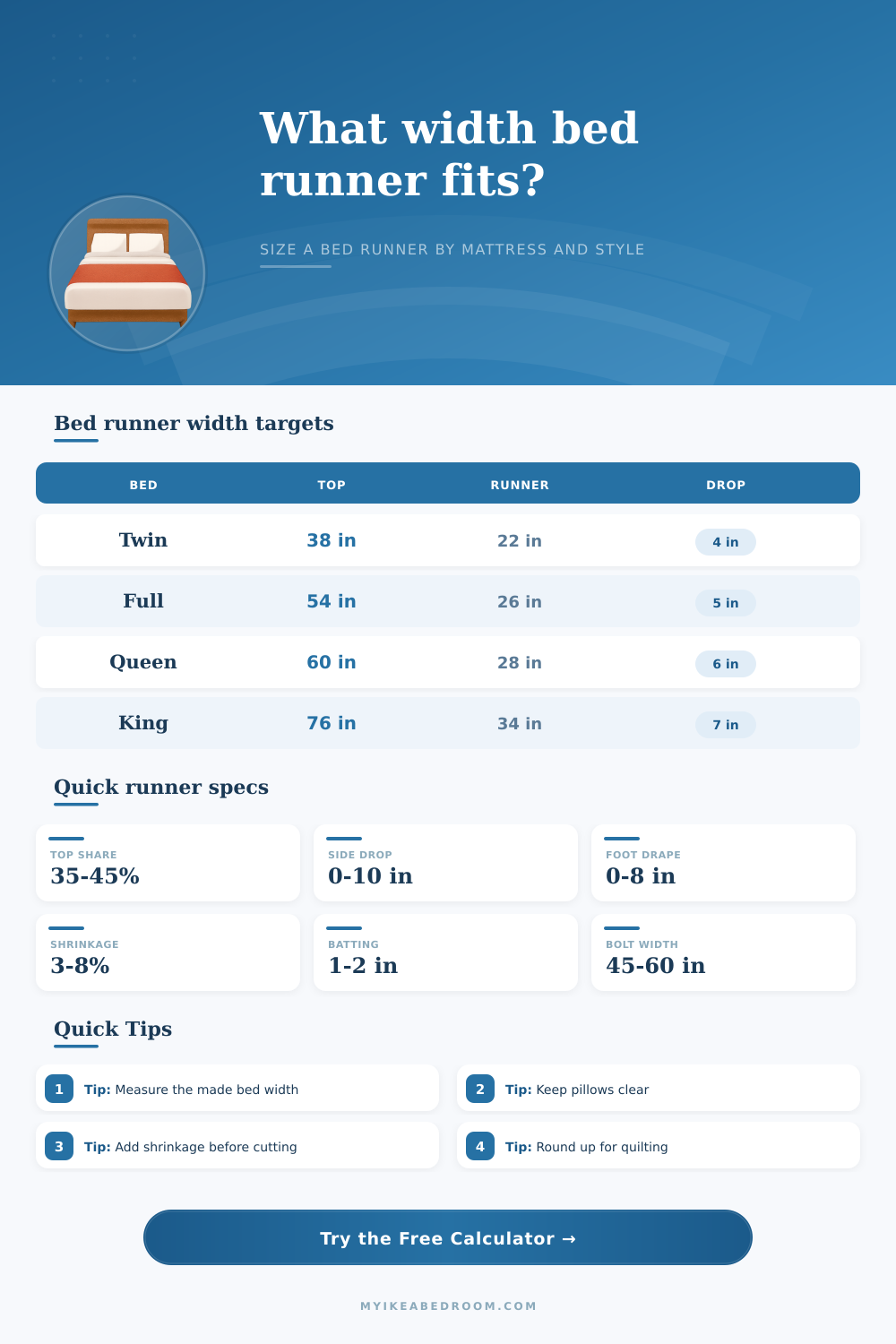
| Bed size | Mattress top | Slim runner | Balanced runner | Wide runner |
|---|---|---|---|---|
| Twin | 38 x 75 in | 18-22 in wide | 22-26 in wide | 26-30 in wide |
| Full | 54 x 75 in | 22-24 in wide | 26-30 in wide | 30-34 in wide |
| Queen | 60 x 80 in | 24-26 in wide | 28-32 in wide | 34-38 in wide |
| King | 76 x 80 in | 28-32 in wide | 34-40 in wide | 42-48 in wide |
| California king | 72 x 84 in | 28-32 in wide | 34-38 in wide | 40-46 in wide |
| Construction | Extra layer plan | Take-up allowance | Best use |
|---|---|---|---|
| Single layer | Top fabric only | 0 in | Light seasonal accent or scarf-style runner |
| Lined runner | Top plus backing | 0.5 in | Cleaner underside and better drape |
| Quilted | Top, batting, backing | 1 in | Structured runner with soft loft |
| Patchwork quilted | Pieced top, batting, backing | 1.5 in | Scrap or panel runner with visible quilting |
| Woven textile | Finished textile | 0 in | Ready-made throw or blanket conversion |
| Fabric width | Usable width | One-panel runner | When piecing starts |
|---|---|---|---|
| 42 in quilting fabric | 40 in | Twin through queen balanced widths | Wide king or large drops |
| 45 in cotton fabric | 43 in | Most queen runners and slim king runners | Wide king with side drops |
| 54 in decorator fabric | 52 in | Most king decorative runners | Oversized blanket-style runners |
| 60 in wide fabric | 58 in | Wide king and cal king runners | Rare unless using deep drops |
| 90 or 108 in sheeting | 88+ in | Oversized runners without center seams | Usually no piecing needed |
The finished width is the final visible left-to-right runner size after hemming, quilting take-up, and shrinkage.
Use this when buying a ready-made bed runner.
The cut width adds hem or binding allowance, shrinkage buffer, and construction take-up before sewing.
Use this when cutting fabric.
Top share is the runner width on the mattress top as a percentage of bed width before side drop is added.
Raise it for a fuller foot-of-bed look.
Foot drape is the length that hangs beyond the mattress foot or down over a footboard-free bed end.
Set it to zero for a runner that stays on top.
Measure the made bed. A comforter, folded duvet, or thick quilt changes the runner drop more than the mattress label does.
Check footboard clearance. If the runner must sit inside rails or a footboard, reduce foot drape and side drop before cutting.
A bed runner must have the correct proportion to make a bed runner look intentional rather than accidental. A bed runner that is too narrow will look like an afterthought to potential viewer of the bed. Additionally, a bed runner that is too wide will compete with the pillows and the bedding on the bed.
The person buying the bed runner must decide how wide the bed runner should be in relation to the mattress, how far it should hang over an edge of the bed, and how much extra fabric is needed for shrinkage and finishing. These decisions are essential because they will determine whether the bed runner looks good on the bed or if it appear to be fighting against the other bedding on the bed. The measurements that is entered into the calculator are important because they represent the actual decision that the owner of the bed runner will make.
How to Measure and Choose a Bed Runner
The person must measure the width and length of the mattress, but also the depth of the bed must be measured in relation to the comforter that will be sleeping on the bed. If the person intend to use a mattress topper, the thickness of that topper must be measured as well. The width style options allow the person to determine the percentage of the mattress that the bed runner should cover.
The side drop and foot drape measurement are only relevant and meaningful for those who must clear a footboard or those who merely want the bed runner to sit within the bed rails. Finally, the construction of the bed runner will affect the appearance and the way in which the bed runner is constructed. If the bed runner is to be single-layered, it will require less fabric than a quilted bed runner.
Additionally, if the bed runner is to be quilted, it will require batting. Each of these construction will affect the size on which the bed runner is cut and how it will drape from the bed. Finally, an allowance must be made for shrinkage; otherwise, the bed runner may be too short once it is washed for use on the bed.
The width of the fabric bolt will determine whether you can cut the bed runner from one panel or if you will need to use multiple panel to create your bed runner. The choice of how many panels of fabric to use will impact the yardage and the placement of the seam on the bed runner. The placement and depth of the bed runner will impact how the bed runner will sit upon the bedding.
If the bed runner is too low upon the bedding, the bed runner may dissapears beneath the bedding. If the bed runner is too close to the side of the bed, the bed runner may appear too short upon the bed when the bedding is made up. These relationship are calculated within the tool once you enter the measurements of your bed and bed runner.
People often make mistake with bed runners because they measure their mattress without the comforter. The comforter add to the height of the bed. If the height of the comforter is not accounted for, the bed runner may either hang too low or too high on the bed.
People also often make mistakes in selecting a top share that may look good with the other bedding in the bedroom but appear too narrow when viewed on the bed with the pillows. The reference table can help guide people in understanding the appearance of the bed runners of different width on the beds of different sizes. The width of the fabric impacts the panels from which the bed runner will be cut.
If the width of the fabric is narrow, more panels may be required to create a wide bed runner. More panels implies more seam in the bed runner. Conversely, fabrics with wide bolt reduce the need for seams in the bed runner.
However, such fabrics tend to cost more per yard of fabric. The tool account for the usable width of the fabric bolt (excluding selvedges) and the number of layers of fabric required to create the bed runner. The finished width and finished length of the bed runner will tell you what type of bed runner you will be making.
However, the cut size of the bed runner is sold with allowance for the seam allowances that you will use when constructing the bed runner. The yardage and panel count will provide a shopping list for the bed runner and will help prevent you from guessing at the amount of fabric required to construct your bed runner. The usefulness of these calculation is only useful if you enter the dimension of your actual bed and bed runner into the calculator.
When all of these factor are considered together, your bed runner will settle into your bedding instead of sitting upon the bedding.