Banquet Tablecloth Size Calculator
Size round, rectangle, square, half-round, and serpentine banquet linens from table dimensions, height, drop style, hem allowance, shrinkage, and event table count.
Load a common event table and linen goal, then fine-tune the drop, hem, shrinkage, and number of matching tables.
How this calculator sizes the cloth
Rectangles and squares: cloth length equals table length plus two drops, hem allowance on both sides, and shrinkage allowance. Width follows the same method.
Rounds: cloth diameter equals table diameter plus two drops, hem allowance, and shrinkage. Half-round and serpentine presets use the same practical rental-linen sizing rule unless you are custom cutting shaped linen.
Standard match: the calculator compares the rounded result with common event linen sizes and reports the closest option that covers the requested drop.
Seated dinner
Prioritize a 10-15 in side drop on guest sides. Longer drops look formal but can bunch at knees, chair arms, or wheelchair positions.
Buffet or service
Use formal or floor length drops to hide table legs, storage bins, and service supplies. Check that staff can lift corners safely.
Cocktail tables
Highboys often use long round cloths tied at the center post. Add enough diameter for the table height, knot, and floor clearance.
| Table type | Top size | Common seated linen | Common floor linen | Notes |
|---|---|---|---|---|
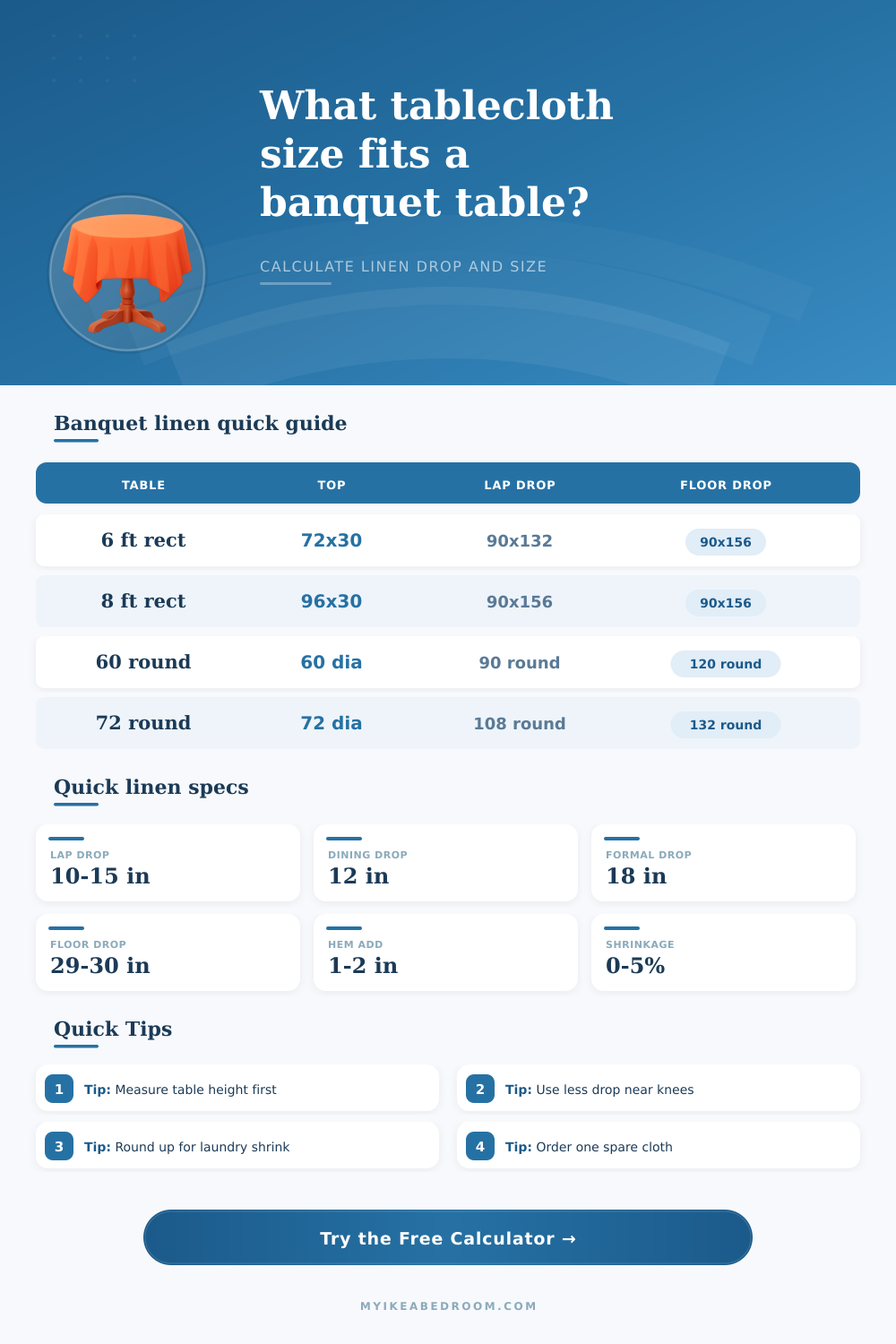
| 6 ft rectangle | 72 x 30 in | 90 x 132 in | 90 x 156 in | Standard dinner or registration table. |
| 8 ft rectangle | 96 x 30 in | 90 x 156 in | 90 x 156 in | Long buffet, family-style dining, or seminar rows. |
| 60 in round | 60 in diameter | 90 in round | 120 in round | Common 8-seat wedding or banquet round. |
| 72 in round | 72 in diameter | 108 in round | 132 in round | Large 10-seat table; check room aisle width. |
| 30 in highboy | 30 in diameter | 90 in round | 120 in round | Long cloths are often tied around the post. |
| 48 in square | 48 x 48 in | 72 x 72 in | 108 x 108 in | Useful for cake, gifts, or small displays. |
| Drop style | Drop each side | Best use | Comfort note | Visual result |
|---|---|---|---|---|
| Casual | 6-8 in | Training rooms, casual meals | Usually clear of knees and chair arms. | Shows more table legs. |
| Lap dining | 10-15 in | Seated dinners | Most balanced seated option. | Clean dining drape. |
| Formal | 16-22 in | Head tables, displays, buffets | May touch laps on low chairs. | Elegant partial coverage. |
| Floor length | Table height | Banquets, stages, buffets | Best where guests do not sit on all sides. | Hides legs and storage. |
| Linen shape | Common sizes | Typical table match | Drop range | Planning note |
|---|---|---|---|---|
| Rectangle | 60 x 102, 90 x 132, 90 x 156 in | 6 ft and 8 ft banquet tables | Lap to floor | Longer size controls end drop. |
| Round | 90, 108, 120, 132 in | 48, 60, and 72 in rounds | Lap to floor | Diameter sets drop evenly all around. |
| Square | 72 x 72, 90 x 90, 108 x 108 in | Card, cake, or square dining tables | 12 to 30 in | Works when all sides are the same. |
| Overlay | 54 x 54, 72 x 72 in | Accent layer over base cloth | Short accent | Use over a full base cloth for color. |
| Allowance | Typical value | When to use it | Effect on size | Check before ordering |
|---|---|---|---|---|
| Finished rental linen | 0 in hem | Using stocked rental inventory | No extra cut size | Confirm actual rental dimensions. |
| Simple sewn hem | 1 in per side | Basic folded or serged finish | Adds 2 in each dimension | Match the workroom finish. |
| Deep hem | 2 in per side | Heavier custom cloths | Adds 4 in each dimension | May need more yardage width. |
| Shrinkage | 2-5% | After repeated washing | Multiplies final cut size | Ask laundry or fabric supplier. |
For seated guests: test the longest side drop with the actual chair style. A beautiful floor-length cloth can feel cramped if guests need to pull chairs under the table.
For event counts: keep at least one spare per linen type. Spares cover stains, setup mistakes, last-minute table additions, and mismatched laundry lots.
When choosing tablecloths, don’t just measure the table top; you must also account for its drop. A tablecloth serves as architecture for your event, and getting it wrong will cause chaos. Chairs scrape on bunched linen; waiters fight to center their settings amidst piles of cloth; and guests trip over the excess fabric. Getting it right makes everything in the room seem intentional.
To determine correct size, measure how far below the table’s edge you would like the fabric to fall. For a typical seated dinner, aim for a dozen inches of drop, which positions the hem at guest’s knees, a neat look that doesn’t impede legs or wheelchair footrests. Anything less than a dozen looks unfinished and casual, while anything more (eighteen inches or so) becomes a tripping hazard. Reserve floor-length drops for buffet stations and head tables where nobody will be sitting directly next to the cloth.
How to Choose the Right Tablecloth Size
To use the calculator, you’ll first want to enter how much you’d like your drapery to drop. Next, you should understand how the fabric behaves: natural fabrics (like linen and cotton) shrinks during washing; even more durable synthetic blends can get tighter with age. You’ll want to subtract some number of inches from your initial cut to allow for shrinkage. When laundered three times, what was a perfect fit at first might feel tight. Enter this as a percentage and the calculator takes care of the rest. This is a tiny tweak to the math, but it prevents wasting money on custom linens that actualy don’t fit.
Another question: do you plan on renting your linens or are you sewing them yourself? If the latter, you want to include hem allowance on every side. If the former, you won’t have any unfinished hems, which means you don’t enter anything into those fields. The tool knows the difference and adjusts accordingly.
How does table shape affect fit? A round table has an even drop on all sides so it is very forgiving. Rectangular: Because width and length act different, they needs more precision. For a typical 6′ rectangular table, you’ll typically want to use a 90″ cloth to achieve a nice lap drop. An 8′ table will need much more, sometimes up to 156″ for a full drape! The calculator shows your custom measurement next to these common rented dimensions. Why is this helpful? Event centers stock standard sizes. If your custom calculations aligns with a standard rentable size, you can save hundreds of dollars on custom cutting fees.
Don’t forget about those spare linens. Somewhere between setting up and sitting down, someone will spill something on the tablecloth that can never be cleaned. Red wine, ketchup, marker pen, it’ll happen. Order one extra of every linen type. That way if disaster strikes (and it will), there’s a clean tablecloth ready with no need for panicking. Set this in the tool so you know exactly what quantity to request from your vendor or tailor.
Think about the guest’s experience with the drape. Does it drag on the floor? Sure, it might look lovely. But then what happens when someone attempts to slide into their seat? If at all possible, test out how much room the drape takes up visually alongside your chairs. Low banquet chairs requires less space than high-backed Chiavaris. Try them both out and you’ll find the sweet spot… Elegance that doesn’t impede function.
Balancing how the fabric acts, the desired drape, and size of the tables results in something that just feels…calm. You should of planned for this. And that, my friends, is what good event planning looks like. It is not about perfect symmetry, but about making sure there is no obstacle to folks sitting down and enjoying one another’s company.