Art Size Above Bed Calculator
Estimate total art width, panel width, vertical gap, and wall hanging height from bed width, headboard height, art ratio, layout count, and ceiling clearance.
Start with a real bedroom layout, then fine-tune the bed width, headboard height, ratio, gap, and art count.
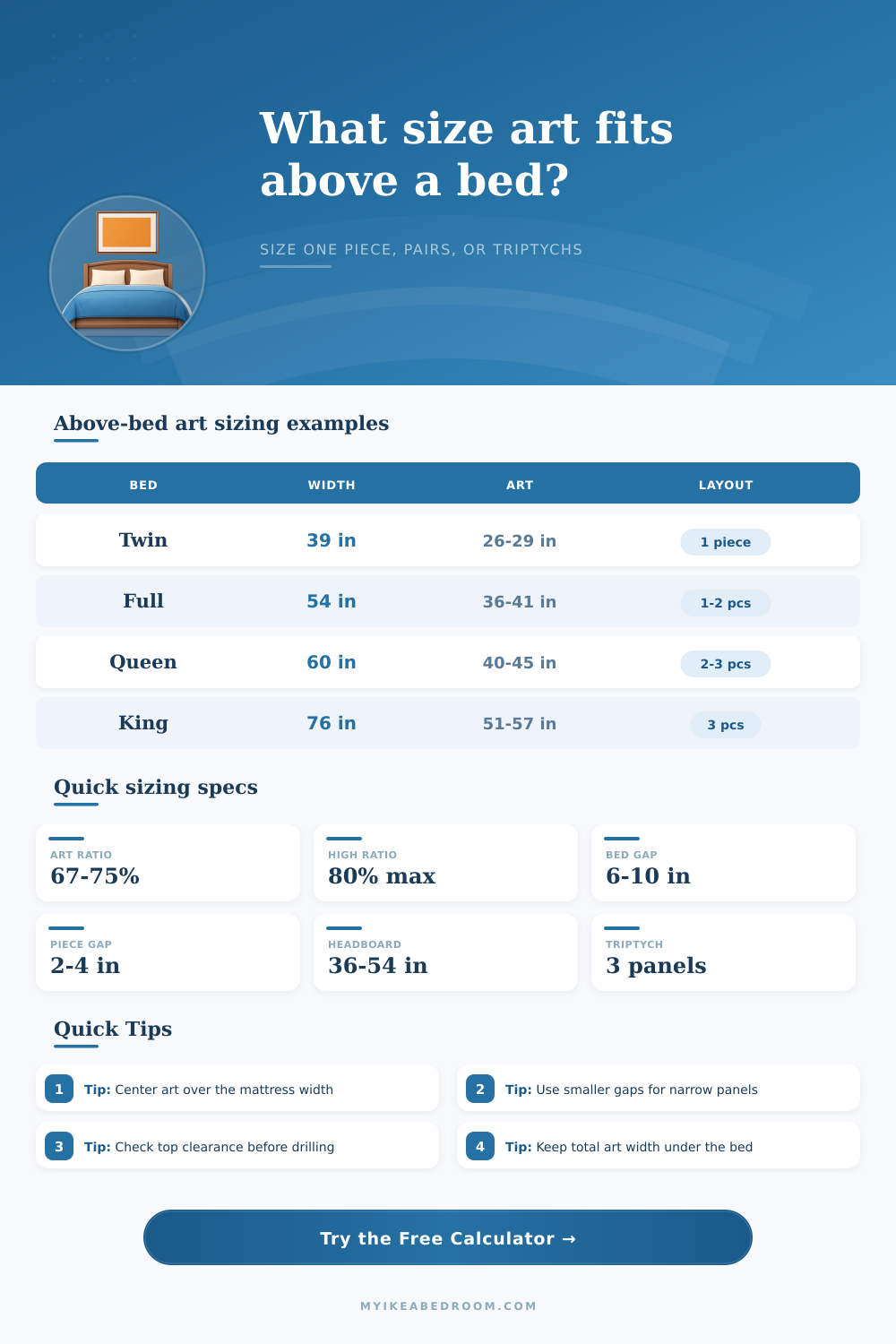
| Bed size | Mattress width | 67% art span | 72% art span | 75% art span |
|---|---|---|---|---|
| Twin | 39 in / 99 cm | 26 in / 66 cm | 28 in / 71 cm | 29 in / 74 cm |
| Full | 54 in / 137 cm | 36 in / 92 cm | 39 in / 99 cm | 41 in / 103 cm |
| Queen | 60 in / 152 cm | 40 in / 102 cm | 43 in / 110 cm | 45 in / 114 cm |
| King | 76 in / 193 cm | 51 in / 129 cm | 55 in / 139 cm | 57 in / 145 cm |
| California king | 72 in / 183 cm | 48 in / 123 cm | 52 in / 132 cm | 54 in / 137 cm |
| Headboard situation | Typical top height | Suggested art gap | Layout note |
|---|---|---|---|
| No headboard | 24-30 in / 61-76 cm | 10-14 in / 25-36 cm | Use mattress top or pillow line as the lower visual anchor. |
| Low headboard | 36-42 in / 91-107 cm | 8-10 in / 20-25 cm | A single wide piece or pair usually feels calm. |
| Medium headboard | 44-52 in / 112-132 cm | 6-9 in / 15-23 cm | Keep art height moderate so the top does not crowd the ceiling. |
| Tall headboard | 54-64 in / 137-163 cm | 4-7 in / 10-18 cm | Use shallower art, smaller panels, or a narrower span. |
| Layout count | Best use | Common gap | Piece width formula |
|---|---|---|---|
| 1 piece | Large canvas, framed print, textile, or panel | 0 in / 0 cm | Total span equals piece width. |
| 2 pieces | Pair over queen, full, or bedside symmetry | 2-4 in / 5-10 cm | (Total span - one gap) divided by 2. |
| 3 pieces | Triptych over queen, king, or low headboard | 2-3.5 in / 5-9 cm | (Total span - two gaps) divided by 3. |
| 4 pieces | Grid row, small frames, or narrow panels | 1.5-3 in / 4-8 cm | (Total span - three gaps) divided by 4. |
| Art shape | Height as piece width | Where it works | Ceiling caution |
|---|---|---|---|
| Panorama | 35-50% | Tall headboards and low ceilings | Usually easiest to keep clear above. |
| Landscape | 50-70% | Single wide art above queen or king beds | Check top edge if headboard is high. |
| Square panels | 100% | Pairs, triptychs, and graphic sets | Total width grows fast when gaps are wide. |
| Portrait panels | 120-150% | Rooms with no headboard or high walls | Needs more ceiling clearance above bed. |
Best for: calm, centered layouts.
Use the total span as the frame width and center it over the mattress width.
Best for: symmetry with bedside lamps.
Keep the gap small enough that the two frames still read as one above-bed group.
Best for: wide beds and horizontal art.
The calculator subtracts two gaps before dividing the remaining span into panels.
Best for: small frames or modular prints.
Use tighter gaps and confirm the individual panels do not become too narrow.
Measure the real visual anchor. If the bed frame is much wider than the mattress, decide whether the art should align with the mattress, the headboard, or the full frame before using the bed width field.
Mock the top edge before drilling. A high headboard plus tall art can crowd the ceiling even when the width looks perfect, so tape the calculated bottom and top edges first.
To determine the size of art that should be placed above a bed, there are several specific measurement that must be considered. Ensuring that the art is the correct size for the bed will allow the art to look balance within the bedroom. Art that is too small for the wall will make it look like it is floating on the wall, while art that is too large may make the art appear like it is press against the headboard.
Using a calculator will allow a person to determine the dimension of the art that will best fit into the bedroom. The width of the art should be based off the width of the bed. The width of the art should have a specific width ratio to the width of the bed.
Choose the Right Size Art for Above Your Bed
Many people chooses a ratio between 2/3 and 3/4 of the width of the bed. Using a ratio of more than 80% of the width of the bed will cause the art to have too small margins on each side of the art. Using a ratio of less than 65% of the width of the bed may make the art appear too small for the bed.
Art ratios can be test in the calculator to determine the effect that each ratio will have on the art margins. The height of the art should be based upon the height of the headboard. For those with low headboards, the gap between the headboard and the art should be 9 or 10 inch high.
For those with tall headboards, the art should be hung closer to that headboard. For those without a headboard, the height of the mattress (or bed pillows) will determine the height of the art. The calculator will calculate the height of the bottom edge of the art by taking both the height of the headboard and the desired gap between the headboard and art into consideration.
The number of panels that are to be used for the art will impact the total span of the art. Gaps between those panels will also impact the total span of the art. Gaps between panels will take up some of the width of the total span of the art.
Using wide gaps between panels will create more space between the panels, but will make each panel narrow. The calculator will subtract the width of the gaps between the panels from the total width of the art to determine the width of each individual panel. The calculator can perform this subtraction of the width of the gaps between panels to ensure that each panel is the size that is desire.
The height of the ceiling in the bedroom will impact the height of the art that can be used. The height of the ceiling will determine the amount of clearance that the art will have to the ceiling. If the art is too close to the ceiling, the bedroom may begin to look crowdedly.
The calculator will determine if the top edge of the art is sufficiently clear of the ceiling by comparing the height of the ceiling to the height of the top edge of the art. Finally, the art can be test in the room before it is hung onto the wall. The edges of the art can be taped to the wall to determine how the art will look within the bedroom.
Other aspect of the bedroom, such as bedside tables, lamps, and pillows, will also impact how the art looks. Thus, these aspects should also be considered when hanging the art. While the measurements will allow for even the most precise dimensions for the art, the actual layout of the room will determine if that art is of the correct size for that bedroom.