
An accent color are the specific color that individuals use to add interest to a room. Many peoples use accent colors to avoid their neutral color rooms looking too plain. While individuals use neutral colors for their walls and large furniture piece in the room, they struggle with selecting the proper accent color for there rooms that will not make the room look too cluttered.
An accent color help to create balance in the room. Additionally, accent colors allow individuals to transform their neutral colored rooms into an interesting space in there homes. To use the accent color correct in a room, individuals should follow the 60-30-10 rule.
How to Use Accent Colors in a Room
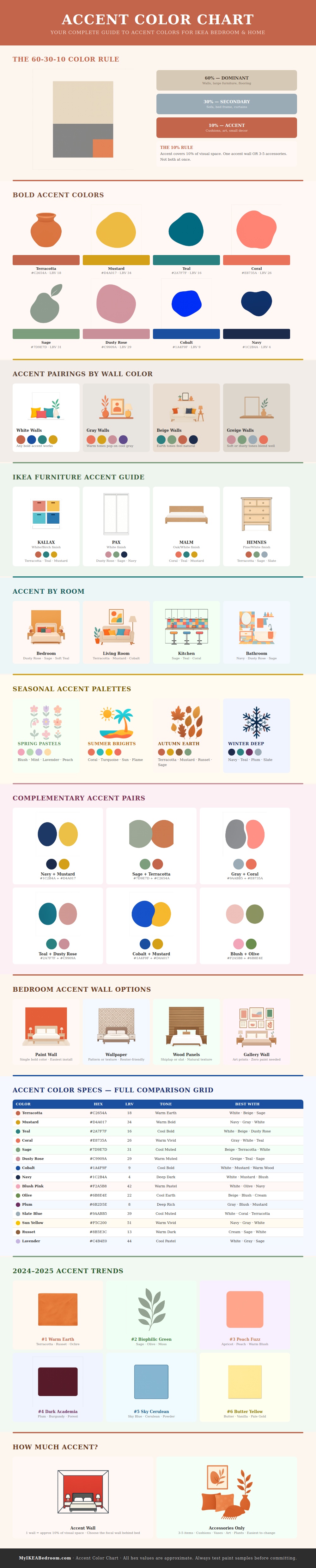
This rule was created to offer individuals a method for selecting the proportions of colors in their rooms. With the 60-30-10 rule, 60 percent of the room should be filled with a dominant neutral color. Additionally, the supporting color can define 30 percent of the room.
Finally, 10 percent of the room should be filled with an accent color. The dominant neutral color is typically used for the walls in the room and the large furniture pieces in the space. The supporting color can be used for rugs or bed frames in the room.
Finally, the accent color is used for small items in the room, such as decorative pillows or decor items. Using too much of the accent color for a room can make the space look cluttered. However, using too little of the accent color for a room can make the space look plain and lacking in interest.
When considering the accent color that will be used in a room, you should consider the base colors in that space. For instance, a warm terracotta accent color will work well in a room with beige or sage colored furniture. Additionally, a teal accent color will work well with a room filled with white colors.
For example, if a room contains gray walls, either mustard or another accent color can be used for the room. However, the accent color should work to amplify the existing colors in the room, and it should not compete with the existing colors within that environment. Furniture from stores such as IKEA can be used with accent colors because the furniture from IKEA tends to be neutral in it’s color.
For example, individuals can use terracotta bins or teal inserts on a white shelving unit to add accents to the shelving unit. Additionally, coral throws can be used on an oak bed frame, or a pine dresser can be accented with sage accents. Using these types of color and accenting the furniture allows individuals to make the IKEA furniture within the house look more intentional.
Furthermore, different rooms in the house can have different accent colors; for instance, the bedroom may be accented with sage colored accents, but the kitchen may include teal colored accents instead. The accent colors for a house can also change based off the season within the year. For instance, in the spring, individuals can use accents of colors like mint or blush to lighten the colors within a room.
In the autumn, people can use earth tones to accent the rooms within the home. Complementary colors, which is colors that are opposite to each other in the color wheel, can also be used, such as navy and mustard, or sage and terracotta. However, there should not be too many accent color in each room.
Instead, the accent colors should include only one color family and three to five item in the room. In addition to accenting individual furniture items within the home, accent colors can also be used in the form of accent walls. Accent walls are walls in a room that are a different color to the other walls in the room.
Accent walls can often be placed behind the bed in the bedroom. For individuals who are renting their homes, accent walls may not be possible with the renter and the landlord. In this case, gallery walls or peel and stick panels can be used as accent walls instead.
Finally, prior to choosing any accent colors for the room, the color swatches for the accent colors should be tested in the light of the room. The light within the room can change how the accent colors appear in the room. Finally, using accent colors in small amounts within the room, such as only one decorative vase or only one pillow with the accent color, is another way to transform a neutral-toned room.
You’ll want to recieve a few samples first, you should of checked the light before buying anything. It isnt a easy process but it’s worth it.
