🦎 Terrarium Substrate Calculator
Calculate exactly how much substrate your terrarium needs — by shape, depth, and substrate type
| Depth | Sq In Covered | Sq Ft Covered | Sq Cm Covered |
|---|---|---|---|
| 1 inch (2.5 cm) | 1,728 sq in | 12.0 sq ft | 11,148 sq cm |
| 2 inches (5 cm) | 864 sq in | 6.0 sq ft | 5,574 sq cm |
| 3 inches (7.6 cm) | 576 sq in | 4.0 sq ft | 3,716 sq cm |
| 4 inches (10 cm) | 432 sq in | 3.0 sq ft | 2,787 sq cm |
| 6 inches (15 cm) | 288 sq in | 2.0 sq ft | 1,858 sq cm |
| 8 inches (20 cm) | 216 sq in | 1.5 sq ft | 1,394 sq cm |
| Tank Size | Floor Area (sq in) | Cu Ft Needed | Bags (2 cu ft) |
|---|---|---|---|
| 10-Gallon (20"x10") | 200 sq in | 0.35 cu ft | 1 bag |
| 20-Gallon Long (30"x12") | 360 sq in | 0.63 cu ft | 1 bag |
| 40-Gallon Breeder (36"x18") | 648 sq in | 1.13 cu ft | 1 bag |
| 55-Gallon (48"x13") | 624 sq in | 1.08 cu ft | 1 bag |
| 75-Gallon (48"x18") | 864 sq in | 1.50 cu ft | 1 bag |
| 120-Gallon (48"x24") | 1,152 sq in | 2.00 cu ft | 1 bag |
| 150-Gallon (72"x24") | 1,728 sq in | 3.00 cu ft | 2 bags |
| Custom Enclosure (60"x36") | 2,160 sq in | 3.75 cu ft | 2 bags |
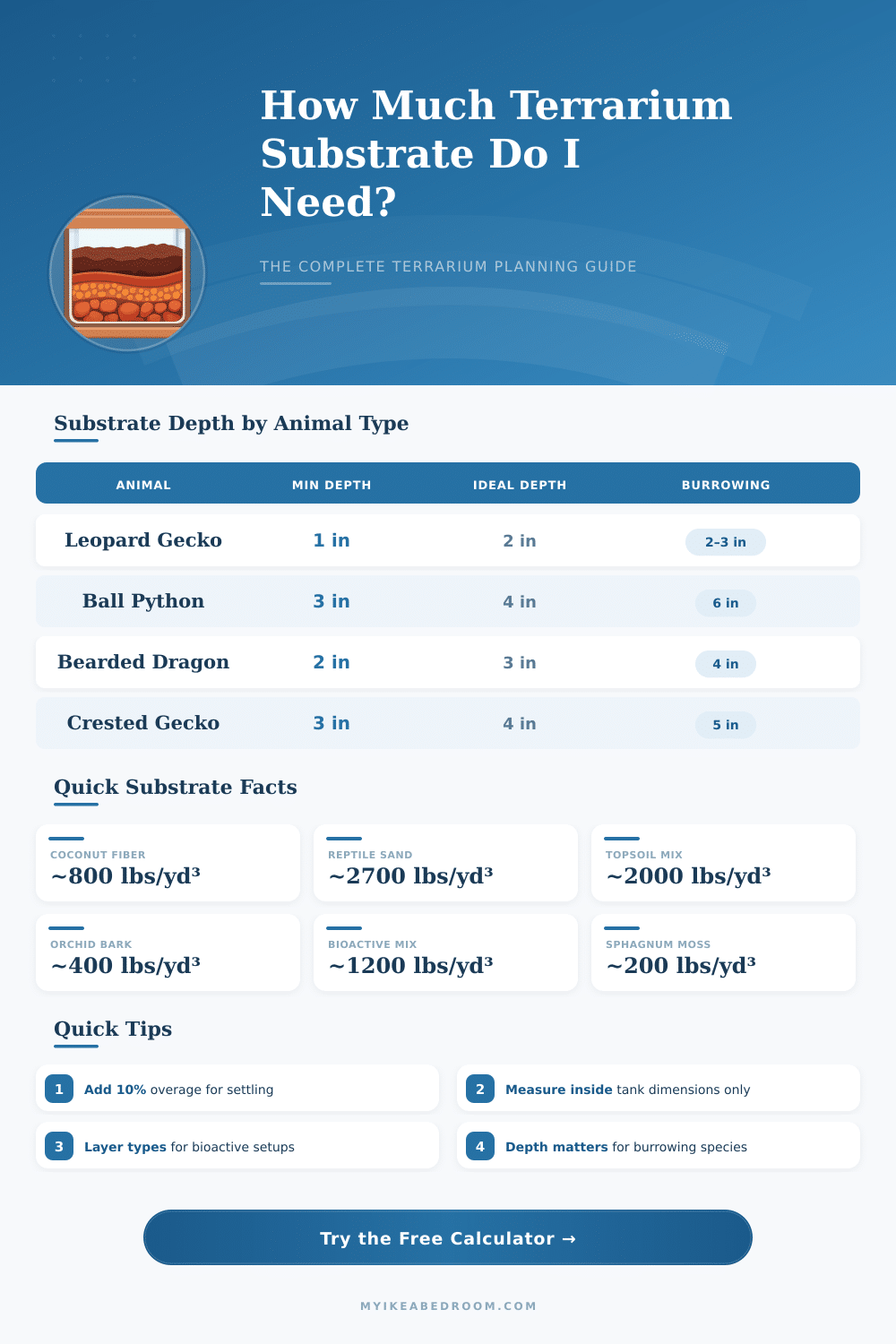
| Animal | Minimum Depth | Recommended | Burrowing Species |
|---|---|---|---|
| Leopard Gecko | 1 inch | 2–3 inches | 4 inches |
| Bearded Dragon | 2 inches | 3–4 inches | 4–6 inches |
| Ball Python | 2 inches | 3–4 inches | 6 inches |
| Crested Gecko | 2 inches | 3–4 inches | 4 inches |
| Dart Frog (Bioactive) | 3 inches | 4–6 inches | 6 inches |
| Box Turtle | 3 inches | 4–6 inches | 6–8 inches |
| Tarantula / Invert | 3–4 inches | 4–6 inches | 8–12 inches |
| Monitor Lizard | 4 inches | 6 inches | 8 inches |
At the core, the substrate of a terrarium is simply the basic foundation on that everything else rests, the basic layer that can make or break your whole setup. It matters because it directly affects how well your plants will grow and does your terrarium stay healthy for months or quickly fall apart in weeks. Getting the formula of substrate right commonly makes the difference between a flowering closed ecosystem and simply sad chaos.
The mix ABG shows as probably the favorite choice between builders of terrariums. ABG stands for Atlanta Botanical Garden, and it is popular for very good reason. This mix well balances drainage with control of humidity and it fights against packing over time, what is key for long stability.
Choose the Right Soil for Your Terrarium
Many brilliant artists of terrariums swear by soil in ABG style, because such setups really can last years without collapse. The traditional recipe is made up of two parts coconut fiber, mixed with two parts orchid bark or coconut husks, then one part tree fern fibers, well mixed together.
Sphagnum moss deserves its own place here. It can absorb up to twenty times its own weight in water, what makes it perfectly fit for keeping the permanent humidity, that closed terrariums require. If you chop it and mix it into your substrate, it forms little pockets full of humidity and stops the soil from packing.
The dried form of it commonly works better then alive moss for that use, but alive sphagnum also does the task well, if that is what you have. Its fluffy structure makes it so practical… It well handles water control while also airing the whole thing.
Sphagnum also has bitter character, that naturally limits the growth of bacteria, without stressing your plants. What is the best? It fits with almost every mix for terrarium, that you prepared.
Layering became popular in the world of terrariums. Many folks choose rocks in the bottom, then carbon, sometimes sand, then the soil, and sphagnum moss on top. On the other hand, some of the healthiest terrariums, that really stayed popular for years, entirely lacked layers; only one solid, well balanced mix of soil from the top to the bottom.
Bioactive substrates deserve attention, if you want to add helpful critters like springtails and isopods. Such mixes combine organic materials with fibrous elements, that aim to support the tiny creatures. Correctly prepared, bioactive substrate can last as long as your critters.
They also well help to grow plants and moss together with the rest. One kind of forest substrate copies the real soil of a forest floor, with ingredients that naturally break down over time, to create that rich decay, that one finds outside.
Aqua soil is an option, that some favor instead of coconut fiber, and it does not pack, so one can skip the layer of lava rock in the bottom. About that soil from your own back garden it is possible, but really not worth the risk, it rarely is sterile and could bring pests or eggs. One final tip: succulentsand terrariums do not well combine, so think about that, when you choose your plants and the mix of substrate.