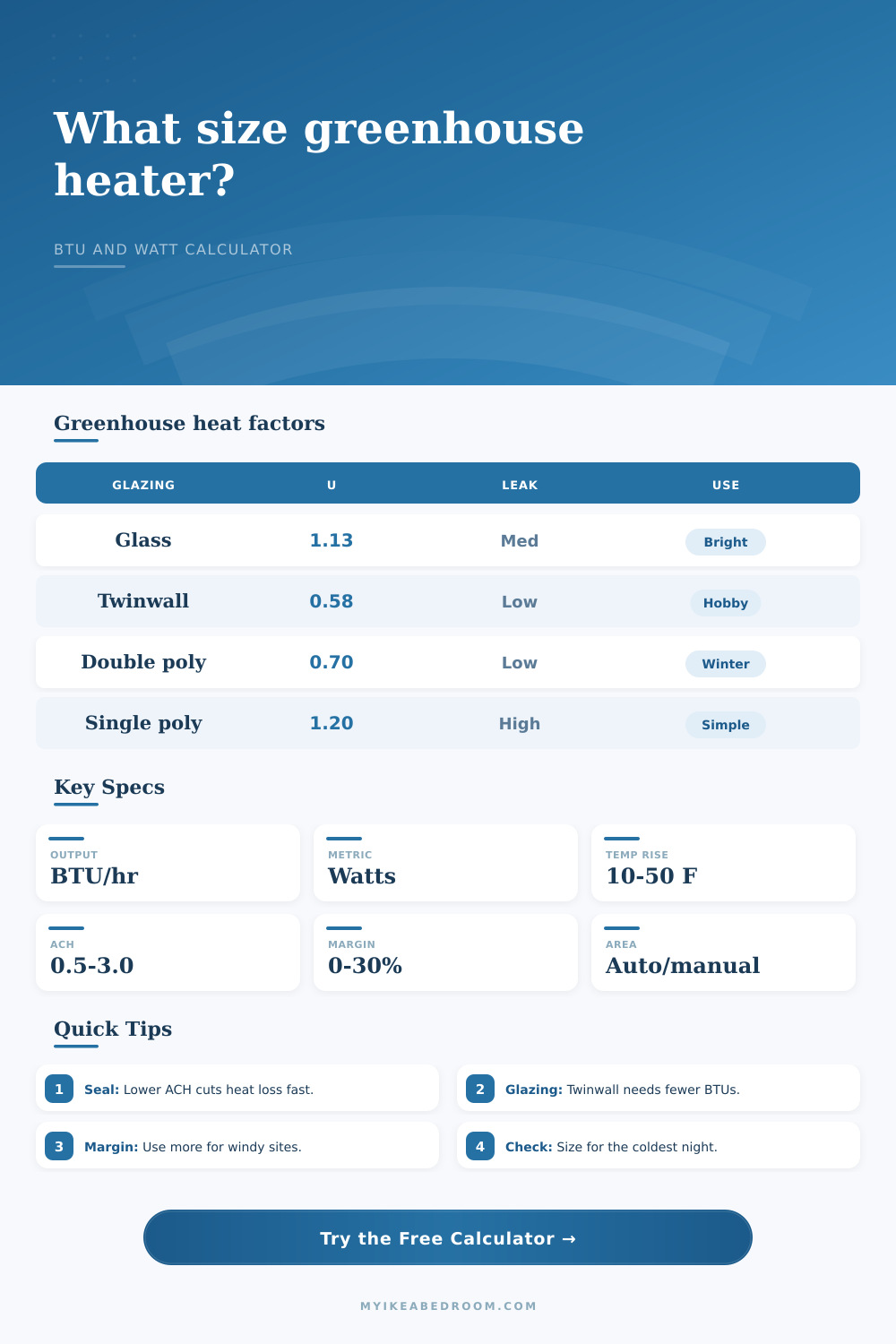
Greenhouse Heater Size Calculator
Estimate greenhouse heater output from length, width, height, glazing U-factor, target temperature rise, calculated envelope area, infiltration, climate exposure, and safety margin.
Choose a starting point for a common greenhouse shape, glazing, and winter exposure, then adjust every input to match the actual structure.
Heater sizing result
| Glazing type | U-factor | Rough R-value | Best calculator use |
|---|---|---|---|
| Single polyethylene film | 1.20 BTU/hr ft² °F | R-0.8 | Simple seasonal tunnels and quick covers |
| Single glass | 1.13 BTU/hr ft² °F | R-0.9 | Traditional glass greenhouse walls |
| Double inflated polyethylene | 0.70 BTU/hr ft² °F | R-1.4 | Winter tunnel covers with air gap |
| Twinwall polycarbonate | 0.58 BTU/hr ft² °F | R-1.7 | Common hobby greenhouse panels |
| Triplewall polycarbonate | 0.42 BTU/hr ft² °F | R-2.4 | Colder climates and warm crops |
| Mixed insulated base panels | 0.35 BTU/hr ft² °F | R-2.9 | Part-wall insulation with glazing above |
| Greenhouse condition | ACH input | Typical signs | Heat result effect |
|---|---|---|---|
| Tight panels and sealed doors | 0.5 to 0.8 | Minimal drafts around vents and frames | Lower infiltration BTU/hr |
| Normal hobby greenhouse | 1.0 to 1.5 | Some gaps at glazing clips and door seals | Balanced default estimate |
| Older glass or loose film | 1.8 to 2.5 | Visible drafts, worn weatherstrip, lapped plastic | Noticeably higher heater size |
| Windy hoop or vent gaps | 2.5 to 3.5 | Moving cover, roll-up sides, leaky end walls | Large extra heat allowance |
| Temporary frost protection | 3.0 to 4.0 | Quick cover, imperfect edges, short duration | Use high margin and check often |
| Target use | Example outside | Example inside | Temp rise input |
|---|---|---|---|
| Light frost hold | 25°F / -4°C | 35°F / 2°C | 10°F / 6°C |
| Cool greens | 20°F / -7°C | 45°F / 7°C | 25°F / 14°C |
| Seed starting | 15°F / -9°C | 55°F / 13°C | 40°F / 22°C |
| Warm crops | 10°F / -12°C | 65°F / 18°C | 55°F / 31°C |
| Tropical holding | 20°F / -7°C | 70°F / 21°C | 50°F / 28°C |
| Greenhouse | Approx envelope | Moderate heat rise | What changes the result |
|---|---|---|---|
| 4 ft x 8 ft seedling house | 150 to 190 sq ft | Small portable output | Glazing and door gaps dominate |
| 8 ft x 10 ft hobby house | 330 to 430 sq ft | Mid-size room-heater output | Roof shape and ACH matter |
| 12 ft x 16 ft winter tunnel | 650 to 820 sq ft | Multiple heaters may stage better | Double poly lowers loss sharply |
| 14 ft x 48 ft market tunnel | 1,800 to 2,300 sq ft | High output with circulation fans | Wind exposure can be decisive |
| 30 ft x 72 ft hoop house | 5,000+ sq ft | Large staged heat system | Use measured area when possible |
When the weather gets realy cold, it sneaks up on us sometimes, doesn’t it? The temperature drop fast, and then there we are in our greenhouse with a thermometer wondering how to make sure our seedlings don’t freeze. Heat escapes incrementally, gradually building up toward disaster, and intuition’s no help; it builds slowly, silently. Think of the greenhouse more like a thermal system different than merely a shelter, and think of getting the heating correctly sized as a matter of life and death for plants inside, not you.
Once you input the size of your roof and what kind of glazing it has, the calculator do the math. First it considers the envelope, total surface area exposed to the cold. That’s the roof, plus walls beneath the roof (and panels over those walls). The bigger the hoop house, the more energy it require compared to a little lean-to. Here, the shape of the roof also count: A steep gable will add some vertical wall area, so it increases total square footage to be heated.
How to Size Your Greenhouse Heater
The second big variable is type of glazing. This refers to the material itself and determines how quickly heat escape through it. Inexpensive single polyethylene film has a high U-factor (i.e. Low resistance to heat flow). Double-inflated poly and twinwall polycarbonate does better at trapping air layers that reduce rate of loss. Single cover may be enough if your climate is relatively mild; otherwise upgrading the glazing tends to cost less then stepping up to a bigger heater during tough winters. The tool includes those differences, and you don’t need to remember thermal conductivity numbers yourself.
Many growers forget about this invisible cost: Air infiltration. Unless it’s a very tightly sealed greenhouse, some amount of cold air leak in and forces out warm air continually. One figure requested by the calculator is the “air change” rate, meaning number of times the interior air exchange with outdoor air during each hour. A drafty tunnel might have three or four changes. A super-tight hobby house may have fewer than one. This can multiply heat load considerably, making air sealing even more important then turning up the thermostat.
Secondly, what’s the temperature increase that you’re trying to achieve? This means finding difference between coldest night you expect and the lowest temperature your plants will survive. Maintaining a 35-degree greenhouse in 10-degree weather is doable; maintaining a 50-degree one isn’t so easy. People typically miscalculate for their anticipated “average” winter night rather than the worst-case minimum for which they are designing, leaving themselves insufficient power for super-cold nights. It’s smart to factor in some safety buffer since heaters turns on and off, and no real-life system is ever perfectly efficient because of duct losses.
What does that translate into? The answer is in final output: the wattage and BTUs your heat needs. That is just a straight-up number. It reflects the combination of your own goals, your climate, and particular structure where you are growing. And once you have that number, you know what size heat to get, whether it be a propane unit, an electric element, or a water-based system that meets the load.
When you’ve sized right, you’ll worry less about frost, your plants will thrive and your energy bill stays predictable. Winter gardening becomes ordered instead of challenging. You should of used this tool sooner.