Mattress Replacement Timeline Calculator
Estimate a practical mattress replacement timeline from material lifespan, current age, sleeper load, use pattern, sag depth, rotation history, guest use, and a replacement priority score.
📌Mattress and user presets
⚙Mattress timeline inputs
Your Mattress Replacement Timeline
Timeline and score breakdown
🛏Material lifespan rule cards
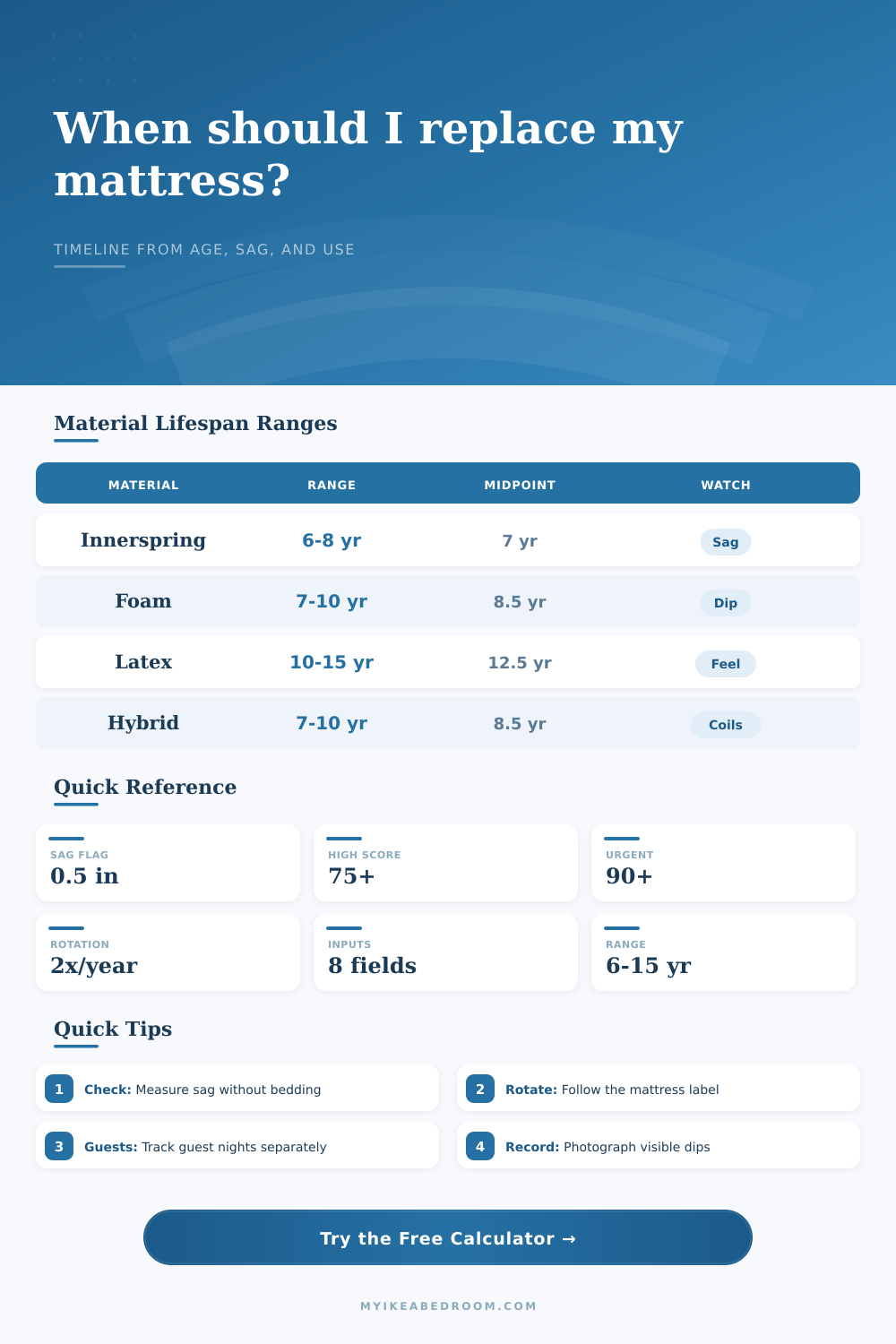
📊Material Lifespan Ranges
| Mattress material | Base lifespan range | Midpoint used | What shortens the timeline | What can extend planning life |
|---|---|---|---|---|
| Innerspring | 6 to 8 years | 7 years | Coil fatigue, visible dips, high nightly load. | Even rotation where allowed and moderate use. |
| Foam | 7 to 10 years | 8.5 years | Softening, body impressions, warm-room compression. | Supportive base, balanced load, regular rotation if allowed. |
| Latex | 10 to 15 years | 12.5 years | Long daily load, uneven foundation, neglected rotation. | Lower compression set and consistent foundation support. |
| Hybrid | 7 to 10 years | 8.5 years | Comfort-layer softening plus coil-zone fatigue. | Rotation, strong slat support, and balanced sleeper positions. |
🧮Replacement Priority Score Factors
| Factor | Maximum score weight | Low priority example | High priority example | Calculator role |
|---|---|---|---|---|
| Mattress age | 40 points | Less than half of adjusted midpoint. | Past adjusted upper range. | Compares entered age with the adjusted material range. |
| Sag depth | 25 points | Less than 0.25 in or 0.6 cm. | 1.0 in or 2.5 cm and deeper. | Adds direct priority for visible surface dip. |
| Use and load | 18 points | Rare guest use with light sleeper load. | Nightly two-sleeper or higher-load use. | Adjusts both lifespan and priority score. |
| Rotation and feel | 17 points | Rotated as allowed and surface feels consistent. | Never rotated with clear unevenness. | Adds maintenance and surface-change priority. |
📐Sag Depth and Timeline Bands
| Measured unloaded sag | Metric equivalent | Priority effect | Timeline signal | Planning action |
|---|---|---|---|---|
| 0 to 0.24 in | 0 to 0.6 cm | Low | Age drives most of the result. | Recheck during the next rotation or room reset. |
| 0.25 to 0.49 in | 0.6 to 1.2 cm | Moderate | Monitor if age is near the material midpoint. | Photograph and measure the same spot again later. |
| 0.50 to 0.99 in | 1.3 to 2.5 cm | High | Replacement planning becomes more active. | Compare with age range, surface change, and use load. |
| 1.00 in or more | 2.5 cm or more | Very high | Timeline usually moves to near-term planning. | Check support base and plan a replacement window. |
🏠Common Mattress Timeline Examples
| Example profile | Material and age | Use pattern | Sag depth | Typical planning signal |
|---|---|---|---|---|
| New foam guest bed | Foam, 2 years | Rare to monthly guest use | 0.10 in | Low score, recheck later. |
| Daily foam mattress | Foam, 7 years | Nightly single sleeper | 0.45 in | Moderate score, plan ahead. |
| Older innerspring | Innerspring, 8 years | Nightly two-sleeper use | 0.80 in | High score, near-term replacement. |
| Latex main bed | Latex, 9 years | Nightly use, rotated | 0.20 in | Inside range, keep monitoring. |
| Unrotated hybrid | Hybrid, 8 years | Nightly two-sleeper use | 1.10 in | Very high score, replace now. |
💡Timeline Calculation Tips
We all purchase a mattress and then ignore its existence except for that painful day our backs remind us we have one. Coincidence? Rarely. Each type of coil, foam or latex has a life span. Usually you don’t know about the degradation till it’s too late. Don’t act like an engineer to decide when to replace it; instead, stop looking at the calendar date. Yes age matters, but it isn’t everything. How you use your bed will matter far more then its age.
This calculator is how you cut through the noise to find the signal. You enter information about the sleeper’s weight, your material type, their age, etc. What’s valuable is that it weighs these inputs. This means a mattress used as a primary bed each night isn’t going to last anywhere near as long as a guest bed use only twice per month. By weighting actual usage vs. Merely elapsed time, it’ll adjust the timeline accordingly.
How to Know When to Replace Your Mattress
Most folks do not get this right. They think the clock ticks the exact same way for all of us. But an infrequently used guest mattress will remain well within its planning range longer than a primary mattress use nightly.
The first variable is material selection. Six-to-eight-year lifespan tends to be the average for innerspring beds. Latex stretches closer to 15 years. These become starting points once the calculator consider how you use the bed. For example, what if you sleep on a hybrid? Hybrids blend two different material properties. They combine long life of springs with pressure relief offered by foams. Your bed will wear down different than a one-material foam bed. While the comfort layer sags, the base layer remain rigid. It’ll feel like you’re sinking without support.
To account for this, the calculator consider the amount you sink into the bed (sag depth). Half-inch or deeper dents are a telltale sign of failing inner structures. Why does it sag? Because it’s not comfortabley. It’s a structural failure. If the surface of mattress dips, your spine cannot remain neutral and it gets stiff first thing in the morning.
By measuring the dip without bedding on, you get a number to plug into the tool that provides an objective measurement. The calculator will probably say to continue monitoring if it’s under a quarter inch. At an inch, the replacement priority goes up fast.
What this measurement does is combine physical evidence with your history of rotations. Twice yearly rotations spread out the load. That buys you some additional time. Failure to perform this easy maintenance step accelerate wear. Heavier sleepers will do this faster as will couples who share the space.
Lounging during the day and having guests stay leads to hidden wear. When your mattress take extra stress in those places… Like sitting on the edge or having guests stay over for a night, it will shorten the expected lifespan by a year (or two). Easy-to-overlook factors like these compound over time. The mattress may look great from above, but constant edge compression can cause the inside to lose support.
By asking questions about your rotation and surface feel habits, the tool help you measure invisible damage. At the end of the day, replacing a mattress is about defending your sleep. It is not so much about sticking to an arbitrary calendar. Thankfully, the calculator does that math for you. It removes guesswork from knowing when to get serious about shopping. It replaces fuzzy “it feels off” with a concrete date range.
From there, you can budget accordingly. Or you might choose to just make a trip to the store. Don’t wait until the thing looks physically broken. Watch for the subtle clues that tell you something isn’t right. Trust the data. Measure a dip; it’s worth a better night’s sleep.
Begin with a blank slate and truthful input numbers. Then the answer will come. Knowing when the mattress is dead isn’t enough. Knowing how to prevent it from robbing your sleep while it’s still breathing, that’s the point. You should of known this earlier.