Sump Pump Size Calculator
Measure how fast water rises in the sump pit, then convert that timed rise into gallons per minute, gallons per hour, head-height derating, reserve capacity, and discharge pipe guidance.
🏚Basement presets
📏Pit rise measurements
Use the pit rise method after rain or during a controlled inflow test: pit area × inches of rise gives cubic inches, then divide by 231 for gallons.
Pit rise methodYour sump pump sizing result
Calculation breakdown
Sizing is based on water entering the pit during the timed test. For critical flood protection, compare the result with the pump curve at your actual head height and local code requirements.
🔧Quick reference specs
📊Pit volume per inch of rise
| Pit size | Water area | Gallons per inch | 10-minute rise example |
|---|---|---|---|
| 16 inch round pit | 201 sq in | 0.87 gal/in | 4 inches = 2.1 GPM |
| 18 inch round pit | 254 sq in | 1.10 gal/in | 4 inches = 2.6 GPM |
| 24 inch round pit | 452 sq in | 1.96 gal/in | 4 inches = 4.7 GPM |
| 18 x 24 inch pit | 432 sq in | 1.87 gal/in | 4 inches = 4.5 GPM |
💨Head-height derate reference
| Vertical head | Derate factor used | Why it matters | Curve check |
|---|---|---|---|
| 5 ft | 100% | Low lift, short run | Compare 5 ft pump curve |
| 10 ft | 83% | Typical basement lift | Compare 10 ft pump curve |
| 15 ft | 65% | Tall lift or long route | Compare 15 ft pump curve |
| 20 ft | 48% | High lift condition | Compare 20 ft pump curve |
🚰Discharge pipe sizing reference
| Design flow | Suggested pipe ID | Typical use | Check before choosing |
|---|---|---|---|
| Up to 25 GPM | 1.25 inch | Small seepage pit | Short lift, low solids |
| 25 to 45 GPM | 1.5 inch | Common residential sump | Most pump outlets match |
| 45 to 80 GPM | 2 inch | Storm or large pit | Use pump curve and check valve size |
| Over 80 GPM | Dual or larger | Heavy water table load | May need duplex pumps |
🏠Basement scenario table
| Basement preset | Pit test | Head height | Reserve used |
|---|---|---|---|
| Small dry basement | 2 in / 180 sec | 8 ft | 15% |
| Finished room rain seep | 4 in / 120 sec | 10 ft | 25% |
| Utility room pit | 5 in / 90 sec | 9 ft | 25% |
| Laundry drain load | 6 in / 75 sec | 10 ft | 35% |
| High water table | 8 in / 45 sec | 12 ft | 50% |
💡Sizing tips
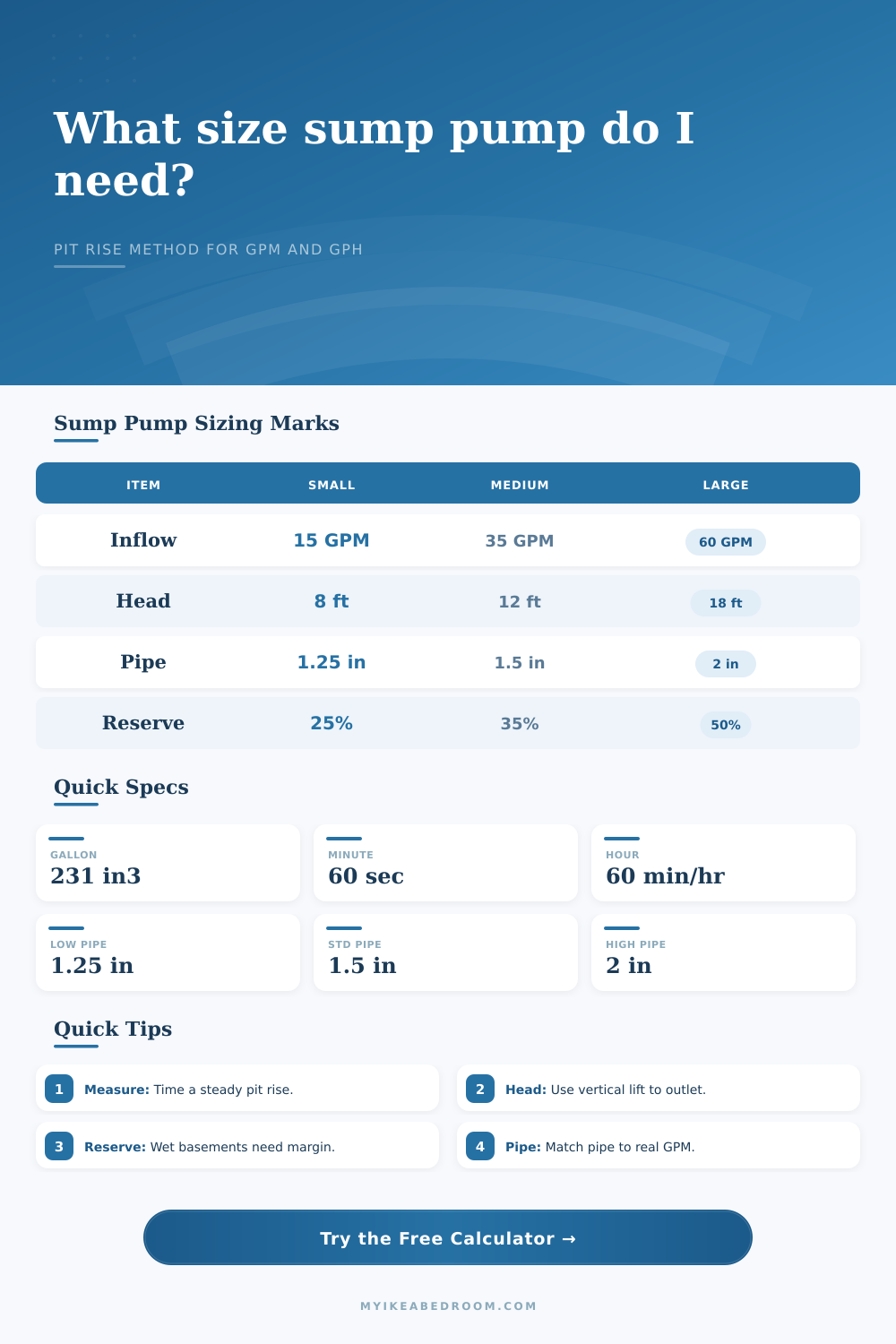
A majority of home owners buy a sump pump based off the biggest number they see on the box. That sounds logical; shouldn’t more flow equal better protection? Unfortunately, most people find out when it’s too late and water is standing in their basement. An eight-thousand gallon per hour rated pump may only produce four-thousand gallons at vertical height necessary to eject water from your basement. They rate pumps without any resistance, but there is certainly a lot of resistence in your plumbing.
To do that, we’re going to measure our water inflow rate (the speed at which water flows into your pit). Get yourself a stopwatch and a piece of tape, and when your pump’s turned off, mark where the water sits. Next, turn your pump back on and observe how many seconds pass before the water reach some known distance.
How to Choose the Right Sump Pump
The calculator will convert that number for you; it’s much more precise than estimating from rain fall data or what other people in your neighborhood might say. Simply enter the time it took for the water to rise, along with all measurements of your pit, and it’ll do the rest. The shape of the pit matters more different than just its diameter. It will hold fewer inches of water if it’s circular then if it’s square with the same diameter. The tool knows the size and shape of your pit to figure out how much water can fits on top of it. That’s the surface area times the height of the rise. Then divide by time and you know how fast it’s coming through. It is simple math, but it is hard when staring into a rising tide trying to figure it out in your head. Let the tool convert it for you.
Next is head height. That’s the vertical distance between the outlet of your pump and where water leaves your house. For each foot of lift, gravity take its toll, reducing the effectiveness of the pump. Fifteen percent or even more may be lost with a ten-foot lift. You’ll see this in action in the derating table on the page. It bumps up your needed flow to make allowance for the loss. Say you calculate you need ten gallons a minute, but your lift is fifteen feet. You really need a pump that can absorbs much more to guarantee that it puts out those ten gallons.
And this is where the judgment come in: Safety reserves. If you have a finished lower level with high-end flooring, add plenty of margin. If your only wet area is an occasional seep under the house in your dry basement, add minimal margin. You can choose the percent of reserve you want from the calculator. Add some buffer capacity for measurement error or for those nasty storm surges. A new pump are cheaper than replacing drywall.
The last bottleneck is pipe size. Too small of an outlet with too many 90 degree turns in it, even with a beefy pump, will cause it to choke. One and a half inch pipe is pretty standard for residential sumps. For high flow situations you may need two inch lines. Make sure the pipe size matches the actual flow rate so that you don’t cut off the flow to the pump due to backpressure.
Ignoring the curve is where most people make their size mistake. They see the max GPH rated on it, then forget about the curve. The curve tells you how the pump perform under load. You aren’t checking for performance; you are buying potential.
So take the time to measure the rise. Measure the lift. Give yourself a little reserve for peace of mind. That makes it a calculation instead of a guessing game, and when the storm comes, you’ll know exactly why your floor stays dry.
You should of measured carefully before buying any furnitures.