Sheer, main, blackout, and double-track fabric planner
Layered Curtain Fullness Calculator
Calculate finished fabric width per layer, panel cut widths, total yardage or meters, stack-back, overlap coverage, returns, and hem allowances for layered bedroom curtains and wide window tracks.
| Layer type | Typical fullness | Common panel count | Planning note |
|---|---|---|---|
| Sheer privacy layer | 2.0x to 2.7x | 2 to 4 panels | Use more fullness for voile so the layer does not look flat in daylight. |
| Main decorative layer | 1.6x to 2.2x | 2 panels | Balanced pairs are easiest to draw and keep centered over a bedroom window. |
| Blackout or thermal layer | 1.4x to 1.9x | 2 panels | Dense fabric stacks wider, so keep fullness moderate if wall space is tight. |
| Separate liner layer | 1.3x to 1.7x | 2 panels | Use when the liner hangs behind the main fabric on its own track. |
| Wall-to-wall ceiling track | 1.8x to 2.4x | 4 to 6 panels | Multiple panels reduce individual cut width and make long tracks easier to handle. |
| Heading style | Stack-back factor | Fullness range | Best use |
|---|---|---|---|
| Ripplefold or wave track | About 16% | 1.8x to 2.3x | Clean ceiling tracks and layered rooms where folds need to stay even. |
| Pinch or tailored pleat | About 20% | 1.8x to 2.5x | Structured main curtains and bedrooms where the front layer is visible open or closed. |
| Grommet or eyelet | About 22% | 1.5x to 2.0x | Simple rods, rental rooms, and wide panels that slide by hand. |
| Back tab | About 24% | 1.6x to 2.2x | Soft folds with a hidden rod look, but allow more wall space for stacking. |
| Rod pocket | About 28% | 1.8x to 2.5x | Stationary or rarely moved curtains because stack-back and friction are higher. |
| Fabric width | Useful for | Cutting impact | Metric equivalent |
|---|---|---|---|
| 45 in | Light cottons and sheers | More joined widths per panel on wide windows. | 114 cm |
| 54 in | Most drapery fabric | Good default for blackout, linen, and bedroom mains. | 137 cm |
| 60 in | Wide decorator fabric | Can reduce seams on medium windows. | 152 cm |
| 108 in | Railroaded sheers | May cover tall panels with fewer vertical joins. | 274 cm |
| 118 in | Extra-wide voile | Useful for patio sliders and wall-to-wall sheer tracks. | 300 cm |
| Common setup | Track width | Layer plan | Typical result |
|---|---|---|---|
| Bedroom sheer plus blackout | 84 to 108 in | 2 layers | Sheer around 2.2x, main around 1.8x, 2 panels per layer. |
| Wide patio slider | 132 to 180 in | 2 layers | Use 4 panels per layer to keep each cut width manageable. |
| Bay window track | 108 to 150 in | 2 layers | Add light returns but keep center overlap modest around angled glass. |
| Nursery blackout | 60 to 90 in | 2 or 3 layers | Use extra overlap and returns to reduce side and center light leaks. |
| Wall-to-wall bedroom | 144 to 216 in | 2 layers | Plan stack-back before placing furniture or nightstands near the ends. |
Start by planning your layers of light: a window plus heavy blackout curtain, plus sheer panels. Purchase both. Install them on double track. Close them. Realize that the open stacks is eating into your walking space, and the middle gap is letting in to much sunlight. Most people don’t understand how width affect volume.
That’s why we built this calculator, it enters your layer choices and track size, then does all the math. No more guestimating those fullness coefficients.
How to Calculate Your Curtain Needs
People’s first error is measuring the glass rather than their hardware. The width of the rod or track determine how full the curtains can be, because the fabric has to stretch across it. So if your rod extends ten inches past each side of window frame, you’ve got to take that extra span into account. Otherwise you’ll wind up with curtains that look all flat and pulled-out when shut. No plush drape going on here! The tool wants to know this at the beginning, since otherwise its fabric estimates is really going to reflect what wall space you have.
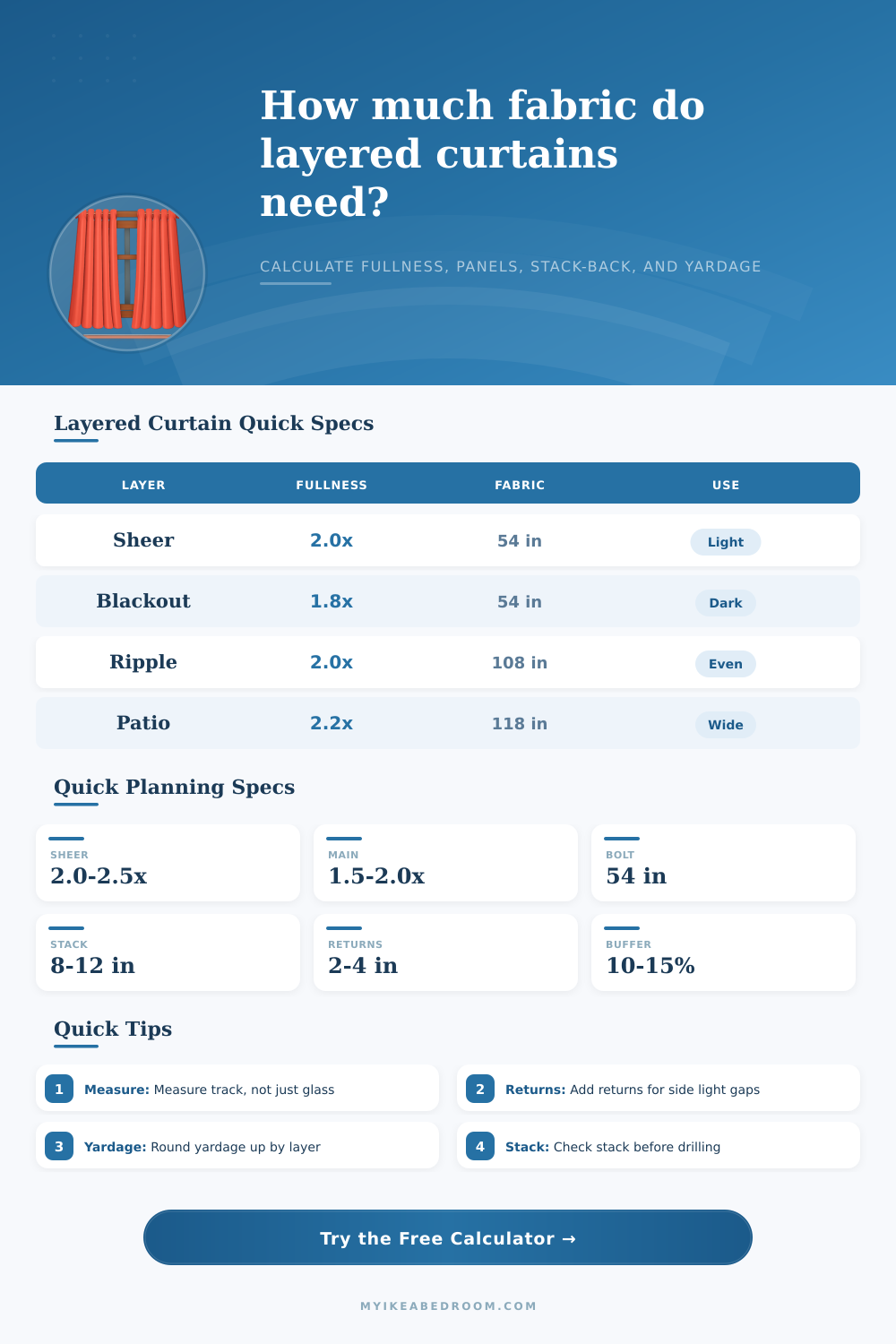
The texture and weight of sheer layers changes how they will appear compared to heavier blackout mains. Lighter fabrics such as voile should be fuller (more volume) in order not to be seen as sparsely layered, but as intended. Sheers tend to have a normal fullness of about twice the width of tracks, occasionally up to three times the width for heavily layered sheers.
Thicker fabrics such as thermal lined cottons/linens tends to be denser. Because of their density, they don’t need as much volume. Typically needing only 1.5 to 2 times the width of the track. If you pile on too much heavy fabric for your rod length, you’ll end up with a bulky stack of fabric. It will never fully open up, leaving black patches at the curtain corners even when they are drawn open.
Stack-back is the amount of horizontal wall space taken up by the fabric once it is gathered to each side. Ripplefolds are more compact than traditional rod pockets or pinch pleats; they use fewer inches of wall space but create a neat, consistent fold. Check to make sure your stack-back won’t clash with nightstands or other furnitures pushed up against the windows. That last width depend on which kind of heading you choose (see the reference table below). It affects how well the room functions and flows.
Bolts of fabric are set sizes: typically fifty four inches wide (as with most drapery material). So, when calculating out your panels, take this into account. If your panel needs to be wider than that, you will have to join two pieces of fabric vertically. That creates an added seam, and, of course, more fabric to purchase. It’s also important to consider pattern matching since fabrics with prints or textures must match up (unless you’re going for a look where there are no patterns and you don’t care about perfect matching).
It’s good practice to add a little wiggle room for cutting mistakes and shrinkage. Can’t get any more fabric once it’s been cut! But you can always snip off a bit extra.
And then there’s the fact that layering complicates things: you’re effectively doubling your fabric (and hardware) needs. And each layer requires a different stack-back size… How much fullness do you want in the sheer? You might need more panels for your heavy mains to maintain proper proportions without looking stiff. The same goes for the heavier mains: they may require three or four panels to properly proportion themselves while still looking relaxed, whereas maybe two will do just fine for the sheers. This is where the calculator can break things down per-layer so that you don’t end up under-ordering for half of the assembly.
The style of heading also makes all the difference. A grommet looks casual and easy, although it does add extra stack space because of the rings around the fabric. A tailored pleat is formal and structured. It’s often found in a more traditional bedroom setting. A rod pocket is simple, but can create some friction against the rod, difficult if you have a heavier fabric that you need to slide back and forth easily. Consider how frequently you’ll be adjusting your curtains before deciding what style to go with. Do you pull them open and closed every morning and night? In that case, consider how easy they are to use above how they look.
It’s a lot of variables, which is why I was initially put off by the feeling that it would be tedious. But they all affect one another. You have to consider the window width, the length of the track, and the width of the fabric. You also need to account for hem allowances and how much fullness you want.
But getting it right will make the difference in whether your DIY installation looks amateurish or resembles a high-end hotel installation. Don’t rush on the measuring, use the tool to see what it will look like before purchasing. Spend another hour figuring it out now rather than wasting money on fabric and your sanity later. Measure twice, cut once, and follow the math. The math should direct your hand so you feel like you’re not improvising but simply making something effortlessy beautiful.