Repeat matching and layout yardage planner
Fabric Pattern Match Yardage Calculator
Estimate cut length rounded to repeat, panels across usable fabric width, matched yardage, repeat waste, extra repeats, horizontal placement waste, and total ordering yards or meters.
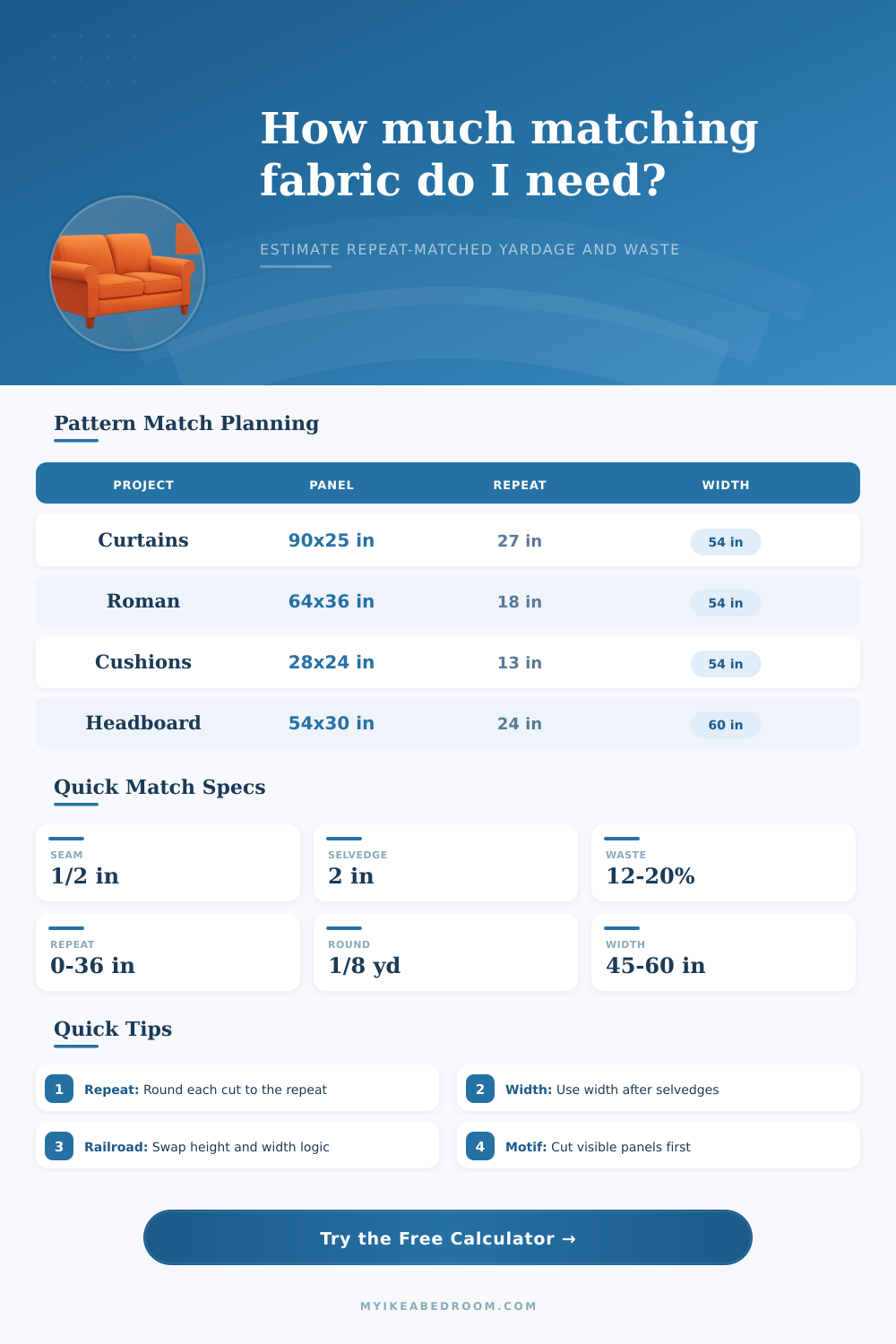
| Project type | Typical panel | Repeat concern | Starting waste |
|---|---|---|---|
| Curtain pair | 84 to 96 in high by 22 to 28 in wide | Vertical repeat controls each full-length drop. | 12 to 18 percent |
| Roman shade | 48 to 72 in high by 24 to 42 in wide | Center the motif before rounding the cut length. | 12 to 20 percent |
| Sofa cushions | 22 to 30 in deep by 24 to 34 in wide | Horizontal repeats can reduce panels across the width. | 15 to 22 percent |
| Headboard panels | 36 to 60 in high by 24 to 36 in wide | Large motifs often need centered panel placement. | 15 to 25 percent |
| Vertical repeat | Yardage behavior | Extra repeat risk | Use this rule |
|---|---|---|---|
| 0 to 3 in | Acts close to a solid texture. | Low | Still keep visible panels cut the same way. |
| 4 to 12 in | Adds small but visible cut-length rounding. | Moderate | Round each panel group before adding waste. |
| 13 to 27 in | Can add one large repeat to each row. | High | Plan motif position before cutting the first panel. |
| 28 in or more | May dominate the yardage calculation. | Very high | Order from the same dye lot and keep a repair reserve. |
| Layout direction | Calculator behavior | Best for | Planning note |
|---|---|---|---|
| Straight grain | Uses actual panel width across fabric. | Small textures and solids | Lowest placement waste. |
| Centered motif | Rounds panel width to horizontal repeat. | Medallions and scenic prints | Good for visible central panels. |
| Stripe or plaid | Rounds width to horizontal repeat. | Checks, stripes, and balanced grids | Keep all panels on the same stripe line. |
| Half-drop repeat | Adds a half-repeat width offset. | Staggered wallpapers and fabrics | Expect fewer panels across the fabric. |
| Fabric width | Usable width after selvedges | Common projects | What to check |
|---|---|---|---|
| 45 in | 42 to 43 in | Light cotton panels and small shades | Many cushion faces need one panel per row. |
| 54 in | 52 to 53 in | Upholstery and decorator fabric | The most common width for matched home projects. |
| 60 in | 58 to 59 in | Wide cushions, headboards, duvet pieces | Useful when horizontal repeats are large. |
| Railroaded goods | Varies by roll | Long benches, sofas, and bedding | Confirm the print direction before ordering. |
Avoid Pattern Matching Panic Your damask curtain fabric comes in and it doesn’t line up just right. You got all precise cutting it out for one panel, only to find that there is a flowery burst three inches lower down on the other panel. It happens to everyone who has ever tried to match a pattern, and it has happened to every person who have attempted to match a pattern.
How much additional yardage do I purchase to allow for misalignment? That is what separates an amateur from a professional finish. Most people just add twenty percent without thinking, or they don’t use enough material at all. You simply input the repeat intervals and the size of your panels and let the calculator do the math for you.
Why You Need Extra Fabric for Matching Patterns
It calculates wasted fabric (without requiring guesswork on any conversion or coefficient) by taking into account the repeat units (the repeats across and up) and treating the fabric as a series of repeating blocks that must be respected. All you need to know are the finished width/height of the panel(s), and the repeat measurement horizontally and vertically. Those two latter values is important because they determine how much fabric is lost to preserve alignment.
If, for example, your fabric’s repeat is 24 inches, you can’t just cut one panel after another, you have to line things up and then jump ahead another entire repeat before placing the second panel to ensure perfect motif matching. This repeating skip generates what we call repeat waste. Now, you can’t see it in the finished project, but it’s there, all right. It show up in the form of wasted material on your bill.
To figure out how much repeat waste there is, the calculator rounds up every cut length until it gets to the next full repeat. So if your repeat is twenty-seven inches, and your panel has to be exactly eighty inches long, then you don’t cut it at eighty-two. Nope, you have to take it to the next repeat multiple. This means stretching that single panel to a hundred and eight inches. A foot and a half of material goes poof!
That material go into the hem or seam allowance and also subtracts from your available yardage. If you fail to account for it, you’ll run short before you ever pin your first piece.
There’s another wrinkle (literally) most home sewers forget: horizontal alignment. The calculator will ask you about the usable width of the fabric once it has been trimmed from its selvedge edges. You can choose how you want the motifs laid out, as a half-drop repeat? Centered motifs? That approach takes up more (or less) fabric horizontally.
Plaid and stripe patterns needs precise grid alignment, so they’ll span multiple panels laid side by side with perfect continuity. If the fabric is wide enough that you could have two panels sitting side by side, the tool will tell you if their horizontal repeat permits just such an arrangement.
The amount of waste can also depend on the material selection. For example: “Anything with a nap, like velvet, is considered to be a one-way good,” they say. “So no matter which way it prints on the backside, all panels has to run the same direction.” That rules out any option of flipping over fabric to conserve yardage. And because linen blends have been known to fray and change positions when handled, designers tend to add a bit more waste (to account for a few tweaks).
The chart below, which breaks down by type of project, does just that. It indicates that big-motif headboards may require up to 25 percent waste allowance, whereas those with tiny textures can occasionally squeak by with less.
The tool also allows you to railroad fabric which means rotating the panel ninety degrees, so the width runs along the bolt. On really large pieces such as bench cushions or even a duvet cover this saves some yardage. But it will change how your repeat calculations work, as the height now must fit across the usable fabric width instead of down the grain.
I know it is not that big a deal, but it is important if you are working with high-end decorator fabrics. Again you want to cut your panels in order of visibility. Usually those middle ones is best, then you nest the smaller pieces around them. That way you use the best part of the print where it counts the most.
The bottom line is that pattern matching is all about planning for imperfection in a perfect world. Bolts of fabric have imperfections, seams move, and patterns never appear as regular on your cutting table than they do in the store catalog. A tool that makes you think about placement waste and repeat before you cut the first time will save you. It prevents the costly error of running out mid-way through.
That extra yardage may feel like a waste of money when you are buying it. But it’s actualy an insurance policy against having to run back out and buy a full bolt because the last panel was half an inch too short. Let the pattern lead the way (and don’t force the fabric to match what you expect) and then buy enough, measure twice!