Foam density, ILD, and seat compression planner
Bench Cushion Foam Density Calculator
Estimate pressure per sitter, recommended foam density range, compression percentage, foam volume, cushion weight, finished sit height, and firmness category for storage benches, dining benches, mudrooms, window seats, daybeds, banquettes, and entry benches.
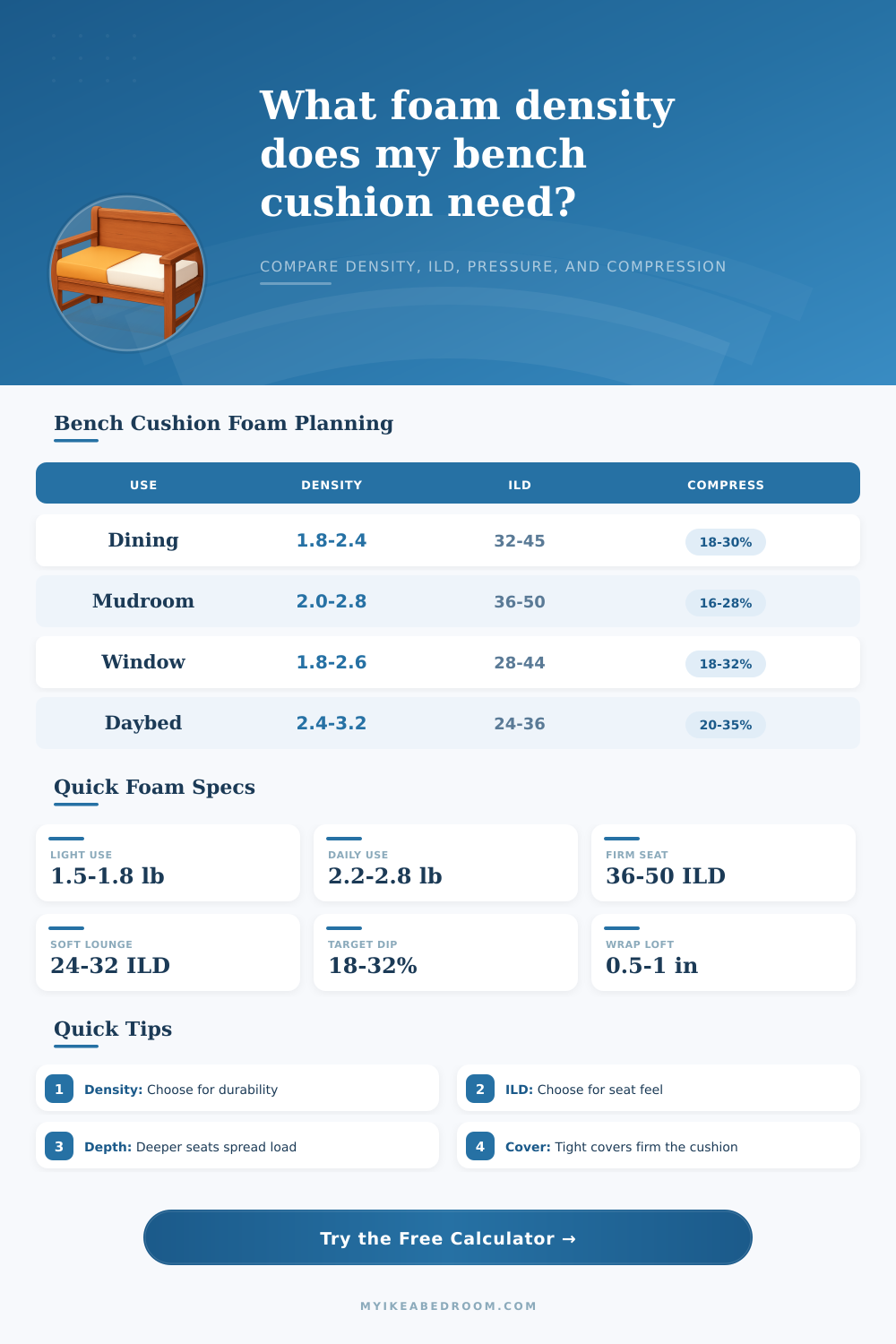
| Bench use type | Recommended density | Typical ILD | Target compression |
|---|---|---|---|
| Decorative occasional bench | 1.2 to 1.8 lb/ft3 | 24 to 32 ILD | 22 to 35 percent |
| Dining bench | 1.8 to 2.4 lb/ft3 | 32 to 45 ILD | 18 to 30 percent |
| Mudroom or entry bench | 2.0 to 2.8 lb/ft3 | 36 to 50 ILD | 16 to 28 percent |
| Window seat or reading nook | 1.8 to 2.6 lb/ft3 | 28 to 44 ILD | 18 to 32 percent |
| Daybed or lounge bench | 2.4 to 3.2 lb/ft3 | 24 to 36 ILD | 20 to 35 percent |
| Commercial waiting bench | 2.8 to 3.6 lb/ft3 | 40 to 60 ILD | 14 to 26 percent |
| ILD category | Common seat feel | Best cushion thickness | Bench note |
|---|---|---|---|
| 18 to 24 ILD | Soft | 4 in or thicker | Better for lounge benches than upright dining seats. |
| 25 to 32 ILD | Medium | 3 to 5 in | Works for window seats, daybeds, and relaxed benches. |
| 33 to 45 ILD | Firm | 2.5 to 4 in | Useful for dining, storage benches, and mudrooms. |
| 46 to 60 ILD | Extra firm | 2 to 3.5 in | Good for thin cushions or heavier sitter loads. |
| Compression result | What it feels like | Likely cause | Adjustment |
|---|---|---|---|
| Under 15 percent | Very firm or barely yielding | High ILD, thick foam, or low load | Lower ILD or add softer topper wrap. |
| 15 to 25 percent | Supportive bench sit | Balanced firm cushion | Good for dining and entry benches. |
| 25 to 35 percent | Comfortable deeper dip | Medium ILD or lounge use | Good for window seats and daybeds. |
| Over 35 percent | Soft, high bottom-out risk | Low ILD, thin foam, or high load | Increase ILD, thickness, or density grade. |
| Bench scenario | Starting foam | Wrap and cover | Planning check |
|---|---|---|---|
| Storage bench lid | 2.0 to 2.6 lb, 32 to 45 ILD | 1/2 in wrap, standard cover | Keep finished height clear of hinges and lid stops. |
| Dining table bench | 2.2 to 2.8 lb, 36 to 50 ILD | Light wrap, snug cover | A firmer feel helps upright posture at table height. |
| Mudroom shoe bench | 2.4 to 3.0 lb, 40 to 55 ILD | Light wrap, tight cover | Plan for repeated short sits and edge loading. |
| Window reading nook | 1.8 to 2.6 lb, 28 to 40 ILD | 1/2 to 1 in wrap, relaxed cover | Deeper cushions can use a softer ILD comfortably. |
| Daybed bench | 2.4 to 3.2 lb, 24 to 36 ILD | Plush wrap, relaxed cover | Balance sitting support with reclining comfort. |
The sinking feeling when you sit on a brand-new bench and feel straight through to the hard wood underneath is no fun. It’s not just unpleasant, it say something about somebody who mistook soft for supported. In fact, if more than one person are going to be using it, foam doesn’t behave in quite the same way in a loose pillow as it does in a flat cushion. Because comfort comes from a delicate dance between cushiness and sturdiness, we need to tell the difference between two frequently mis-mixed numbers: ILD and density.
ILD stands for indentation load deflection, or basically how firm the foam will feel when you push down on it. Low ILD give way easily, high ILD offers stiff resistance. The question becomes: Which number governs what you want? And which number governs what you can afford? Density answers this second question: How much material is being packed into each cubic foot of foam? Think of density as a measure of long life. Higher density mean it will collapse less over time.
How to Pick the Right Foam for Your Bench
Once you know how many people will be using the bench, and what size that bench will be, the rest of math is done for you in calculator above (saving you from guessing whether a thin cushion needs firmer support than a thick one). First, define the bench. How long is it? How deep is it? Those variables help figure out how much surface area each person have. Three friends on a narrow storage bench? That’s going to spike the pressure per square inch dramatically. The calculator takes into account that load and tells you if your desired foam will bottom out.
People often make one mistake: they choose a very soft low ILD foam for a skinny cushion that is only two inches thick. It looks plush at first glance, but it offers zero support when compressed. The calculator does all the work here, comparing your desired ILD with the thickness of the cushion plus weight of average person who might sit there. If the compression % goes too far, you’re gonna feel the floor. That’s where people make mistakes thinking about comfort, because they go after softness and end up losing stability. A three inch pad doesn’t look any different than a five inch pad, but since there is more material for the foam to compress against before reaching the deck, depth actualy does matter.
Dacron wrap also changes the overall feel by increasing loft and softening first contact of the seat. At the same time, it maintain the supportive structure of the core. Half an inch of dacron can take what feels like a firm foam and make it inviting, yet still provide the supportive structure. Additionally, how snugly your cover fits makes a very real but subtle difference. A tight tailored cover squishes the foam before you even sit down, essentially reducing its height and making it firmer. Foam left with relaxed covers breathes better and retains more of its original profile. You should choose these based off your upholstery style, instead of leaving them as they are.
Each use case require some compromise. A mudroom bench needs tough durability to resist repeated stress from short bursts of weight, like when tying shoes, but it does not need to be comfortabley enough to lounge on for hours. A dining bench should be solid enough to sit up straight at table level while still avoiding slumping over time. A window seat is all about sinking down to spend an afternoon reading, so softer ILDs make sense here. This allow for a deeper cushion that supports your back better.
A daybed falls in between: it has to accommodate both sitting postures during the day, then lie flat for sleeping at night. This is all laid out well in reference tables on the page so that you can see what range of densities will perform best based off whether they’re being built as a workhorse or a decoration. A guest room bench that gets used only twice a year doesn’t require high density foam. If this is your primary family seating area, then you’ll pay more to replace it down the line than what you saved by skipping the durability upgrade.
So what about density? Think of density as the skeleton, and ILD as the muscle tone. You don’t want one without the other working in harmony. A firm ILD paired with low density foam will be hard right now, but it’s going to get all lumpy later. Soft ILD paired with a lot of density will support your body well for years but may feel stiffer then you’d like for casual lounging around. The trick is to find that sweet spot where the compression falls inside a comfortable range. Most benches does best when they compress between eighteen and thirty percent under weight. Less than that and it’ll feel like you’re sitting on a board. More than that and you run the risk of bottoming out completely.
When you learn how these factors interact, buying foam doesn’t feel like such a gamble anymore. You aren’t chasing cheap softness any longer; you are creating seats that really hold up over time. That firm yet forgiving sit isn’t by accident but simply good math at play in comfortable living.