Exterior Paint Calculator
Estimate exterior paint gallons from wall area, gables, openings, trim, doors, coats, primer, surface texture, and waste allowance.
Full breakdown
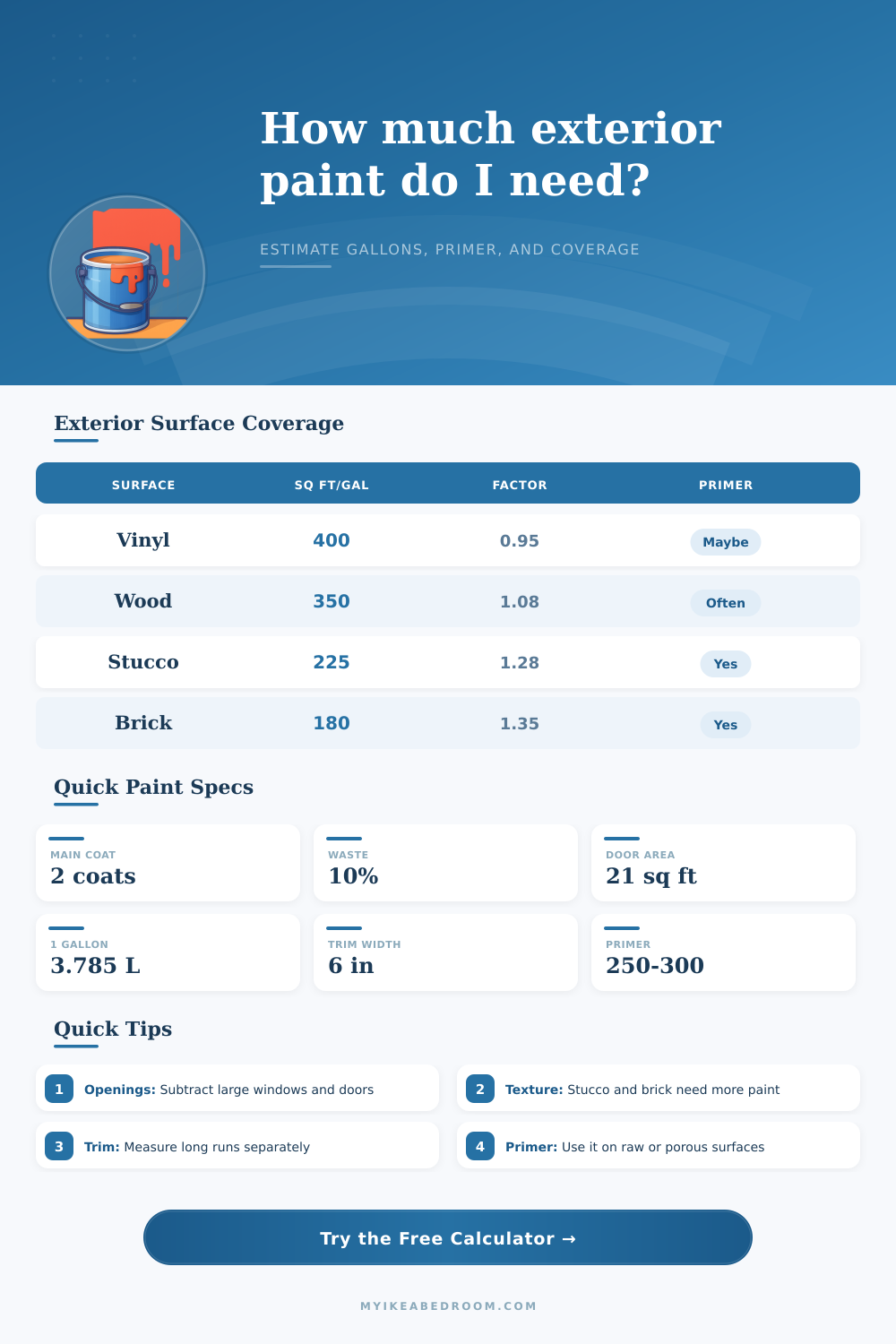
| Surface | Typical paint coverage | Adjustment factor | Primer guidance |
|---|---|---|---|
| Smooth vinyl siding | 350-450 sq ft/gal | 0.95 | Use bonding primer when needed |
| Painted wood siding | 300-400 sq ft/gal | 1.08 | Spot-prime bare wood |
| Fiber cement | 275-375 sq ft/gal | 1.08 | Prime cut ends and bare boards |
| Cedar shakes | 200-300 sq ft/gal | 1.22 | Stain-blocking primer often helps |
| Stucco | 175-275 sq ft/gal | 1.28 | Masonry primer recommended |
| Brick | 150-250 sq ft/gal | 1.35 | Masonry primer strongly recommended |
| Concrete block | 100-200 sq ft/gal | 1.45 | Block filler may be required |
| Area item | Default allowance | Metric equivalent | When to edit |
|---|---|---|---|
| Standard exterior door | 21 sq ft each | 1.95 m2 each | Use more for both sides |
| Typical window | 12-18 sq ft | 1.1-1.7 m2 | Subtract large picture windows |
| Garage door | 63-112 sq ft | 5.9-10.4 m2 | Add if it will be painted |
| Trim run | length x width | meters x cm | Measure fascia and corner boards |
| Gable triangle | 0.5 x width x height | 0.5 x m x m | Add each exposed gable end |
| Paint system | Use in calculator | Coverage effect | Common exterior use |
|---|---|---|---|
| One finish coat | Use for same-color refresh | Base coverage x 1 | Maintenance coat on sound paint |
| Two finish coats | Default setting | Base coverage x 2 | Most siding repaints |
| Three finish coats | Use for strong color shift | Base coverage x 3 | Deep colors or uneven patches |
| Primer coat | Separate primer gallons | Uses primer coverage | Bare wood, stucco, brick, stains |
| Waste allowance | 5-20 percent | Multiplies final gallons | Touch-ups, texture, sprayer loss |
| Common project | Typical area | Likely paint | Notes |
|---|---|---|---|
| Small ranch exterior | 1,400-1,900 sq ft | 9-13 gal | Two coats on wood or vinyl |
| Two-story siding | 2,700-3,800 sq ft | 16-24 gal | Openings and gables matter |
| Stucco bungalow | 1,600-2,300 sq ft | 15-24 gal | Texture raises gallons quickly |
| Brick repaint | 1,800-2,800 sq ft | 20-34 gal | Primer can equal a large share |
| Trim and doors only | 200-600 sq ft | 2-5 gal | Small area, detailed brushing |
Smooth siding
Vinyl, metal, and smooth factory siding usually need fewer gallons when clean and previously coated.
Wood siding
Wood varies by age and exposure. Bare boards, end grain, and old chalky paint increase primer demand.
Textured masonry
Stucco, brick, and block have pores and relief that reduce spread rate compared with the label coverage.
Trim packages
Trim has less square footage but more edges, brush work, and touch-up allowance than broad siding walls.
How to calculate exterior paint. When it comes to purchasing exterior paint, the math doesn’t always work out like you think it should. Take, for instance, this example: A label reads “four hundred square feet covered per gallon.” Easy enough, right? Just divide and get your number of gallons needed. WRONG! Most of the time.
The amount of paint you’ll need isn’t only based off square footage; the type of surface also plays into equation. Use a specialized calculator beforehand. When you’re at store, it will have done all the math for you based on information you enter (i.e., perimeter, height(s), and surface type). No more guesswork required, how many gallons do I realy need for the project?
Why Paint Labels Can Be Wrong
Know that walls aren’t flat. They’re covered in different types of texture: wood clapboard; brick; stucco; vinyl siding. Each surface soak up paint differently. Stucco is like a sponge compared to painted vinyl. Like a sponge next to stucco. Stucco is rough with lots of relief and pores that soak it up. You’ll get much less coverage per gallon then the label says you should expect on smooth surfaces. The texture factor adjust your expected yield down accordingly… Preventing the all-too-common error of purchasing adequate paint for a smooth wall, only to discover yourself running out mid-paint-job on some textured stucco.
Another trap for homeowners are openings. A typical exterior door averages twenty-one square feet. Garage doors and large windows can eats up hundreds of square feet. When determining how much paint you need, don’t calculate the total perimeter and height, take out the spaces occupied by those openings. You’ll end up purchasing way to much paint. It’s a little change in input process, but it makes all the difference when deciding whether to purchase 8 gallons or 10. The paint company doesn’t include windows in their math; make sure you do if you want to save money.
There’s also a special category for Trim Work. A space may have large walls but it can also have railings, fascia, corners and other areas that demand closer attention with brush work. Often this means you use more expensive and higher quality paint here. The calculator breaks out the trim width/length separately from the rest of wall so you can get an idea of exactly what is going on these edges. That way you know exactly how much of each kind of paint you’ll need (trim vs siding) when shopping rather than only a total amount.
Exterior paint The amount of primer is another big factor. For example, when repainting sound vinyl or wood siding you may be able to get away without using any primer at all, just spot prime problem spots. But for rougher surfaces such as stainable surfaces, bare wood, and porous masonry (concrete block & brick) you must use primer. This option lets you turn it on/off as needed. It adjust the extra gallons needed for the primer coat. Failing to use primer will result in faded, peeling paint within a year on rough surfaces. Primer is one of those things you should of do correctly up front or pay for later when you re-do it!
Reality Meets Optimism Waste happens when spills occur. Clogs occurs. Air loss occurs. Most folks add a 10% buffer to their projects. If there are tricky trim pieces or rough surfaces, this can go up. You can tweak this percentage in the calculator according to your comfort level and how difficult the job will be. Run out on your last coat? Touch ups required? Better to have some left over! Adjusting carefuly with those buffers will help ensure a clean finish to your project. Keep the math simple and make it manageable.