Ceiling paint coverage planner
Ceiling Paint Calculator
Estimate ceiling area, paint gallons, primer volume, can counts, and extra coverage for texture, beams, trays, fixtures, skylights, and vaulted rooms.
| Surface | Use in calculator | Multiplier | Why it changes paint |
|---|---|---|---|
| Smooth drywall | Smooth | 1.00x | Paint film spreads close to the stated can coverage. |
| Light orange peel or knockdown | Light texture | 1.10x | Low texture adds surface area and catches more roller paint. |
| Heavy stipple | Heavy texture | 1.22x | Deep texture needs a heavier roller load to reach recesses. |
| Popcorn or acoustic texture | Popcorn | 1.35x | Irregular peaks use more paint and often spray less efficiently. |
| Wood plank ceiling | Wood | 1.18x | Grooves, grain, and seams increase cut-in and absorption. |
| Beams or coffers | Beam detail | 1.28x | Multiple edges and sides add extra paintable surface. |
| Paint type | Rated coverage | Best ceiling use | Calculator behavior |
|---|---|---|---|
| Standard flat ceiling paint | 350 sq ft/gal | Most bedrooms, living rooms, and hall ceilings | Balanced default coverage |
| Premium high-hide ceiling paint | 400 sq ft/gal | White-to-white repaints where coverage is strong | Fewer gallons for smooth ceilings |
| Bathroom moisture-resistant paint | 325 sq ft/gal | Baths, laundry rooms, and humid ceilings | Slightly lower spread rate |
| Paint plus primer product | 340 sq ft/gal | Light color changes on sealed ceilings | Does not replace stain-block primer |
| Stain-blocking ceiling finish | 275 sq ft/gal | Ceilings with smoke, water marks, or patched areas | Lower coverage and likely primer |
| Spray-applied ceiling paint | 300 sq ft/gal | Large textured or unfinished ceilings | Includes typical spray transfer loss |
| Common room | Ceiling area | 2-coat smooth estimate | With light texture |
|---|---|---|---|
| Small bathroom 8 x 8 | 64 sq ft | 0.40 gal | 0.45 gal |
| Nursery 10 x 11 | 110 sq ft | 0.70 gal | 0.76 gal |
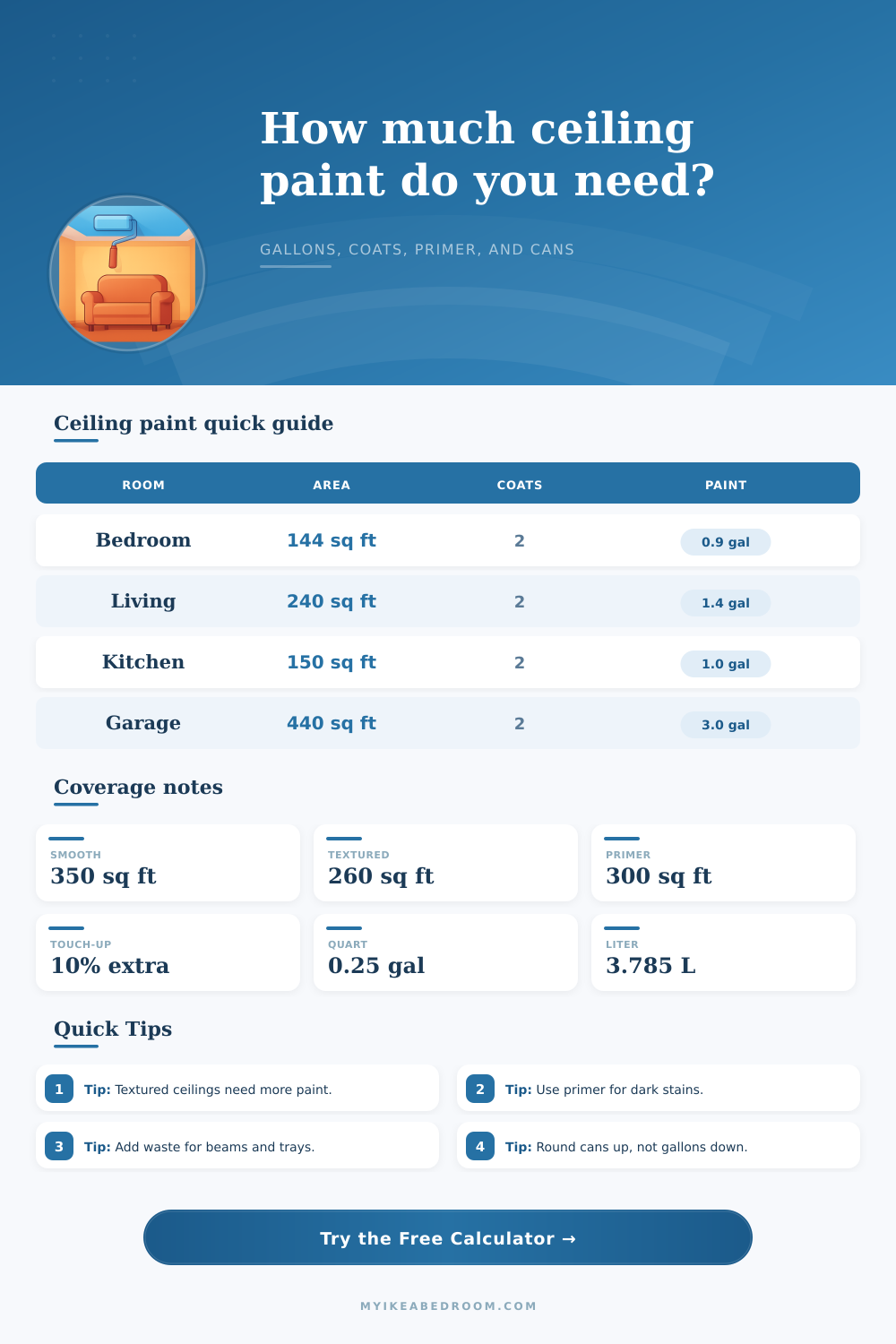
| Bedroom 12 x 12 | 144 sq ft | 0.91 gal | 1.00 gal |
| Primary room 14 x 16 | 224 sq ft | 1.41 gal | 1.55 gal |
| Living room 15 x 20 | 300 sq ft | 1.89 gal | 2.08 gal |
| Garage ceiling 20 x 22 | 440 sq ft | 2.77 gal | 3.05 gal |
| Container plan | Capacity | Best fit | Rounding note |
|---|---|---|---|
| 1 quart | 0.25 gal / 0.95 L | Spot repairs, closets, very small ceilings | Useful when estimate is under 0.25 gal |
| 2 quarts | 0.50 gal / 1.89 L | Bathroom ceilings or one-coat touch-ups | Often easier than storing a full gallon |
| 1 gallon | 1.00 gal / 3.79 L | Most bedrooms and nurseries | Default buy point for full ceiling repaints |
| 2 gallons | 2.00 gal / 7.57 L | Primary bedrooms and medium living rooms | Safer for textured or two-coat jobs |
| 5 gallon pail | 5.00 gal / 18.93 L | Garage ceilings, multiple rooms, large open areas | Use only when the estimate is near several gallons |
Ceilings aren’t like walls after all. Coverage depend on whether surface is smooth or textured. Gravity also make them prone to dripping.
Once you input the area you need to cover, calculator will tell you how much paint you’ll need. The beauty of this is it takes the guess work out of shopping… It’s time saving, does the math for you in quarts/gallons and keeps your budget manageable.
How to Use the Paint Calculator
The texture of your ceilings also matter. Smooth ceilings absorbs roughly 350 sq ft/gal while textured (e.g. Stippled or an “orange-peel” finish) will soak up even more since rollers need to fill in their grooves. To compensate for this, our paint calculator include a texture multiplier. This means that two room with identical square footage (e.g. A bedroom and a garage) may not use same amount of paint because of different ceiling conditions.
Always consider condition of surface you’re painting. If your ceilings has water stains, smoke damage, or new patches from joint compound, you’ll want primer first. Otherwise, those imperfections will show through after painting. The calculator have an option to turn primer on/off depending on state of your ceiling. It estimates the amount of paint needed only for primer, not finish paint. This prevents waste if you have areas that require oil-based or shellac undercoats due to water. A good primer job will make all your coats look even and not blotchy.
Beyond just raw sq ft, you also have tray designs that add extra surface area as well as vaulted ceilings. For example, while a normal 12×12 room would be 144 sf, if it has a pitched roof or coffers, those will add much more material to paint. That’s why we’ve got an option to account for the slope allowance and adjust overall area accordingly. If not, you might run out of paint midway through second coat and the colors won’t match for rest of job. You should of planned better.
With cut-ins, like fixtures and edges, you’re using more paint (since they don’t cover as much surface area as you’d roll on a wall). When cutting in around recessed lights or fans, vents, etc., you’ll have some overlap and waste that must be included in calculation by the tool. A 10 percent addition for touchups/waste is built in by pros to allow for reloading rollers, the inevitable small mistake. Better to have a little extra paint left over than run out before completing project.
The last step is selecting the correct amount of paint. Buying paint by the gallon for most of your room will save you money. For smaller spaces, you may need quarts or mixed packages so you do not waste any paint. Based off the output, it suggests how much paint to purchase for job. Don’t end up buying half cans and having partially used paint dry out over time. By planning ahead, you make project doable.
A ceiling is a canvas. Preparation and accuracy both goes into painting a ceiling. Knowing what will be covered by texture, primer and architectural detail lets you calculate precisely. Your estimates tells you what to buy. How well it’s applied determines the outcome. Roll away and let the math do the math; measure twice.