Canopy Fabric Yardage Calculator
Estimate fabric yards for bed canopies, four-poster curtains, ceiling crown drapes, daybed panels, mosquito-net style boxes, top cloth, hems, fullness, and pattern-repeat rounding.
Choose a realistic canopy setup, then adjust the bed, drop height, fabric width, fullness, hems, repeat, and overage to match your sewing plan.
Four-poster box
Best when curtains hang from a rectangular frame and can close on all sides.
Highest yardageCeiling crown
Best for soft gathered fabric falling from a hoop or central ceiling point.
Fullness drivenDaybed rail
Best for a wall-side daybed with one show side and shorter end panels.
Moderate yardageHeadboard half
Best for a decorative head canopy where fabric does not wrap the full bed.
Lowest yardage| Fabric | Common Width | Good Fullness | Canopy Use | Planning Note |
|---|---|---|---|---|
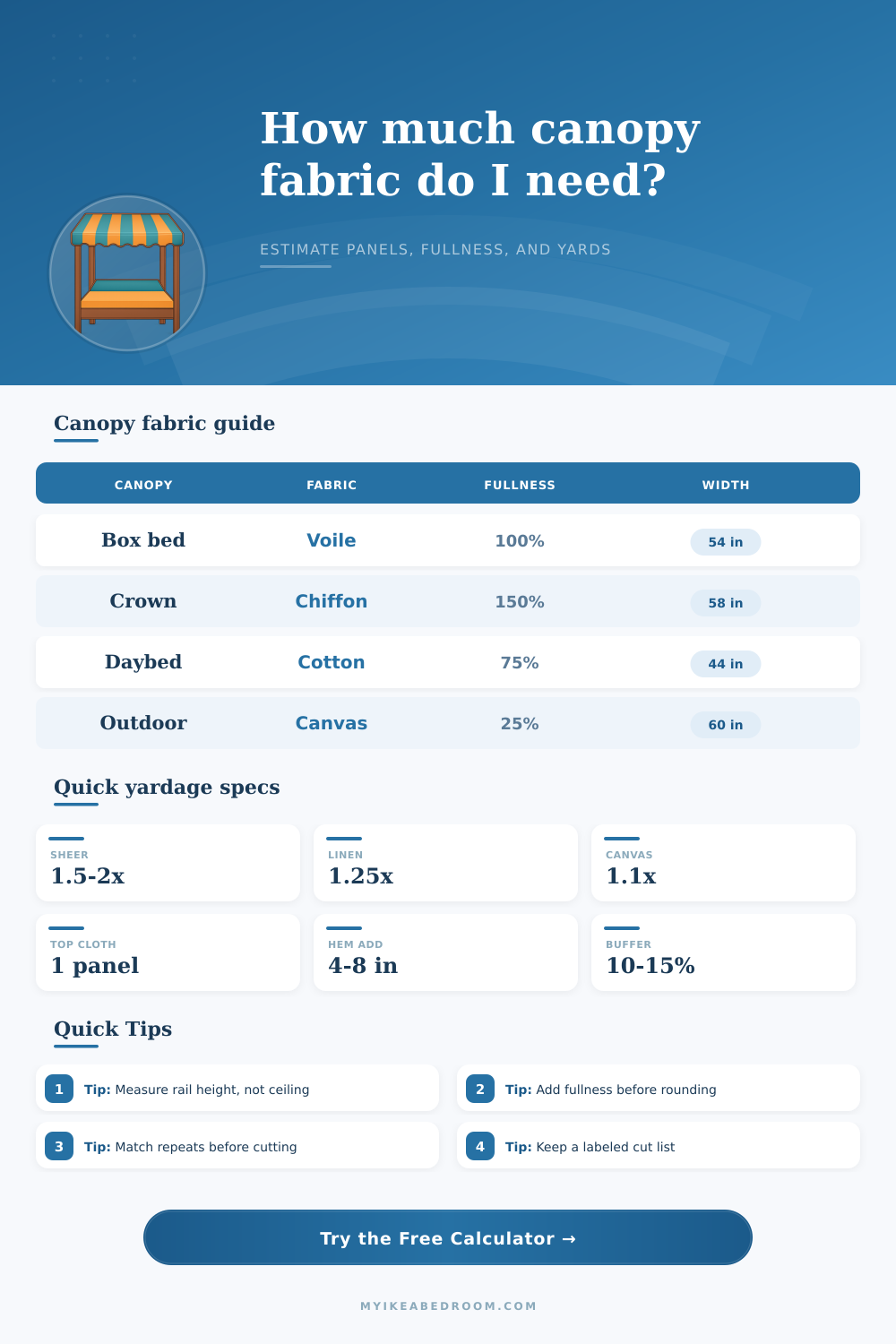
| Cotton voile | 54 in / 137 cm | 1.5x to 2.0x | Light bedroom canopy | Soft folds, easy to layer |
| Poly chiffon | 58 in / 147 cm | 1.75x to 2.5x | Romantic ceiling crown | Needs generous fullness |
| Tulle or mosquito net | 108 in / 274 cm | 1.5x to 2.5x | Wide box or hoop canopy | Wide bolts reduce panel joins |
| Cotton muslin | 45 in / 114 cm | 1.25x to 1.5x | Kids loft or reading nook | Prewash before final cutting |
| Linen blend | 54 in / 137 cm | 1.15x to 1.5x | Four-poster curtains | Looks good with softer fullness |
| Outdoor canvas | 60 in / 152 cm | 1.0x to 1.25x | Covered patio daybed | Heavy cloth needs less gather |
| Look | Multiplier | Best Fabric | What Changes | Use When |
|---|---|---|---|---|
| Flat privacy panel | 1.0x | Canvas, blackout | Lowest width and fewest panels | Function matters more than folds |
| Light folds | 1.15x to 1.25x | Linen, cotton | Small ripple without bulk | Rails are close to furniture |
| Gathered drape | 1.5x | Voile, muslin | Balanced canopy softness | Most bedroom canopies |
| Full sheer | 2.0x | Voile, chiffon | More opacity and movement | You want cloudier side panels |
| Very full net | 2.5x | Tulle, netting | High panel count unless wide fabric | Hoop or crown styles |
| Bed Setup | Canopy Footprint | Four-Side Rail Run | Top Cloth Area | Typical Drop |
|---|---|---|---|---|
| Twin with 2 in overhang | 43 x 79 in | 244 in | 23.6 sq ft | 72 to 84 in |
| Full with 3 in overhang | 60 x 81 in | 282 in | 33.8 sq ft | 78 to 90 in |
| Queen with 3 in overhang | 66 x 86 in | 304 in | 39.4 sq ft | 84 to 96 in |
| King with 4 in overhang | 84 x 88 in | 344 in | 51.3 sq ft | 84 to 100 in |
| Daybed with 2 in overhang | 43 x 79 in | 165 in three side | Optional | 48 to 72 in |
| Cut Item | How It Is Counted | Rounding Rule | Common Add-On | Check Before Cutting |
|---|---|---|---|---|
| Side panels | Gathered width divided by usable bolt width | Round panel count up | Header plus lower hem | Confirm finished drop from rail |
| Top cloth | Canopy width divided by usable bolt width | Round widths across up | Side seams on all edges | Match any directional print |
| Box valance | Rail run times 8 in valance drop | Area converted to linear yardage | Small seam allowance | Keep valance depth consistent |
| Pattern repeat | Each long cut rounded to next repeat | Applied before overage | Extra fabric for alignment | Mark right side and top edge |
Tip: Measure from the real hanging point: ceiling hooks, canopy rails, clip rings, and rod pockets can change the finished drop by several inches.
Tip: For patterned fabric, cut the longest visible panels first, then use remaining cloth for top pieces, tie backs, tabs, or a short valance.
Intuition doesn’t account for those lost due to seams and hems, something you definitely want to think about when estimating how much fabric you’ll need. This math can be a headache, but the calculator above take care of it for you. Simply enter in your bed measurements and preferred fullness and the tool handles the complex arithmetic to help you estimate what you’ll need. It helps minimize waste and prevents you from buying too little, but remember to account for things like shrinkage if you’re prewashing naturaly fibers.
The most significant variable for a canopy project is fullness. Fullness tell you what percent of your rail length is covered by gathered fabric. Most sewers prefer their soft folds to be either a one point five times or twice as long than the rail. This means that it makes all the difference on the final yardage and its decision on how many vertical panel to cut off any given bolt of fabric.
How to Plan Your Canopy Fabric Needs
You may only need three panels for a standard rod. But for a soft fold, I typically need six or eight, depending on how full you want the gathered canopy to look. The wider your fabric is, the less sides it will have, thus saving on waste and sewing time. A standard width of upholstery fabric is 54″; some drapery specials can be as high as 180″. When cutting a narrow fabric, you must also account for seam allowances at all joins. Fewer joins mean less cutting, but wider fabric often cost more per yard. Consider how long it takes to piece several panels together and balance that with the additional money being spent. Think about total hours of work on the whole project. This is the bottom line.
The bottom hem should be three to six inches, depending on how heavy the fabric is. Tab Tops and Rod Pockets adds inches at the rail. Vertical Repeat Matching: Depending on how busy the pattern is, sometimes it takes more length to get the same repeat in every panel. For example, maybe you’ll waste two feet just to line up a pattern correctly. Enter your desired hem size and repeat length to use this calculator. It adds everything up so the bottom number includes every last stitch, not just what you see dropping down.
When ordering a canopy with your bed, always order based on where the fabric actualy falls (measure from the real hanging point down to where it ends), not where it would be off of the floor if hung off of a ceiling. Meaning if you want to hang something like this that is off of the ceiling hook and you measure from the headboard instead, your panels will end up too short or awkwardly bunched near the mattress. In addition, make sure to account for the strength of what is holding up the fabric. A lightweight fabric like canvas can be suspended by a nice strong metal frame. A heavier one like velvet needs more structure as a simple tension rod won’t cut it with all those gathers.
Special note: Yardage for top cloths are sold separately because it covers the mattress area, which prevents your canopy from looking like it is hovering in mid air. Some designs include a box valance around the perimeter, which requires additional fabric length calculated by the rail run. So many times you forget about these things and then find yourself with plenty of side curtain but no way to cap it off. If you plan for these parts at the beginning, it helps make sure that you have the full picture, not just partially there.
For those who use cotton or linen, plan on pre-washing. Natural fibers shrink a lot, sometimes more than five percent… Which means you could cut out panels only to have curtains that is an inch or two shorter than desired. Take the time to measure and plan since a canopy is going to be there forever. If you must, give yourself some wiggle room and lose a few extra yards rather than having your finished project fit poorly. It’s cotton.