End Table Height to Armrest Calculator
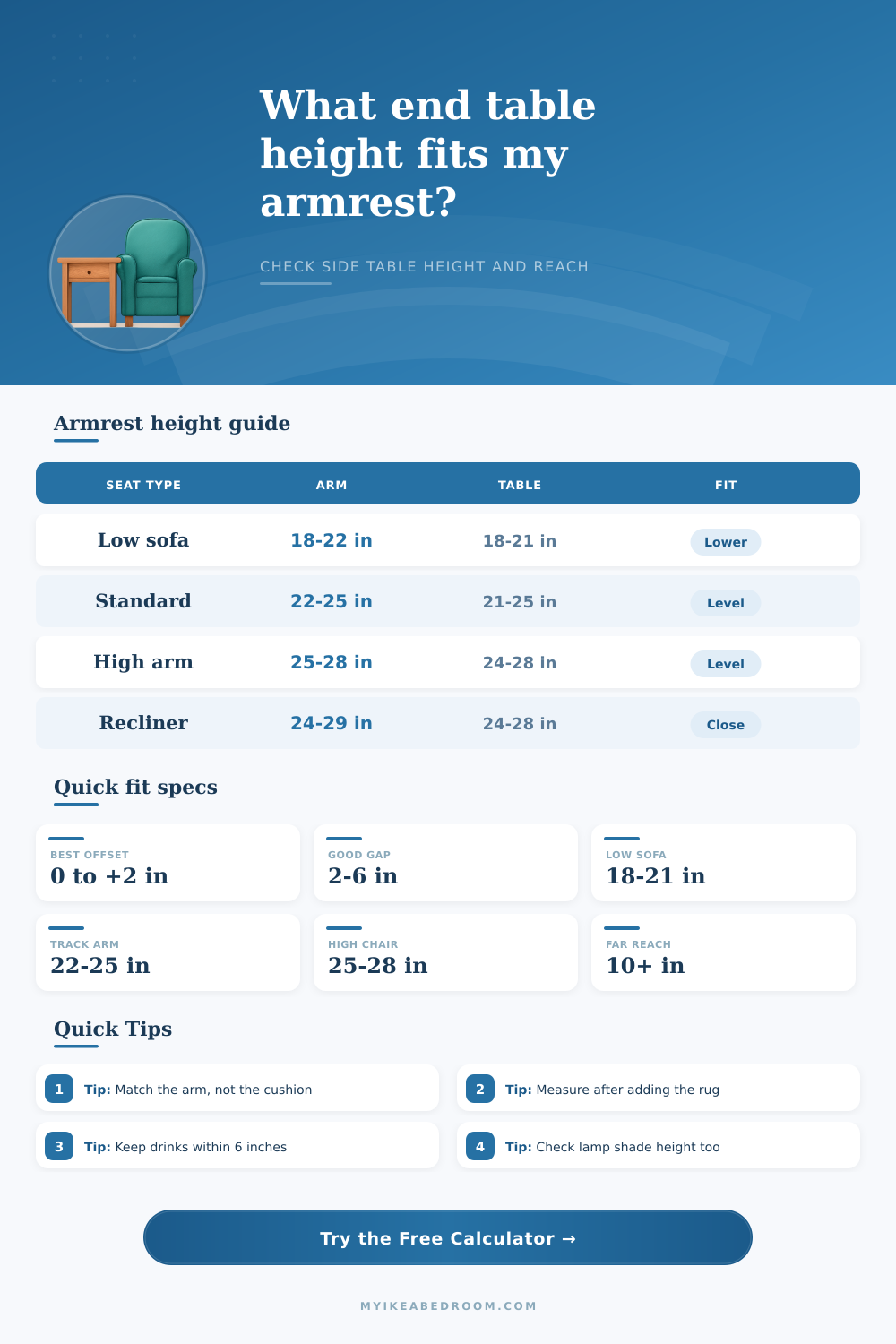
Compare a sofa, sectional, recliner, or accent chair armrest with an end table so the tabletop lands at a comfortable height for drinks, remotes, lamps, and reach.
Pick a common sofa or chair setup, then adjust arm height, rug thickness, side gap, and table style to match the room.
How the calculator judges fit
Height: end table tops usually work best from about 1 inch below the armrest to 2 inches above it, with adjustments for rug thickness and the chosen use.
Reach: side gap plus half the arm width estimates how far your hand travels before reaching the usable tabletop.
Use: recliners, gliders, and C-tables need a little more clearance because arms move, rotate, or overlap.
| Offset from armrest | Fit quality | Best use | Watch item |
|---|---|---|---|
| 2 in below or lower | Often low | Low lounge sofas, decorative tables | Drinks and remotes may feel like a downward reach. |
| 1 in below to level | Very comfortable | Most sofas, loveseats, and square end tables | Check thick arms that extend the reach. |
| Level to 2 in above | Comfortable | Side lamps, reading chairs, recliners | Do not var a tall table block the arm profile. |
| More than 3 in above | Often high | C-tables, mobility use, laptop surface | Can feel awkward for drinks beside a soft sofa. |
| Seating type | Typical arm height | Useful table range | Common result |
|---|---|---|---|
| Low lounge sofa | 18 to 22 in | 18 to 21 in | Low cube, tray, or nesting table |
| Standard sofa or loveseat | 22 to 25 in | 21 to 25 in | Standard end table or round side table |
| High-arm sofa | 25 to 28 in | 24 to 28 in | Drum, cabinet, or taller lamp table |
| Recliner or glider | 24 to 29 in | 24 to 28 in | Close side table or C-table with motion clearance |
| Wingback or reading chair | 25 to 30 in | 24 to 29 in | Pedestal, lamp, or martini table |
| Side gap | Reach feel | Best arrangement | Adjustment |
|---|---|---|---|
| 0 to 2 in | Very close | Small drinks, remotes, reading glasses | Check drawers, outlets, and arm fabric rubbing. |
| 2 to 6 in | Comfortable | Most sofas and chairs | Use half the arm width to judge the real reach. |
| 6 to 10 in | Long reach | Wide rolled arms or lamp tables | Move the table inward or choose a wider tabletop. |
| More than 10 in | Often too far | Decorative use, rarely used surface | Add a C-table, tray, or closer side table. |
| Preset setup | Arm height | Table height | Expected verdict |
|---|---|---|---|
| Low lounge sofa plus square table | 21 in | 20 in | Slightly low but comfortable for a relaxed sofa. |
| Track-arm sofa plus round side table | 24 in | 23 in | Near ideal once rug height is included. |
| Roll-arm sofa plus drum table | 27 in | 26 in | Good height, with reach checked for the wide arm. |
| Recliner chair plus C-table | 26 in | 25 in | Good if the table clears motion and side gap. |
| Wingback chair plus lamp table | 28 in | 27 in | Comfortable height for reading and lamp use. |
Measure after the furniture is sitting where it will live. A rug under only the sofa or only the end table can shift the real height relationship by enough to matter.
Use the armrest top as the reference. Seat cushion height helps diagnose comfort, but the tabletop should be compared with the arm where your hand actually travels.
Wide arms need closer tables. A table 5 inches away from a 10 inch rolled arm may feel farther than a table 7 inches away from a slim track arm.
Check lamps as a combined height. The table may fit the armrest while the lamp shade sits too high or too low for the reading chair beside it.
The sofa is what you buy first… The thing that anchors the room. But the thing that makes the room liveable is a side table. If the two aren’t the same height, a comfortabley spot becomes a workout for your wrists whenever you put down your phone or pick up your drink. Furnitures simply isn’t built on any sort of universal standard. What may look flush when you see it in the showroom (one brand’s twenty-four inch armrest vs. Another maker’s twenty-two inch table) can be dangerous inches too high when you bring it home to your living room with its own rugs, quirks, etc., making the gap glaringly obvious.
This is why: Before you lift one finger, use the calculator up top to see the relationship between your table’s height and your armchair’s back. No, you do not have to be an interior designer to understand it. All you have to do is take measurements of both the table top and the top of the armrest, the tool will do the rest.
How to Choose the Right Side Table Height
Most folks think that level is always best. And generally speaking, it is. But sometimes there are exceptions, partcularly about arm width. If it’s a skinny track arm, you can gets away with a larger space on the side without feeling like you’re stretching your hand out too far. But if it’s a wider, more rolled-up Victorian-type arm, even though the table surface may be flush against its side, the true useable part of the table are farther away. This is where the tool comes into play; it takes into account arm width so you can determine whether the distance your hand has to travel is greater then what meets the eye.
But rugs can be tricky things here. And a lot of people never even consider them. For instance, maybe just sofa rests on an area rug, but legs of the end table sit directly on wood floors. Now the furniture has shifted heights from each other by a matter of inches. When you’re stacking all that thickness on top of your own comfort level for sitting down, that quarter inch of cushioning starts to really add up. Maybe you don’t notice the difference in an inch. But lean back with a full glass in hand and you will.
Stability trumps accuracy in these situations. What do you mostly use the surface for? Is it mainly lamps? Then a bit above the armrest could be good for you. When you sit down, the shade gets out of the way so your line of sight isn’t blocked by harsh downward light. That annoying neck cramp that you get from trying to read under such lighting won’t happen. On the other hand, if the table will mostly hold remotes and mugs of coffee, then leave it near-level or perhaps just slightly below. When you relax and reach down, it feels more natural than reaching up.
Adding another wrinkle: recliners make things even more complicated, because the seating position shifts. Your body may move back as the armrest remains static. This alters effective reach. This means that function follows form. If you’re looking for something that can slide around your furniture, think C-table, then expect it to be a bit taller and sit closer. Expect nesting tables to be various heights, since they’ll tuck under each other. Measure the top table when it’s out, not the bottom table when it’s stashed away. And don’t neglect the actual thickness of the tabletop itself. Even with equal-length legs, a thin glass pane is visually lower than a thick slab of wood or stone.
Ultimately, the goal is invisible ergonomics. It stays that way until you want it to change. When you set the height to your arm height, the table seems like part of the sofa not some other thing fighting for elbow room. That is what a good living room does. It doesn’t call out for attention. It simply allows the life unfolding around it. Run the numbers once, trust the fit, and then go sit down and watch your movve in peace without wondering where to place the remote.