Vanity Stool Height Calculator
Find a comfortable vanity stool height by balancing tabletop height, underside clearance, cushion compression, shoe or rug height, thigh room, footrest position, and your preferred makeup or grooming posture.
Start with a common dressing table, desk-height vanity, counter-height vanity, or compact bedroom setup, then tune the real dimensions from your room.
How this calculator decides stool height
Top-to-seat gap: The main target is the vertical distance from the vanity top to the compressed stool seat. Most vanity work feels natural around 10 to 12 inches, but posture changes that target.
Knee clearance: The underside of the vanity must clear thighs and a little movement space. A beautiful stool that sits too high can still fail if knees hit the drawer apron.
Real seat height: Cushion compression, rug thickness, and slippers all shift the effective seat height, so the calculator separates raw stool height from loaded sitting height.
Foot support: Higher vanity stools usually need a foot rail or ring. The footrest reading checks whether the rail lands in a useful zone instead of too close to the floor.
| Vanity top height | Upright gap | Typical stool seat | Clearance check |
|---|---|---|---|
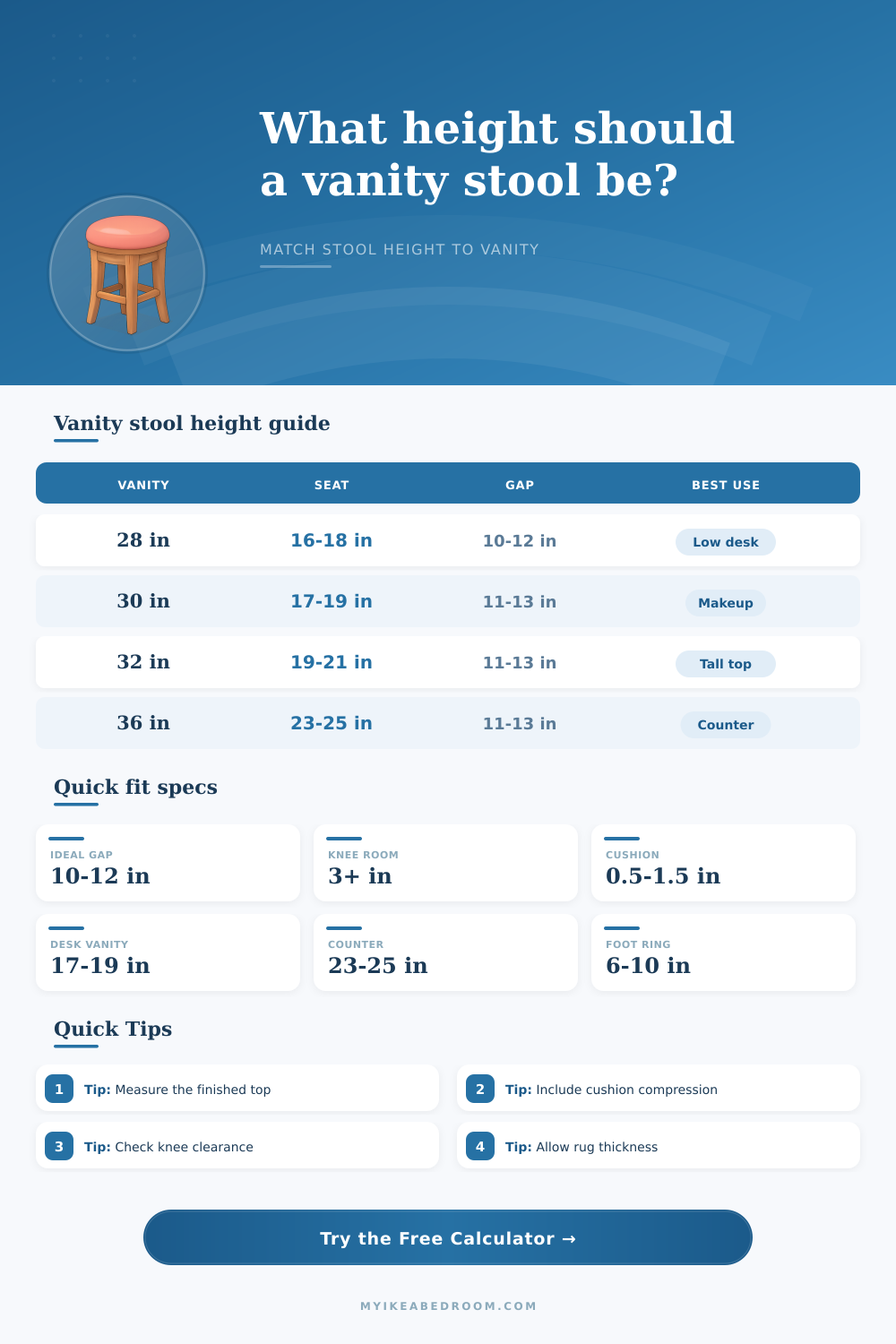
| 27 to 28 in low dressing table | 9.5 to 10.5 in | 16 to 18 in | Underside should still clear thighs by at least 2 in. |
| 29 to 30 in standard vanity | 10.5 to 12 in | 17 to 19.5 in | Best all-around range for makeup and grooming. |
| 31 to 33 in tall vanity | 11 to 12.5 in | 19 to 22 in | Foot rail becomes more helpful as seat rises. |
| 35 to 36 in counter height | 11 to 13 in | 23 to 25 in | Use counter stool proportions, not desk chair proportions. |
| Posture mode | Target top-to-seat gap | Best when | Watch point |
|---|---|---|---|
| Upright makeup or grooming | 11 in baseline | You sit close to mirror with elbows relaxed. | Check drawer apron clearance above thighs. |
| Relaxed dressing table | 12 in baseline | You prefer a little lower seat and softer posture. | Mirror may need a slightly lower tilt. |
| Close mirror work | 10 in baseline | You need fine detail access at the tabletop. | Do not sacrifice knee clearance. |
| Extra knee room | 12.5 in baseline | The vanity has a thick drawer or low apron. | Seat may feel low for detailed work. |
| Seat type | Typical compression | Calculator entry | Practical effect |
|---|---|---|---|
| Wood or woven seat | 0 to 0.25 in | 0 to 0.25 in | Raw stool height is close to seated height. |
| Firm upholstered stool | 0.5 to 0.75 in | 0.5 to 0.75 in | Common for compact bedroom vanity stools. |
| Soft foam cushion | 1 to 1.5 in | 1 to 1.5 in | Buy slightly taller if the cushion sinks deeply. |
| Thick tufted cushion | 1.25 to 2 in | 1.25 to 2 in | Measure while seated if possible. |
| Fit area | Comfortable target | Tight but usable | What to adjust |
|---|---|---|---|
| Free knee air gap | 3 in or more | 1.5 to 3 in | Lower seat, thinner cushion, or taller vanity opening. |
| Top-to-seat gap | 10 to 12 in | 9 to 13 in | Choose stool height by posture and mirror distance. |
| Foot rail below seat | 8 to 12 in | 5 to 14 in | Use a foot ring for taller stool heights. |
| Seat depth vs opening depth | 2 in spare | flush fit | Pick a shallower stool if it will live tucked in. |
Measure from the floor you actually use. A rug under the stool, a separate rug under the vanity, or thick slippers can change the effective sitting height enough to matter.
Test the lowest obstruction. Drawer fronts, center rails, and support aprons are often lower than the tabletop underside, so use the tightest knee opening in the calculator.
Your shoulders hunch forward as you crane toward the mirror for a glimpse. Your knees is pressed up against a hard-edged counter. You’re tense. That isn’t just poor furniture design; it’s a geometry issue. It is about how human bodies interacts with solid objects.
We all select our vanity stool based off appearance… We don’t think of how much legroom we require. Where do you work? How far away is it from where you sit? That will tell you if you look relaxed or strained. To run the numbers, use our calculator above (which does the math for you).
How to Pick the Right Vanity Stool Size
However, know that the inputs are based off these dimensions: The clearance zone below the seat, the distance between your bum and the floor, depends on how much thigh room you want. In other words, what is the height of the bottom of whatever is beneath surface where your feet rest? This is usually not the tabletop, but rather a support beam or drawer rail.
The other thing that most consumers don’t consider is how much a cushion compresses. A big thick piece of foam might look nice in photos, but when you sit down it sinks an inch or more. That will change the angle of your elbows and how high your eyes are from the mirror. What you want to do is measure for the true seated height. If you purchase a stool by looking at its un-compressed height you are actualy purchasing a stool that is higher then what you will be seated at. The tool includes the cushion compression so you can target the true seated height rather than the height you see on spec sheet in marketing materials.
Finally: How far away from the desk should the seat be? This is mostly a matter of posture. An upright makeup application stance usually prefers an eleven-inch gap between the seat and the desk surface (so you can put your elbows down comfortabley yet still extend your hands out front). You may like to lean back while applying general bandages, which would give you a little more space between your hip and the tabletop. But again: this isn’t some random rule; it’s an ergonomically appropriate response to length of time you expect to spend in said chair. Ten minutes? Different story then an hour-long skin care routine.
Other minor elements, like slippers and rugs, can make all the difference. It’s easy to overlook, but adding a pile of slippers or a rug underfoot adds yet another wrinkle (literally) to the equation. Heavy indoor slippers or thick-soled shoes will also raise your sitting surface above ground, which in turn will affect size of stool. And if you typically wear socks or go barefoot when applying makeup, but sit down on a fluffy area rug, those inches will add up in a hurry.
As soon as the seat goes up past typical chair height, you need somewhere for your feet to rest. At about 20 inches or so, your feet wants somewhere solid to go other than dangle unsteadily in space. A foot rail or foot ring stabilizes and give you something to lean on for balance and keep the blood flowing. Without one, stools higher than twenty inches feel precarious because there’s nothing anchoring your center of gravity.
This range can be broken down on the page as reference tables if it helps, I have provided those for typical vanity heights, but ultimately it’s all about what you’re comfortable with. Take careful measurements. Factor in softness of your cushion. Make sure there’s enough clearance beneath the drawers.
Once each measurement falls into place, you stop noticing the furnitures and only see the reflection staring back. The right size becomes second nature, leaving you free to get things done without constantly readjusting your position or struggling for elbow room. It transforms a tight corner into a working area that includes comfort in its design.