Double Curtain Rod Projection Calculator
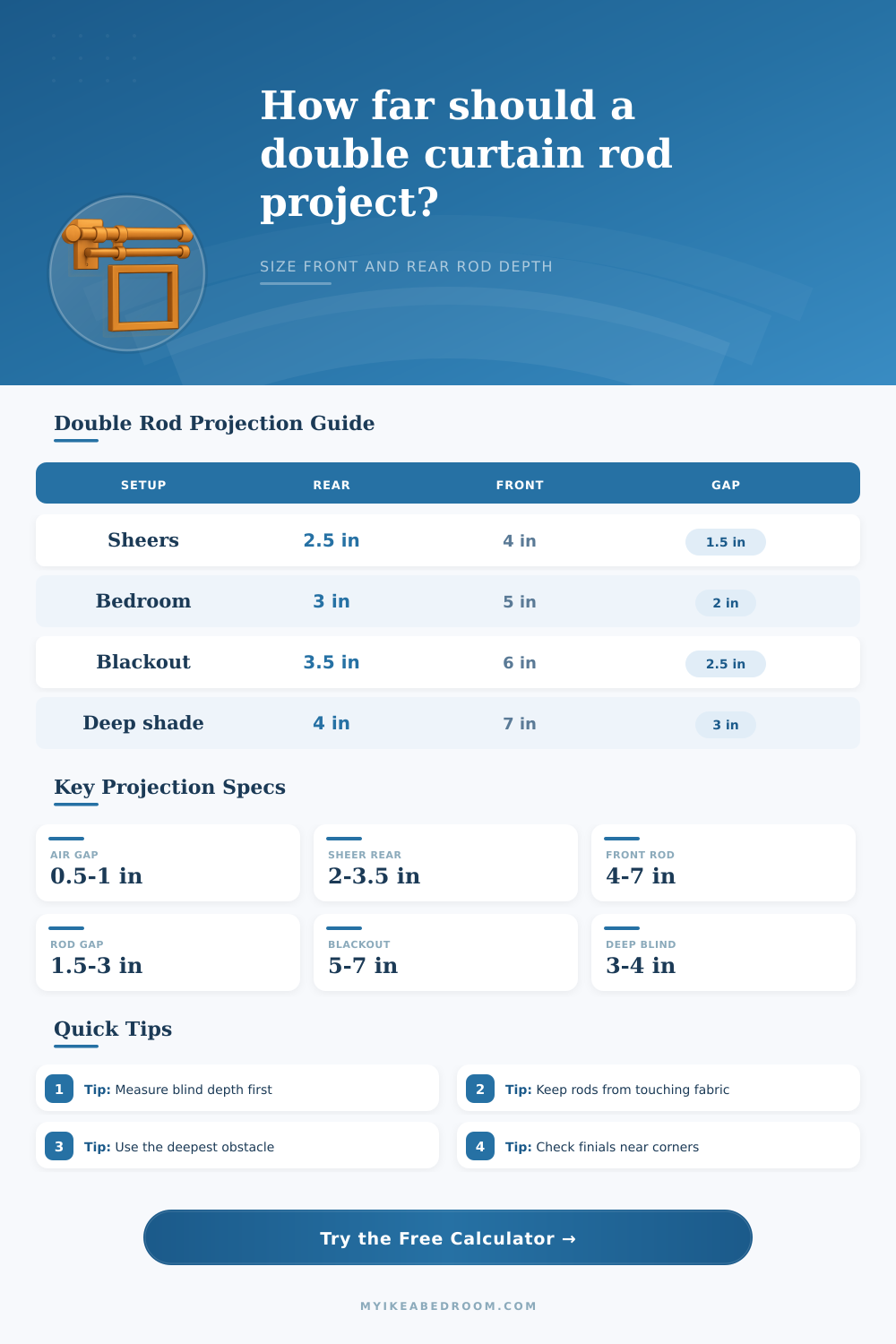
Check rear sheer clearance, front curtain projection, rod-to-rod spacing, bracket depth, and wall-to-fabric room before mounting a double rod set.
Double rod projection results
| Bracket or rod style | Typical rear projection | Typical front projection | Best use |
|---|---|---|---|
| Compact double bracket | 2-2.75 in | 3.5-4.5 in | Light sheers behind unlined panels where trim depth is shallow. |
| Standard wall double bracket | 2.5-3.5 in | 4.5-5.75 in | Most bedroom curtains with a sheer rear layer and a lined front layer. |
| Extended projection bracket | 3-4.5 in | 6-8 in | Deep casing, cellular shades, roller shades, or bulky blackout panels. |
| Adjustable telescoping bracket | 2.5-4 in | 4.5-7 in | Useful when the blind depth is unknown until final measurement. |
| French return front rod | 2.5-3.5 in | 5-7 in | Better side light control because the front fabric returns toward the wall. |
| Double track or track plus rod | 1.5-3 in | 3-5.5 in | Low-profile layered treatments with carriers instead of large rings. |
| Heading mix | Add to rear check | Add to rod gap | Projection note |
|---|---|---|---|
| Rings on both rods | 0.25-0.5 in | 0.5-0.75 in | Rings swing slightly, so count a little extra gap between layers. |
| Rod pockets on both rods | 0.25 in | 0.25-0.5 in | Close-fitting pockets can work with slimmer brackets if fabric is light. |
| Front grommet panels | 0.25 in | 0.75-1.25 in | Grommet waves need more front-to-back room than flat headings. |
| Pleated drapes with hooks | 0.5 in | 0.75-1 in | Hook position and pleat bulk can push fabric behind the rod center. |
| Wave or ripplefold carriers | 0.5-0.75 in | 1-1.5 in | Even waves need steady spacing so front folds do not brush sheers. |
| Blackout lined front panels | 0.5 in | 1-1.5 in | Thicker lining benefits from a deeper front rod and larger return. |
| Obstacle behind curtain | Typical wall depth | Rear rod target | What to verify |
|---|---|---|---|
| Flat window casing | 0.25-0.75 in | 2-2.75 in | Rear sheers clear trim when moving side to side. |
| Deep trim or rosette blocks | 0.75-1.5 in | 2.75-3.5 in | Fold depth does not scrape the proud trim edge. |
| Mini blind or slim shade | 1-2 in | 3-4 in | Shade wand, cords, and tilt bar have moving room. |
| Roller or cellular shade | 2-3.5 in | 4-5 in | Rear curtain does not catch the shade roll or headrail. |
| Window crank or door handle | 1.5-3 in | 3.5-5 in | Use the handle at its deepest usable position. |
| Layered shade plus trim | 3-4.5 in | 4.5-6 in | May need extended double brackets or a track system. |
| Room setup | Projection range | Rod gap range | Practical note |
|---|---|---|---|
| Small apartment window with sheers | 3.5-4.75 in front | 1.25-2 in | Compact brackets usually work if there is no shade behind the sheer. |
| Standard bedroom double rod | 4.75-6 in front | 1.75-2.5 in | Enough space for sheers, rings, and a lined outer panel. |
| Blackout bedroom with sheers | 5.5-7 in front | 2.25-3 in | Deeper projection helps reduce fabric rubbing and side light gaps. |
| Patio door with wide panels | 5-7 in front | 2-3 in | Check stack-back and side wall room before choosing long finials. |
| Window with roller shade behind | 6-8 in front | 2.5-3.5 in | Rear rod must clear the shade roll before the front rod is considered. |
| Track plus decorative front rod | 4-6 in front | 1.5-2.5 in | A slim rear track can save projection when trim depth is moderate. |
Rear rod is tight
Increase rear projection first when sheers rub trim, blinds, or a window crank. A deeper front rod cannot fix a rear-layer collision.
Front panels rub sheers
Add rod-to-rod gap, reduce bulky rings, or choose a deeper double bracket so the front folds clear the rear layer.
Side room is limited
Short finials, plain end caps, or a return rod can preserve stack-back when the window sits near a corner or wardrobe.
Drill bits turn into fabric that doesn’t budge. Measuring tape meets your body as you stand at the window, framing your fingers around two curtain layer (with maybe some fat trim or a roller shade between them). And then there’s the bracket mistake: buying them just because they are on sale! Wrong.
For double rods, it’s all about distance, how far out does each rod stick from the wall? Get that equation incorrect and drapes snags on sheers while sheers scuff up blinds. Layering becomes messy, not elegant. The calculator takes care of the geometry so you don’t have to see it unfold in three dimensions first before you grab the drill.
Why You Need to Measure Curtain Rods Carefully
Depth (of anything behind the curtain) is the critical initial measurement. Most people measure the window frame. Measure the depth of whatever is in back off the window. That cellular shade or motorized blind extend beyond the trim. Then add a slight air gap for sheer fabric to glide past that whole assembly without catching on it.
Every time you open and close the curtains, if the rear rod is too near, it builds friction. It is not just bad looking. It is mechanically bad. With this tool, type in that depth and it will tell you precisely where to position the centerline of the rear rod so it doesn’t touch anything.
Next up is the front rod; where does it go? How far out do those main drapes need to extend into space? That’s largely determined by the heading style. Simple pockets or pencil pleats takes up less space than wide wave headings or grommets. Bulkiness of the curtain can also be included with heavy thermal-lined blackout panels that increase thickness beyond width of even the rod itself. By allowing you to set the rod diameter and fold depth, the calculator take all of these factors into account.
I know what you’re thinking… what’s the big deal about a half-inch difference in projection? A lot. That extra half inch determines if your curtains pull back to stack open while still covering the window, or if they sits straight and flat against it.
Another common mistake is placing the rods too close together. For a clean look, people try to keep them tight, but the rings on the front rod need space to swing past the fabric on the back rod. 聽The rings on the front rod must have room to pass by the fabric on the back rod.聽 Otherwise your fabric wrinkles up and bangs on the other ring.聽聽
There are tables in the tool which give you ranges that work for most situations.聽 They will also tell you what minimum distance you should of had between rods for certain configurations such as lined drapes with sheer panels behind them.聽聽聽 These is safety margins derived from understanding how the fabrics behave as they move about.听 Not hard and fast rules.
All of this comes back around to bracket selection. If you have a very shallow window casing, a short bracket may eliminate visual clutter, but it won’t work in real life. If you have a deep casing, extended brackets pushes out everything. This is great if you want lots of layers, but it does not work well in small spaces.
The calculator compares the measurements and the bracket style you select to see if hardware can handle the needed depth. It also flags if your finials will hit a corner or a nearby wall. That’s something I’ve seen people forget about until they’re standing with a drill above completed work.
Sometimes, it’s not so much what projection is as available side room. If you don’t have much space beside the window, long finials won’t work. And, if your side clearance is not enough for the end caps of your choosing, the tool tell you so. You’re forced into a decision: go with shorter hardware or be prepared for curtains to bunch together tighter then desired.
Window treatment design is a no-free-lunch deal. Each decision comes at a spatial expense. Form and function create a harmonious space. You want privacy through the drapes, light control through the sheers, and smooth operation for all parts. To do this we has to honor the space the hardware occupies in real life.
This tool allows you to run your custom measurements through it and transition from guessing to knowing. The math tells you it will work, meaning the fabric will not hit the wall, the blinds, or each other. Knowing this makes drilling easy. The certainty is worth all aesthetic preferences combined. And it transforms what was an exercise in frustration, into something quite peaceful, and simply functional for your home.