
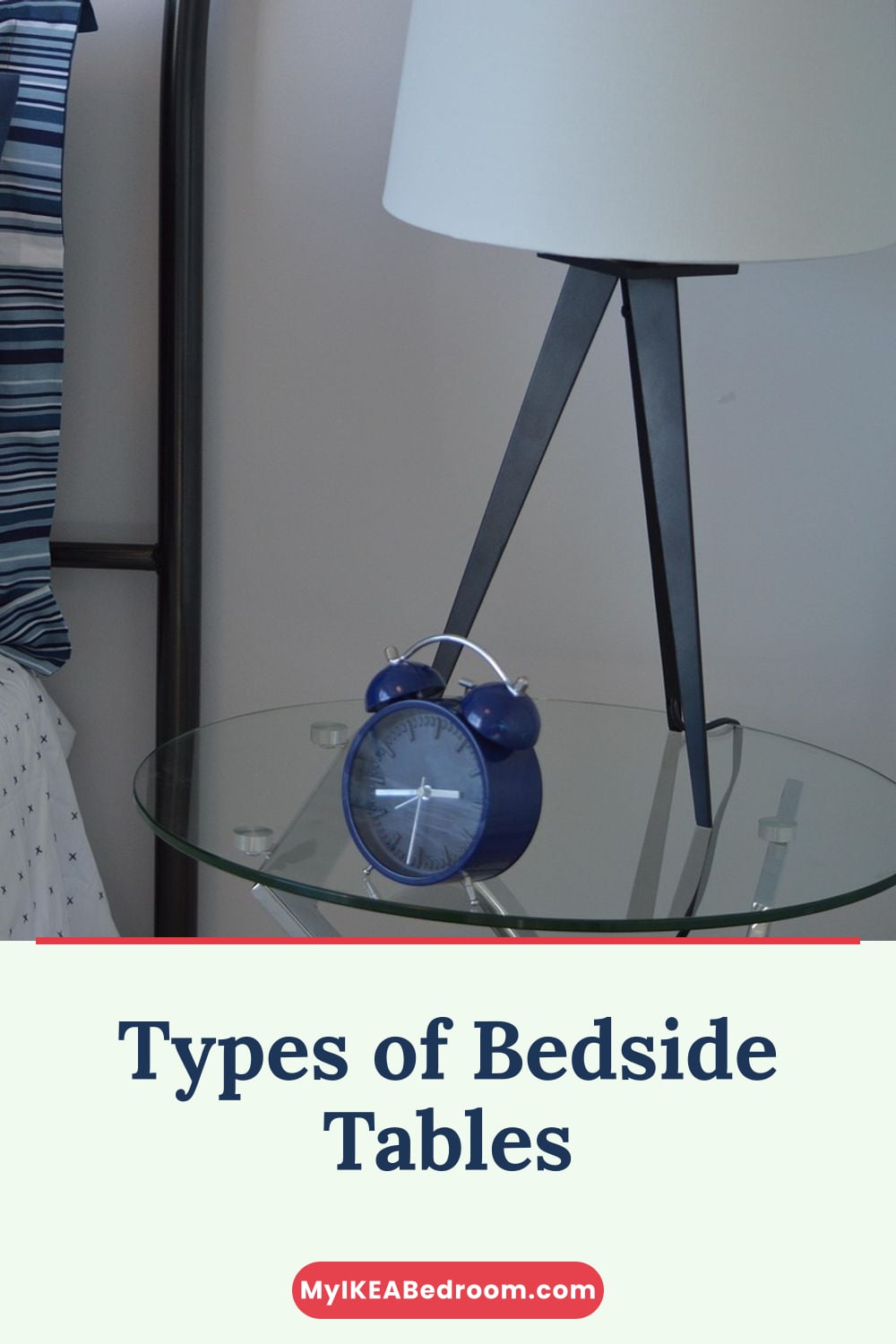
A bedside table do more than just hold a lamp and a glass of water. A bedside table performs several essential functions, it must hold essential items close to the sleepers bed, and a bedside table ultimately affects the look and feel of a bedroom when a person enter the bedroom at the end of the day. If a person selects the wrong type of bedside table for their bedroom, they may find that their bedside table is too bulky for the area, that they cant access their essential items easy, or that the bedside table does not coordinate well with the other furnitures in their bedroom.
However, if a person selects the correct bedside table for their bedroom, the bedside table will essentially dissapear in their bedroom, and it will perform its essential functions so smooth that they may even forget that they have a bedside table in their sleepers bedroom. Bedside tables can be a variety of different types. Each type of bedside table come in different materials, heights, storage options, and designs.
For instance, some bedside tables include fewer storage option than others, while other bedside tables offer more storage options. A persons understanding of the main types of bedside tables will allow for the person to choose a bedside table that match their sleeping habits, rather than forcing their sleeping habits to match the bedside table that they select. Nightstands can be divided into several different category.
Each of these categories includes bedside tables that are designed to solve a specific set of problems for those who own the beds upon which these nightstands are placed. Each category of bedside tables have certain features that distinguish it from other categories of bedside tables, as well as indicates in what types of situations those bedside tables may be best utilized. One of the most common types of bedside tables are traditional nightstands.
Different Types of Bedside Tables to Consider
1. Traditional Nightstands
These nightstands are typically between twenty-four and twenty-eight inches in height, to allow individuals to place their bedside tables at a height that is compatible with most mattress. Most traditional nightstands include one or two drawer in which individuals may place items such as reading glasses, earplugs, or other items that they may have previously removed from their pockets while they were walking or performing other tasks. The top of the nightstand may include a non-drawyer portion of the nightstand where items such as books, telephones, or even plants may be placed.
Traditional nightstands come in a variety of materials and colors that may complement almost any type of bedroom. For instance, traditional nightstands that use oak or walnut materials may best compliment bedrooms that include these types of wood furniture, while painted nightstands may be best utilized in modern bedrooms. However, traditional nightstands may be problematic for individuals that have limited floor space in their bedrooms, as their size may appear to be bulky when placed next to their beds.
Yet, for most bedrooms, a traditional nightstand will be the best choice. Another type of bedside tables that can be selected are floating bedside tables.
2. Floating Bedside Tables
These types of bedside tables is attached directly to the wall in the bedroom, and they leave the bedrooms floor entirely clear of any bedside tables.
Typically, these types of bedside tables include only a single shelf or drawer, and the items that are placed onto them or within them must not be too heavy. Additionally, because these types of bedside tables are located directly onto a persons bedroom wall, they may be more easily able to provide desired visual impact for the bedroom. For instance, an individual who utilizes a floating bedside table may desire to have an uncluttered look to their bedroom, or who may require additional mobility for their bedroom (such as wheelchair users).
However, the main downside to utilizing floating bedside tables is that they may not provide as much storage for an individuals sleep habit as some of the other types of nightstands. Another type of bedside tables that can be used are C-tables, also known as overbed designs. These types of bedside tables are designed to be placed under a persons bed, such that the top of the bedside table is positioned over the individuals lap.
3. C-Tables
The base of the bed table may slide under the bed, and the vertical support allow for the flat surface to be placed into an open position. C-tables are useful for individuals who wish to eat, read, or perform other tasks while sleeping on their beds. The height of the C-table may be adjusted to allow an individual to place their feet on the ground while lying on their sleepers bed, and the cantilevered nature of the bedside table allow for all of the items that an individual may require while sleeping to be within their reach.
A potential downside to using a C-table is that if an individual places a heavy item, such as a laptop, onto the edge of the table, that C-table may be at risk of tipping off of the bed. Yet, as individuals become used to using these tables correctly, they will likely find their use and benefit from these tables to be hard to relinquish. Another type of bedside tables that may be selected for individuals bedrooms are pedestal tables.
4. Pedestal Tables
These tables are supported by only one column or three legs, as opposed to the four legs that are typically utilized for most bedside tables. Many pedestal tables have a design that incorporates the mid-century modern style, in which the tables have rounded tops and thin bases of walnut material. Other pedestal tables have a more sculptural style in which a solid material such as marble is placed on three thin metal supports.
The main benefit to pedestal tables is that their open base provide an airy feel to the bedroom. Large pedestal tables may allow an individual to place their lamp, clock, and water carafe on the table, but they will not add to the visual weight of the bedroom. Additionally, a pedestal table may allow for another item to be placed underneath the table, should an individual decide to utilize that additional floor space.
Yet, pedestal tables may appear unstable when placed in a bedroom that features thick carpet. Therefore, pedestal tables may work best in the bedroom of an individual that has such flooring in their bedroom. Storage-heavy nightstands may include cabinets with doors, numerous deep drawer, or even small dressers that can be placed into an individuals sleepers bedroom.
5. Storage-Heavy Nightstands
Some storage-heavy nightstands include USB ports or power strips built into their drawers, allowing individuals to place electronic devices into the drawers and charge them while they are in their sleepers bedrooms. Storage-heavy nightstands may be appropriate for individuals whose sleepers bedrooms may also be used for other functions besides sleeping, such as home offices or nurseries. For instance, individuals who would like to store items such as chargers, medications, baby monitors, or clothing for winter night may find a storage-heavy nightstand to be of interest.
Yet, the size of these bedside tables may be problematic in most sleepers bedrooms, as they may appear bulky when placed next to the sleepers bed. Therefore, an individual may need to carefully consider the size and visual impact of the storage-heavy bedside table in relation to the remainder of the sleepers bedroom. Drum nightstands and round nightstands are two types of bedtime tables that may be used in an individuals sleepers bedroom.
6. Round Nightstands
Round nightstands may be between twenty inches in diameter, and may fit into corners in a sleepers bedroom. Round nightstands may include materials such as leather or woven materials to provide visual interest in the sleepers bedroom. Round bedside tables may create a calmer area in an individuals sleepers bedroom.
Because round tables do not have sharp corners, they are less likely to lead to the accumulation of items along the sleepers bed that may otherwise be placed along each of the straight edges of the bed. Round nightstands may also provide visual interest to sleepers bedrooms whose architectural feature are dominated by rectangles. Yet, because round objects have limited area along their surfaces, an individual may have to be more selective about which items are placed onto the sleepers bedroom round bedside table.
Three remote controls and two glasses may not be an appropriate number of items to place on a round surface in a sleepers bedroom. Another type of bedside table that can be purchased for an individuals sleepers bedroom are vintage or repurposed tables. Examples of such items can include an antique writing desk, a stool, or even a vintage suitcase placed upon a low platform.
7. Vintage or Repurposed Tables
The main requirement of these items is that they include a flat surface of an appropriate height. Vintage tables may be of interest to those who would like an item that appears to have the character and history of furniture that is not mass-produced for sale in retail stores. An example of such furniture may be an old school desk.
Yet, the main trade-off in purchasing a vintage item is that they may not include drawers. Therefore, an individual may have to purchase an item that can be placed underneath the vintage item to store small items. Another type of bedside table that may be of interest to individuals are adjustable-height tables.
8. Adjustable-Height Tables
These tables include mechanisms such as a crank, a gas lift, and telescoping bases that allow the height of the bedside tables to be adjusted from twenty inches to thirty-six inches or more. Some adjustable tables may include additional features, such as tilt tops, that allow the tables to be utilized for reading, while others may have no additional features. Adjustable height tables may be especially of interest to those individuals who share a sleepers bedroom with others.
An individual who wishes to utilize the sleepers bedroom for other purposes besides sleeping, such as for watching television, may require the bedside table to be at a different height than an individual who sleeps on their back and does not require any additional raised heights within the sleepers bedroom. Additionally, as an individuals sleepers mattress may change height (either when individuals change their sleepers bed, or as a result of purchasing a new mattress), the ability for the adjustable-height bedside table to be set to the height of the individuals new mattress will eliminate a potential area for frustration within the sleepers bedroom. Yet, adjustable-height tables may be problematic in that the adjustment mechanisms for these tables may increase the cost of the bedside tables, and may require those tables to be periodically maintained.
Therefore, the benefits of adjustable height tables may outweigh the costs and maintenance for those individual. Lastly, another category of bedside tables includes nesting bedside tables. These types of bedside tables may include two or three separate piece of bedside tables that can be utilized to provide additional surface areas for items within the sleepers bedroom, but which are placed in a closed configuration during periods when those additional surfaces are not of interest to the sleepers bedroom.
9. Nesting Bedside Tables
For instance, an individual may pull the smaller of the two bedside tables out of the primary bedside table only when guests are visiting the sleepers bedroom, or when the individual wishes to prepare a table for items such as coffee and pastries. These types of bedside tables are especially useful for those who have limited space in their sleepers bedrooms, but who sometimes require additional space for the sleepers bedroom. For instance, during most days, only the large bedside table will be utilized by the sleepers bedroom.
Yet, during weekends, when guests are visiting the sleepers bedroom, or when an individual is preparing food for others, the bedtime tables may be pulled out to provide a second location for placement of items. Most nesting bedside tables are made out of materials that are relatively lightweight, such as acrylic, metal, and wood. Yet, the smallest of the nesting bedside tables may be too low for an individual to place their lamp onto the table.
An individuals selection of bedside tables will reveal to others the sleeping habits and preferences of the individual. For instance, some individuals may desire to have a bedroom that includes a variety of items that may be placed onto the bedside tables, while others may desire to have a bedroom that is as open and uncluttered as possible. The best types of bedside tables are the types that essentially disappear within the sleepers bedroom.
In such a case, an individual will only become aware of the bedside tables when they are fulfilling their essential functions of placing items within sleeping individuals reach during the night. Thus, each individual should of select a type of bedside table that is that best matches their sleeping habits, rather than their idea of the bedroom in which they would like to sleep. Therefore, if an individuals bedroom features a bedside table whose proportions are appropriate to their bedroom, and if the storage options for that bedside table are appropriate to the number of items that they possess near their sleepers bed, the sleepers bedroom will be of quiet order and comfort to the sleepers.
