
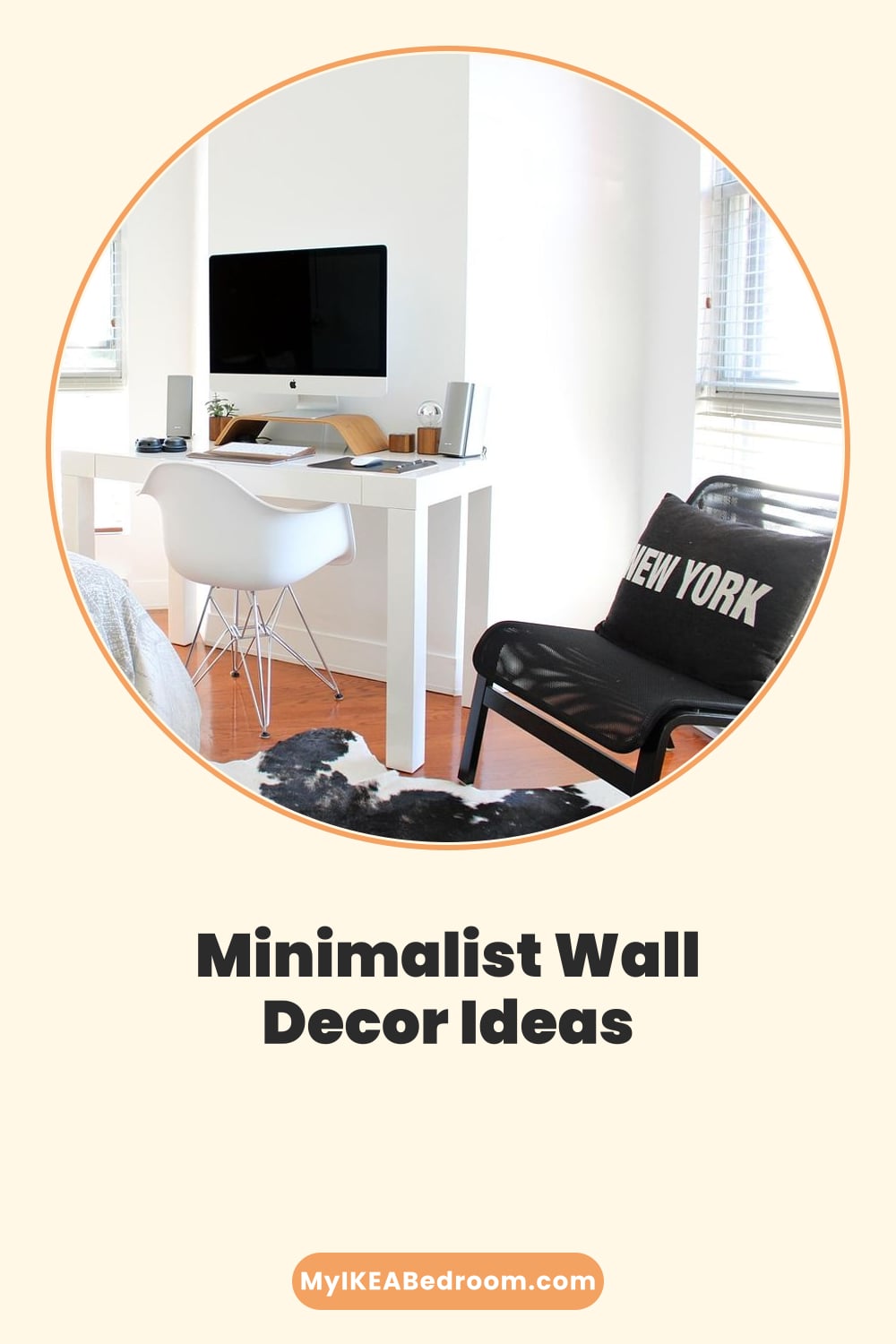
The walls in a room can often communicate with an audience even when the individuals in the room are not speaking to those individuals. If an individual enters a room that contains many objects that is cluttered onto the walls, those visual elements will work to drown out any sounds or other elements within that room. However, if an individual enters a room that has been stripped of many of those elements and only contains a few pieces of décor for the walls, the décor for the walls will allow for the room to breathe, to allow for the individuals in that room to feel calm and have their thoughts become more dominant within there minds.
Minimalist décor for the walls of a room is not about having fewer décor items for the walls than with other décor choices; instead, minimalist décor is made with the intention of making the décor items that remain for that room to be the most important for that space. Thus, an individual that makes the right choices for décor for their walls can allow those walls to work alongside the life in the room rather than the décor for the walls competing with the life in the room. Achieving such a decor for the walls can be difficult to achieve.
Many decoration stores contain items that are printed with different trendy design for décor galleries, for instance, yet these items for the décor can often work to distract from the décor choices that were made for that room. However, there are ways to achieve such minimalist décor for the walls of a room. The following eight ideas has been proven to work for individuals that would like to experiment with making their décor for the walls of their homes minimalist in design.
Eight Simple Ways To Decorate Your Walls
1. Oversized Textiles
One of the first ideas for minimalist décor for the walls is to incorporate a single textile that is oversized relative to the remainder of the décor items in the room. For instance, an individual could choose to use a wool textile or a vintage fabric that has been dyed a deep indigo color. These textiles will immediately draw the viewer attention to the textile, as they often contain various tones of the fabric and different types of weave that exist within the textile.
By choosing to hang such a textile, such as one that is placed above a sofa or a bed, the individual will immediately provide depth to the décor of the room. This décor item is best used within a room that also contains wooden floor or linen décor items within the room.
2. Grid of Frames
Another idea is to use a grid of frames that contain nothing but mat board within each frame.
These frames can be painted to the same color as the walls of the décor, or they can be painted a shade darker than the color of the walls to provide a subtle shadowing effect to the décor of the room. Such décor can be useful for rooms that are narrow in size, as they allow for visual interest within narrow hallways yet do not detract from the feeling of the openness that exists within those narrow hallways. However, each of the frames should be of the same sizes, of the same styles, and should be equally spaced from one another in the décor of the room.
Otherwise, the décor will not have a feeling of calm within the room.
3. Minimalist Gallery Walls
Gallery walls can also be used for minimalist décor for walls, yet there is one rule that must be followed: every décor item within the gallery wall should contain a common element. For instance, each décor item within that gallery wall could feature black and white photography, each décor item could contain oak wood furnishings, or each décor item could feature items that contain a horizon line within the image.
For instance, one homeowner chose nine décor items of ink drawings of native plants within their area, and each of those décor items was matted with cream-colored mat board and framed with thin lines of black metal. From the corner of the room, these nine décor items appeared as one décor item of a textile; up close, there were various details of each of the drawings. This example indicates why minimalist décor for gallery walls works for individuals yet maximalist décor for those same walls do not work for those same individuals.
4. Large Mirrors
Another décor idea for minimalist décor for the walls of a room is to incorporate a large mirror that is placed opposite from a window in the room. This mirror will allow the décor item to borrow some of the light from the remainder of the room, as well as to borrow the scenery from the remainder of the décor of the room. The frame for the mirror can be chosen to be unadorned, or the room can incorporate a frameless mirror to the room.
This décor is most beneficial for small apartments, as it will allow the décor items within that small apartment to make the décor of the space feel as though it is twice as deep as it is in reality. However, an individual must be mindful of the décor that is reflected from the mirror, as décor within the remainder of the room will also be reflected from that mirror. Thus, if there is a messy décor item within the remainder of the room, it will be reflected in the mirror, as.
In this way, the décor must be curated for the individual just as carefully as the décor within the rest of the décor of that room.
5. Floating Shelves
Another décor idea is to incorporate floating shelf of odd numbers into the décor of the room. By incorporating three or five floating shelves into the décor of the room, an individual can create space for décor items within the room.
Those décor items could range from a single ceramic vessel, a single stack of books, or even a single plant. This décor is a good option for those who love to incorporate books into their décor yet want to avoid the look of bookcases for their rooms. Floating shelves allow for books to be evenly distributed throughout the room.
In this way, each item should be removed from the shelves that are floated to ensure they appear balanced within the décor of the room.
6. Sculptural Everyday Materials
Another décor idea is to utilize sculptural décor items made from everyday materials. For instance, dried palm fronds, brass bells on a leather cord, or wooden dowels of varying lengths can be used as décor items for the room.
These items will create shadows within the décor of the room, adding another layer to the décor of that space. These décor items are best used in rooms that have strong natural light. However, caution should be used regarding the scent and the amount of dust that may be created by these décor items.
For instance, dried botanicals may contribute to the amount of dust that is within the room, therefore, care should be taken to either carefully choose décor items of this nature or place them in areas of the room that allow for their regular refreshing.
7. Framed Negative Space
Another décor idea is to frame negative space within the décor of the room. For instance, an individual can take a large portion of the wall and paint a rectangle within that wall using a different type of paint or finish than the remainder of the décor of that room.
Within that framed negative space, an individual can hang one small décor item. This décor idea is most beneficial for individuals that wish to pay homage to one precious item within the décor of their home. Items such as a single ceramic tile, a child’s drawing, or even a vintage postcard can be hung within the negative space of their room.
The negative space of the décor of the room will perform all of the work for that décor item.
8. Washi Tape Patterns
Finally, another décor idea is to temporarily decorate the walls with washi tape. This washi tape can be used to create various decorative patterns on the walls of the house.
Additionally, another benefit of washi tape is that it will remove cleanly from the walls. This type of décor is beneficial for those who live in rental homes. For instance, the minimalist woman created a series of picture frames utilizing washi tape of various sizes.
The effect of the washi tape was both playful and orderly. When she moved to a new home, however, she had clean walls that required no additional décor. Thus, washi tape allows for individuals to take risks in their décor choices because the décor will not be permanent.
Each of these décor ideas shares one principle and concept: the minimalist décor of the walls should be utilized as a supporting actor within the décor of the home rather than the star of the show. Thus, when individuals enter a room that has been decorated in such a way, the first thing that they will notice is how calm that they feel within the space. They will not often notice the décor items that are within the walls, yet they will feel calm within the space.
Thus, the goal of applying minimalist décor to the walls of a home or décor item within an office space is to create a calm feeling within those who enter such a space. The next time that an individual finds themselves staring at a blank wall within their home, they should resist the urge to begin decorating the wall. Instead, they should consider what single décor item will best decorate that wall within their home.
They could even choose to not add any décor to that wall altogether. Yet, their walls have been waiting their attention for a long time.
