
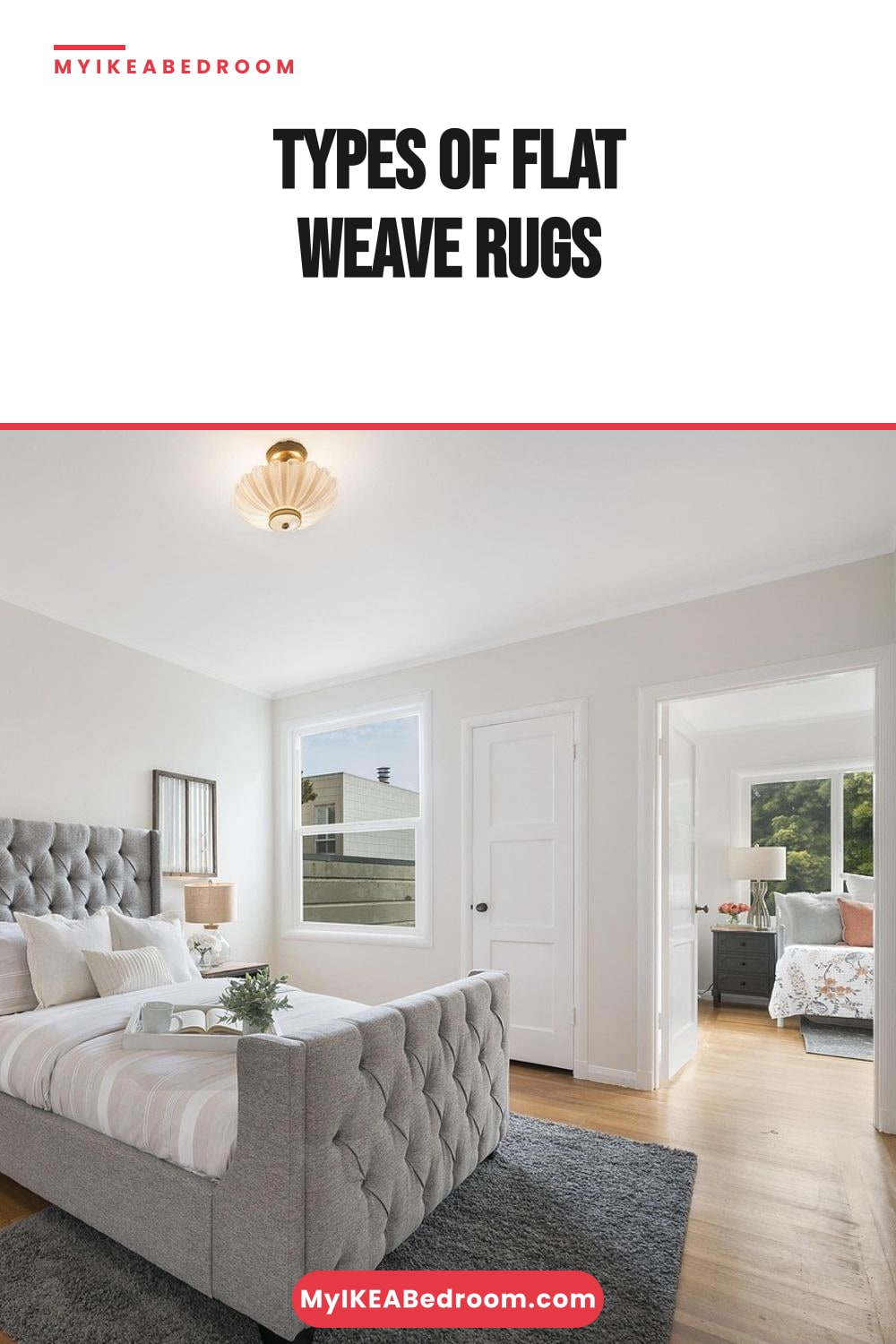
Flat weave rugs adds texture and pattern to a room. However, flat weave rugs do so without the heavy commitment requiring of thick pile rugs. Since flat weave rugs sits low to the ground, they are perfect for areas that experience heavy foot traffic.
Additionally, flat weave rugs are easy to clean than rugs with plush fibers. The lack of fibers on flat weave rugs allow for crisp rugs under bare feet in the summer. Additionally, the rugs will stay cool in areas that tend to become hot under the afternoon sun.
There are different type of flat weave rugs, and each one have a specific purpose in a home. By understanding the different types of rugs, you can transform a room in your home to accommodate the needs of its inhabitant. For instance, the rug in a dining room will need to be spot clean in the event of spilled wine.
However, a living room used as a play area will require rugs with softer fiber. The differences between rug types comes from the region in which they are made and the centuries old techniques used to create them. Once you understand the different types of rugs, you will look at rugs differently and find the perfect one for your life.
Popular Types Of Flat Weave Rugs
1. Kilim
The first type of rug to discuss is the kilim. Kilims are known for their bold geometric designs and their long and proud history. Kilims is woven on upright looms in Turkey, Iran, and the Caucasus.
These rugs are made from wool or wool-cotton fibers, and the wefts interlock to create bold designs on the rug. The rugs has slits along the designs that allow them to have crisp edges, much like stained glass. As the rugs are reversible, you get two rugs in one purchase.
Kilims are perfect for rooms that need visual stimulation but do not want to add much visual weight to the area. Though the rugs may feel stiff when newly purchased, after a few uses they will relax to a more comfortable feel for areas where people sits on the furniture in the room.
2. Dhurrie
The next type of flat rug to discuss is the dhurrie. Dhurries are the version of the flat rug from India. Dhurries are made of cotton though sometimes contain a touch of wool for extra warmth during the winter months. Dhurries have bold repeating design motifs that work well in minimalist lofts and bohemian home.
The artisans that craft these rugs dye the fibers prior to weave to ensure that the rugs take well to sunlight. Made of breathable cotton, these rugs will stay comfortable during the spring, summer, and fall. In the winter, they can be rolled up and store.
As they are lighter in weight than wool rugs, dhurries are perfect for renters of homes who want to avoid any damage to the floor. Though dhurries may be softer underfoot, they are slightly less durable than wool rugs, at least in high traffic areas of a home.
3. Rag Rug
The following rug type is the rag rug. Rag rugs are the ultimate in recycled item in the rug world. Rag rugs are made from tearing old fabric into strips and weaving it into a rug. Though there are no specific location for making rag rugs, most of them are made on simple frame looms in Scandinavia and colonial America.
The result of these rugs is a rug with an irregular weave that tell the story of the individual rugs. These rugs are perfect for areas where perfection is wasted. For instance, they are perfect for kitchens, mudrooms, and the bedrooms of young children.
Rag rugs tend to absorb sound in a room better than other rug do, which makes them perfect for households with many children or loud sounds. Though the rug may have a few loose thread in the first year of purchase, this is normal and part of the rugs appeal. After a few years of use, the rug will have become something else entirely and will likely be used as insulation or mulch in the garden in many decades from now.
4. Sisal Fiber
The last rug to discuss is made from sisal fiber. Sisal rugs are made from fiber harvested from the sisal plant. The sisal rug has a nubby texture that is slightly rough to the touch.
These rugs are perfect for modern homes or coastal home. Natural sisal fibers will age to a soft gray-beige color. However, sisal rugs holds their color better than wool rugs do due to the differences in how each fiber takes dye.
Sisal excels at hiding the sand that is tracked in from the beach, and sisal excels at hiding the crumbs from the snacks that are devoured during the afternoon. However, sisal can sometimes snag the claws of pets that like to scratch at sisal rugs, so sisal is not the first choice for owner of pets. Still, sisal is a good choice for those looking for an eco-friendly rug that can stand up to the heavy dining chairs that are likely to be pushed in and out of the same room.
Thus, sisal rugs earn their place on the rug-shopping short list.
5. Jute
Jute rugs take the idea of natural fiber one step further. The jute fiber has a slightly coarser texture than some of the other natural fiber rugs, and it is a golden-brown color.
When woven tightly, jute rugs are pleasantly rope like under bare feet. The natural oils in the jute rugs provide a subtle sheen to the rugs, which makes them suitable for even the most neutral-toned interiors. Furthermore, jute rugs are relatively affordable and biodegradable.
However, jute rugs may shed during the first few months after purchasing the rugs. Additionally, the rugs will naturally darken when expose to water. Thus, jute rugs are best placed in the drier portion of the home.
Once these factors are accepted, jute rugs can become one of the most long-term satisfying rug purchases.
6. Wool Flat Weave
Wool flat weave rugs combine the benefits of several rug types into one durable rug. Because wool naturally features a crimp in its fibers, the wool rugs can be woven tightly together without losing much of the rug’s resilience to the floor.
Wool rugs are also capable of producing deep and vibrant color, which fade little over the years. Many traditional Swedish röllakan rugs are wool flat weave rugs. These rugs feature intricate geometric designs that appear three-dimensional from a distance.
The slight content of lanolin in the wool provide natural resistance to stains and static cling. The major disadvantage to wool rugs is their cost. However, wool rugs last for many years, justifying the initial cost of purchase.
Thus, wool rugs are a durable rug that may be gifted as a holiday gift or passed along to another family member.
7. Tapestry Rugs
Flat-woven tapestry rugs take the flat weave rug to the next level of artwork. Tapestry rugs are often made of silk or fine merino wool, which allows the rug maker to depict detailed scenes and floral rug designs.
Because rugs of this type require a change of bobbins for each color in the rug’s design, it take longer to produce a tapestry rug. Thus, tapestry rugs command a higher price than some of the other rug types. These rugs are best used in formal sitting rooms or in the homes study room to appreciate the rug.
Additionally, because the rugs tend to be very densely woven, the rug will naturally absorb sound in the room. This is beneficial in a room that has hard floors and high ceilings. However, keep the rug away from rolling office chairs to avoid wear the rug.
8. Cotton Rugs
Lastly, cotton rugs complete the spectrum of rug weaves that use natural materials. Many cotton rugs are reversible and feature stripes or checks on the rug in different colors. The rugs are gentle on the bare knee, especially if the children play on the rug.
The cotton rugs can be easily washed in cold water (if small enough) or professionally cleaned (if larger in size) to maintain the rug’s color. Cotton rugs may naturaly fade over time with use and exposure to sunlight, but the rugs will last many years (as long as they are not used in high-traffic areas). The downside to cotton rugs is that they do not feature the natural resilience to impact that wool rugs feature.
Thus, over time, there may be traffic lane in the rug to accommodate the passage of individuals. Still, cotton rugs are beneficial for use in bedrooms, nurseries, or guest bathrooms. Each rug type discussed above solve a specific problem for the rug shopper.
Furthermore, each rug type adds its own unique personality to the interior of the home. From the drama of the kilim rug to the easygoing nature of the dhurrie rug, the rag rug tells your own unique story about yourself and your family in the home, and the natural fiber rugs connect your home to the outdoors. Thus, each rug type is less about finding the rug of your choice, but rather the rug that correspond to the life that you live.
In livig with your rug of choice, your rug will quietly do its job for the years that you live in your home.
