
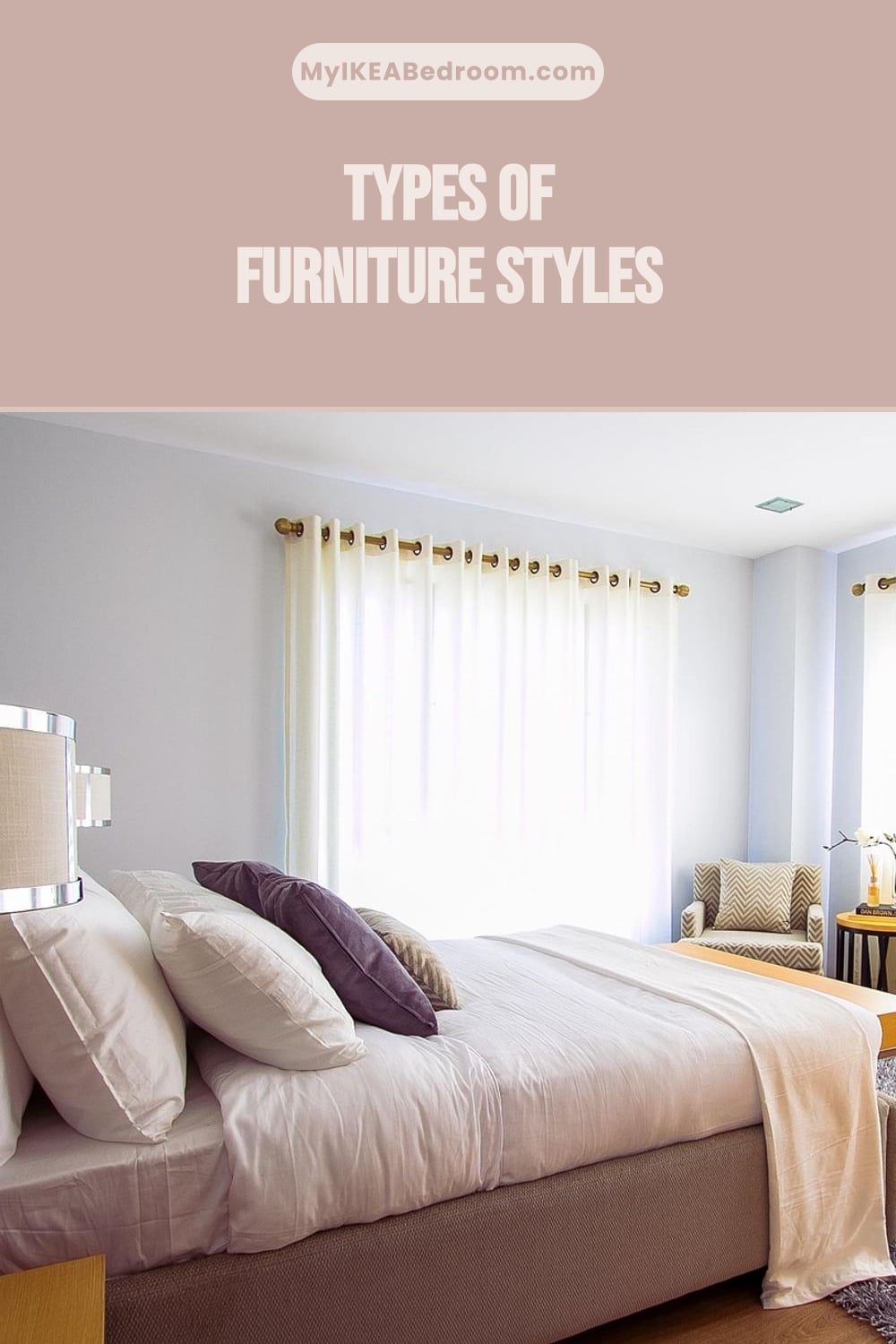
Furniture styles have a way of shaping the way that peoples live in their homes. The styles of the furniture that populate a home have an influence upon the way that a room feels the moment that a person enters the room. Furthermore, certain furniture styles will contribute to the feeling of a room as being one of calmness, order, and beauty, while other furniture styles may contribute to a sense of the personality of those who formerly lived within the room, and its stories.
Thus, choosing a furniture style for a home is more than just a decision of what types of furniture are visually appealing to the individuals that live within those homes; the choice of furniture style is actualy a decision of the type of life that each of those individuals desire to lead within their homes while they are surrounded by their furnishings every single day. Most individuals intuitively understand the relationship between furniture style and the type of individuals that live within those homes. However, when individuals begin to browse for furniture for their homes, those intuitions often become clouded by the variety of furniture styles available for consideration.
Each style has its place within the world of furniture, and so a review of the top furniture styles of the past and present can allow individuals to understand which of those styles may best reflect their personalities, their lifestyles, and their desired home. Among the many different types of furniture styles that have emerged throughout history are Victorian furniture styles, mid-century modern furniture styles, Shaker furniture styles, French Provincial furniture styles, Arts and Crafts furniture styles, Scandinavian furniture styles, industrial furniture styles, Japandi furniture styles, and Baroque furniture styles. Each of these furniture styles has emerged for certain reasons and with certain characteristics that has enabled them to stand the test of time and to remain present within the world of furnishings even today.
By reviewing each of these furniture styles, individuals can make certain decisions regarding the type of furnishings that they would like to include within their own homes.
Popular Furniture Styles to Consider for Your Home
1. Victorian Furniture
Of the most prominent of these furniture styles is Victorian furniture. First emerge in the reign of Queen Victoria within Britain, Victorian furniture styles began to spread throughout the Western world.
Victorian furniture typically includes features such as heavy ornamentation, dark woods (such as mahogany and walnut), and a sense of grandeur. Examples of furniture that includes these features includes furniture with carved floral motifs, tufted upholstery, marble tops, and legs with lion paws. Thus, Victorian furniture includes such characteristics because they work to satisfy the individual desire for opulence and history within their homes.
Such furniture tends to work best within larger homes, as the furniture pieces tend to be heavy and large in their presence. However, Victorian furniture also often works well with moddern lighting designs and features within the homes. Additionally, the use of light-colored walls within the homes allows the Victorian furnishings to stand out.
The disadvantages to the use of Victorian furniture styles includes the need to perform maintenance on the furnishings. For instance, the carved ornaments on the furnishings can accumulate dust, and the woods of the furnishings tend to exhibit scratches more readily than furnishings with more simplistic designs. Overall, though, those who desire to feel as if their homes contain the same features as those of a novel may choose Victorian furniture.
2. Mid-Century Modern Furniture
Another of the prominent furniture styles in existence today is the trend towards the use of mid-century modern furniture styles. Such furniture styles emerged following the conclusion of World War II, but are among the most popular furniture styles chosen by individuals within homes today. Mid-century modern furniture features designs by individuals such as Eero Saarinen and Charles and Ray Eames.
The popularity of this furniture style is due to the fact that it represents a balance between beauty and function in an era when both types of furnishings are valued by individuals who select such furniture for their homes. The popularity of this style in the present day is in part due to the fact that its features are still fresh even after being present for seventy years. This type of furniture is especially useful within smaller homes or apartments.
Because the designs of mid-century modern furniture tend to be slim in profile, and because the furniture tends to lack ornamentation altogether, the furniture allows for individuals to feel as if their homes are larger in size and feature calm interiors. The potential disadvantage to this type of furniture includes the fact that original, vintage furniture of this type can be expensive to obtain, and many reproductions of the designs may exhibit corners cut in their effort to minimize the cost of the furnishings. Another of the more ancient furniture styles includes Shaker furniture.
3. Shaker Furniture
Such furniture styles first emerged within the Shaker communities throughout America during the 18th and 19th centuries. Shaker furniture styles are defined by their simplicity, their craftsmanship, and their lack of decorative element to the furnishings. Thus, Shaker furniture has earned a place in any list of the most important furniture styles in history due to its ability to stand out as one of the most minimalist of all furniture styles.
This type of furniture is best suited for individuals who intend to create their homes with values of honesty and simplicity. For instance, individuals may incorporate Shaker chairs into minimalist lofts, as well as into traditional farmhouses. The only potential drawback to incorporating Shaker furniture into the homes of individuals is that traditional Shaker furniture features primarily limited color options to the furnishings, such as reds, blues, and earth tones.
Thus, individuals who desire bright colors within their homes may have to find alternative ways to introduce those colors into their homes. Another furniture style that has endured throughout time is French Provincial furniture. Such furniture styles emerge from the rural regions of 18th century France.
4. French Provincial Furniture
French Provincial furniture features characteristics of both the Parisian courts of France as well as the rural regions that were required to feature in the furnishings of French homes. Such characteristics include cabriole legs, painted finishes that feature soft greens or creams colors, furniture features that include carved fruit or floral motifs, and the general wear of the furniture. Thus, French Provincial furniture has earned a place on this list due to its ability to serve as a balance between formal furnishings and comfortable furniture styles.
Furthermore, French Provincial furniture is especially well-suited for either dining rooms or bedrooms within those homes. The features of French Provincial furniture are particularly useful for bedrooms or dining rooms, as the colors of the furniture and the forms of the furniture are inherently inviting. Thus, individuals whose homes may be exposed to gray days throughout the year may desire these types of furnishings.
However, the potential drawback to these types of furnishings is the scarcity of antique versions of the furniture styles, as well as their cost. Thus, furniture that is inspired to the original type of French Provincial furniture may need to be inspected more closely prior to purchase. Arts and Crafts furniture, also known as Mission style furniture, first emerged in both Britain and America as a reaction against the design of furniture styles such as Victorian furniture.
5. Arts and Crafts Furniture
Arts and Crafts furniture features designs of both straight and square oak furniture elements, visible joinery elements of the furniture, and incorporates leather straps onto some of its furniture styles. Furthermore, Arts and Crafts furniture typically utilizes materials that are considered to be honest and natural to the furnishings. One of the most well-known proponents of this type of furniture is Gustav Stickley.
Thus, Arts and Crafts furniture has earned a place on this list of the most important furniture styles in history due to its message of furniture that was create to last for several lifetimes. Art and Crafts furniture is especially useful in homes with low ceilings, bungalows, Craftsman homes, and other homes that are intended to allow individuals to physically interact with the furniture. For instance, many Arts and Crafts furniture elements feature exposed joinery and oak furniture elements that are cut in a quarter-sawn fashion.
These features tend to become more visually appealing over time. Thus, the potential disadvantage to this furniture style is its weight; the furniture can be substantial and may require sufficient space within the homes, as well as strong backs of the individuals who may need to move these furnishings. Another of the most popular furniture styles in recent decades is Scandinavian furniture.
6. Scandinavian Furniture
Scandinavian furniture styles feature light colors, natural materials, and designs that are created with the individuals who use the furnishings in mind. Scandinavian furniture styles have become massively popular in recent decades due to the ability of Scandinavian furniture to feature designs that are inexpensive to purchase, visually appealing to most individuals, and that will last for the individuals who use those furnishings. Scandinavian furniture is especially popular in regions with less sunlight and brighter winters, as the light colors of Scandinavian furniture designs allows for the furnishings within the homes to exhibit the presence of natural light.
Furthermore, the slim furniture styles and the pale colors of Scandinavian furniture allow even tiny apartments for individuals and couples to feel visually spacious within their homes. The disadvantage of Scandinavian furniture styles is that its extreme minimalism can exhibit a sense of coldness to the interiors of individuals’ homes. Thus, those individuals may need to combine Scandinavian furniture with other types of furnishings within the homes to create intended feelings of warmth to those individuals.
Industrial furniture elements take inspiration from the features of factories, machine shops, and warehouses that were constructed during the early 20th century.
7. Industrial Furniture
Industrial furniture features raw steel elements, reclaimed wood features, rivets, wheels, and other elements that suggest the features of the early 20th century’s industries to the furnishings. Thus, industrial furniture has earned its place in this list due to the fact that it can serve as a solution to the excess of the more artificial world in which most individuals live today.
Industrial furniture features elements that can be satisfying for those who desire to see the furniture incorporate elements that could once of served to support an industrial machine block. Industrial furnishings are best used within lofts, commercial buildings, and other interiors that feature high ceilings and open spaces within their interiors. Industrial furnishings often work well with concrete flooring within the homes, as well as large windows that allow for natural light to be exhibited within the interiors of the homes.
The potential disadvantage to industrial furnishings is that the designs were often created for commercial spaces. Thus, industrial furnishings can overwhelm the interiors of suburban homes. One of the more recent furniture styles to emerge on the scene includes Japandi furniture styles.
8. Japandi Furniture
The Japandi furniture style incorporates features of both Japanese minimalism and Scandinavian functionality into its furnishings. Thus, Japandi furniture earns its place on this list due to the fact that it helps to solve a particular problem with other furniture styles, how to create warmth within minimalist interiors without adding any additional clutter to those interiors. The Japandi furniture style is useful in contemporary homes that are constructed with the intention of providing serenity to the individuals that live in those homes.
The emphasis on craftsmanship inherent to Japandi furniture designs, as well as the use natural textures in their furnishings, ensures that the homes dont feel as sterile as those with other types of furnishings. Thus, the potential disadvantage to the Japandi furniture style is that it requires a level of discipline within the individuals who use and decorate their homes. Such individuals who have difficulty discarding possessions in their homes may find the Japandi furniture style to be inspiring in concept but challenging to apply within practice.
Another of the historical furniture styles to emerge in the world of furnishings are Baroque furniture styles. Baroque furniture styles first emerged in Italy during the 17th century, as well as began to spread throughout Europe during the 18th century. Such furniture features extravagant ornamentations to the furnishings, gilded elements in the furnishings, bold and curved furniture designs, and velvet furnishings.
9. Baroque Furniture
Thus, Baroque has earned its place on this list due to its ability to remain relevant in the history of furniture designs despite emerging towards the end of the list. Baroque furniture is associated with the art movements that developed during the Baroque period, and the ability of furnishings to evoke emotions from the individuals within the homes. Baroque elements work best within interiors that feature a variety of other contrasting colors and furnishings.
Thus, Baroque elements may work best within homes that utilize Baroque furnishings in only a few locations within the homes to provide visual interest to the interiors of those homes. Furthermore, Baroque designs may require large areas within the interiors of those homes. Thus, Baroque furniture may overwhelm most homes within suburban communities.
The type of home that an individual chooses to decorate with furnishings should reflect the story that they wish to tell of themselves to others, and it should not tell the story of another individual altogether. Each of the furniture styles that have emerged over the centuries have been created to fulfill the needs of the individuals in different ways. Thus, it is better to learn of the characteristics of each of these styles than to adhere to just one.
When an individual understands the reason for certain features of furniture versus others, the individual’s piece of furniture transforms from decoration to a part of their life. Thus, when furnishing the homes with which they decorate, individuals should have both their eyes and their instincts open. The correct pieces of furniture will feel as if they have been waiting for them to enter their homes all along.
