Temperature Blanket Calculator
Plan a daily or weekly temperature blanket from climate range, color count, row height, blanket width, yarn weight, skein yardage, border size, and making buffer.
Start with a familiar climate and blanket format, then adjust colors, rows, and yarn assumptions for your own weather record.
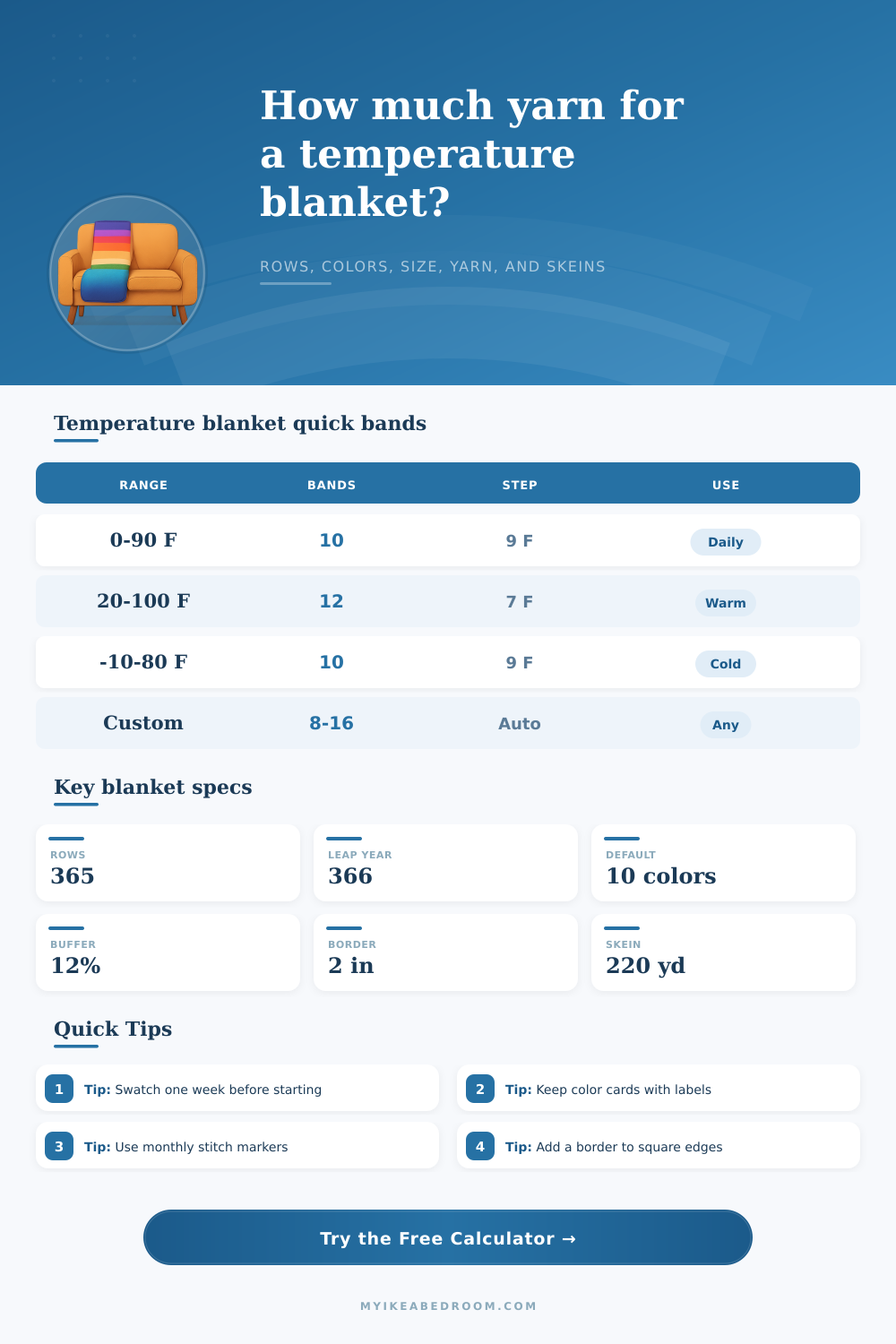
| Climate range | Suggested colors | Band size | Best use |
|---|---|---|---|
| 0 to 90°F / -18 to 32°C | 10 colors | 9°F / 5°C | Balanced four-season daily blanket. |
| -10 to 80°F / -23 to 27°C | 10 or 12 colors | 8 to 9°F / 4 to 5°C | Cold-winter regions with distinct low bands. |
| 35 to 105°F / 2 to 41°C | 12 colors | 6°F / 3°C | Warm climates where hot shades need more detail. |
| 45 to 75°F / 7 to 24°C | 8 colors | 4°F / 2°C | Coastal or mild climate records. |
| Custom travel year | 12 to 16 colors | Auto divided | Multiple cities with wider weather swings. |
| Row height | 365 daily rows | With 12 separators | Blanket note |
|---|---|---|---|
| 0.12 in / 0.3 cm | 43.8 in / 111 cm | 45.2 in / 115 cm | Compact knitted throw or scarf width. |
| 0.18 in / 0.46 cm | 65.7 in / 167 cm | 67.9 in / 172 cm | Common daily crochet blanket length. |
| 0.25 in / 0.64 cm | 91.3 in / 232 cm | 94.3 in / 239 cm | Long bed blanket or narrow twin layout. |
| 0.50 in / 1.27 cm | 182.5 in / 464 cm | 188.5 in / 479 cm | Use weekly blocks instead of daily rows. |
| Skein yardage | 1,500 yd blanket | 2,400 yd blanket | 3,600 yd blanket |
|---|---|---|---|
| 120 yd per skein | 13 skeins | 20 skeins | 30 skeins |
| 180 yd per skein | 9 skeins | 14 skeins | 20 skeins |
| 220 yd per skein | 7 skeins | 11 skeins | 17 skeins |
| 350 yd per skein | 5 skeins | 7 skeins | 11 skeins |
| Project | Width | Entry plan | Typical yarn range |
|---|---|---|---|
| Temperature scarf | 10 to 14 in | 365 thin rows | 900 to 1,600 yd |
| Baby keepsake blanket | 30 to 36 in | 52 weekly blocks | 1,200 to 2,000 yd |
| Sofa throw | 45 to 52 in | 365 daily rows | 2,200 to 3,800 yd |
| Twin bed blanket | 60 to 66 in | 365 daily rows | 3,400 to 5,600 yd |
| Queen temperature blanket | 80 to 90 in | Rows or panels | 5,000 to 8,500 yd |
Best for: full weather records with visible day-by-day changes.
Keep row height small so the finished blanket stays usable.
Best for: baby blankets, compact throws, and thicker yarn.
Use weekly averages or one representative high temperature.
Best for: bed blankets that need a cleaner rectangle.
Make 12 strips and join them after the year is finished.
Best for: moves, trips, college years, and memory blankets.
Use the widest expected range before choosing color bands.
Swatch before assigning yardage. Work at least seven rows in the intended stitch, measure the blocked height, and enter that row height instead of relying on a pattern average.
Build a color card. Label every color with its temperature band, then keep the card with your project bag so replacement yarn and daily rows stay consistent.
Mark the calendar structure. Add thin separator rows or removable stitch markers between months so the finished blanket tells the story without needing a long legend.
Keep border yarn separate. A simple border can square wavy sides and hide carried ends, but it needs its own allowance beyond the daily temperature colors.
A temperature blanket is a textile project in which the person create a blanket that demonstrates each of the daily high temperatures throughout the year. Each row or block in the blanket represents the temperature of one day, and the blanket show what the climate is throughout the year once the person completes the blanket after one year’s worth of rows. Many people find the planning of a temperature blanket to be difficult, as the person must decide on the amount of yarn that will be needed to create the blanket, the width of the blanket, and the number of color step that will be needed to represent the temperatures throughout the year.
Each of the inputs that are required for the temperature blanket calculator work in interaction with each other. For instance, the range of the temperatures will impact the number of color bands required for the blanket, while the height of the rows and the width of the blanket will impact the size of the blanket that will be created. The density of the knit and the weight of the yarn will impact the yardage of yarn that will be consumed in creating the blanket, and there will be allowances for some yarn for the color changes that will occur in the blanket.
How to Plan a Temperature Blanket
Because the blanket will change colors almost every day, some yarn tail will be created in the knitting process. Each of these variables will impact each of the others; however, the calculator will perform the calculations for the individual once the person has entered their chosen numbers for these variables. One of the most common errors for individuals creating a temperature blanket is to choose the number of colors that will be used before choosing the temperature range.
For instance, should a person choose ten colors for a temperature range of only ninety degrees, it is likely that some colors will not be used in the blanket. For instance, the colors used for temperatures that drop to freezing may never be utilized in the blanket. Thus, the person should choose the actual lows and highs for the climate in which the blanket will be created, and allow the calculator to determine the number of color steps that will be used in proportion to the actual climate temperatures.
Row height will have a major impact upon the size of the blanket. For instance, a thin type of fingering weight yarn will create a blanket with 365 rows that will not be too large for the individual to create. However, if the same number of rows is made using worsted weight yarn, the blanket will be much larger.
Thus, the row height and the width of the blanket can be programmed into the calculator to determine the size of the blanket that will result from the individual’s chosen yarn and knitting process. The weight of the yarn and the type of stitches will impact the amount of yarn that will be needed to create the blanket. For instance, a dense type of single crochet stitch will use more yarn than a stockinette stitch; however, a dense single crochet will use more yarn than a group of open granny stripes.
Thus, there is a yarn weight chart that can be used to determine the amount of yards of yarn that will be needed for each type of stitch. Additionally, the color changes each day will impact the buffer for the blanket; thus, an increased amount of yarn will be needed for weaving in the ends. People will likely need more yarn than at first expected for the blanket once they have completed half of the blanket.
Individuals can choose to create the temperature blanket in weekly or monthly format. For instance, if the individual averages the temperatures for each week into one temperature, there will be fewer rows created for each of those weeks. Thus, the number of rows will reduce the amount of yarn that will be needed for the blanket.
These types of blankets will have thick stripes, but they will lose some of the detail of the weather each day. Some people may want this type of blanket to reduce the amount of detail that is lost in the weather; however, others may prefer the blanket to contain these daily elements. Thus, the blanket allows for the individual to choose between these two options to compare the size of the blanket that will be created and the amount of yarn that will be needed.
An individual can also choose the width of the border for the blanket. For instance, a two-inch border will square the edges of the blanket and hide the yarns that are carried into the blankets edges. However, this border will be created separately from the temperature blanket portion of the project.
Thus, the calculator will indicate the width of the border in the size of the blanket that will be created, as it will include the amount of yarn needed for this border. However, if the individual chooses to create the blanket without the border, it is possible that the individual may run out of yarn of that color or may create a blanket that is too large for the individual’s preferences. The color palette that is chosen will impact the visual appearance of the blanket.
For instance, color palettes with high contrast will make it easy to discern when the weather was hot or cold; however, soft colors may require additional labeling of each color within the blanket. In either instance, the individual will need a swatch card that includes the temperature range for each color to ensure accuracy in purchasing replacement yarn for the blanket. The temperature blanket will show the actual weather that the individual experiences.
For instance, if there was a particularly cold week within the year, that will be depicted as one stripe on the blanket. Similarly, the mild winters will depict a narrow range of colors within the blanket. These representations will only be formed if the color steps and row counts for each portion of the blanket are in accordance with the actual temperatures of that individual’s area.
Thus, the calculator will calculate the numbers needed to create the blanket for the individual’s specific climate and size choice, removing the difficulty that can be associated with planning such a blanket. In creating a blanket, the individual will have to dedicate some time and patience to the project. The patterns will not become defined until near the end of the year when the blanket is complete.
Thus, the planning phase of the project is the most important part of creating the blanket. If the individual chooses the correct number of rows and colors for their area, they will avoid any need for additional yarn later in the blanket creation process. A temperature blanket is a textile project in which the person create a blanket that demonstrates each of the daily high temperatures throughout the year.
Each row or block in the blanket represents the temperature of one day, and the blanket show what the climate is throughout the year once the person completes the blanket after one year’s worth of rows. Many people find the planning of a temperature blanket to be difficult, as the person must decide on the amount of yarn that will be needed to create the blanket, the width of the blanket, and the number of color step that will be needed to represent the temperatures throughout the year. Each of the inputs that are required for the temperature blanket calculator work in interaction with each other.
For instance, the range of the temperatures will impact the number of color bands required for the blanket, while the height of the rows and the width of the blanket will impact the size of the blanket that will be created. The density of the knit and the weight of the yarn will impact the yardage of yarn that will be consumed in creating the blanket, and there will be allowances for some yarn for the color changes that will occur in the blanket. Because the blanket will change colors almost every day, some yarn tail will be created in the knitting process.
Each of these variables will impact each of the others; however, the calculator will perform the calculations for the individual once the person has entered their chosen numbers for these variables. One of the most common errors for individuals creating a temperature blanket is to choose the number of colors that will be used before choosing the temperature range. For instance, should a person choose ten colors for a temperature range of only ninety degrees, it is likely that some colors will not be used in the blanket.
For instance, the colors used for temperatures that drop to freezing may never be utilized in the blanket. Thus, the person should choose the actual lows and highs for the climate in which the blanket will be created, and allow the calculator to determine the number of color steps that will be used in proportion to the actual climate temperatures. Row height will have a major impact upon the size of the blanket.
For instance, a thin type of fingering weight yarn will create a blanket with 365 rows that will not be too large for the individual to create. However, if the same number of rows is made using worsted weight yarn, the blanket will be much larger. Thus, the row height and the width of the blanket can be programmed into the calculator to determine the size of the blanket that will result from the individual’s chosen yarn and knitting process.
The weight of the yarn and the type of stitches will impact the amount of yarn that will be needed to create the blanket. For instance, a dense type of single crochet stitch will use more yarn than a stockinette stitch; however, a dense single crochet will use more yarn than a group of open granny stripes. Thus, there is a yarn weight chart that can be used to determine the amount of yards of yarn that will be needed for each type of stitch.
Additionally, the color changes each day will impact the buffer for the blanket; thus, an increased amount of yarn will be needed for weaving in the ends. People will likely need more yarn than at first expected for the blanket once they have completed half of the blanket. Individuals can choose to create the temperature blanket in weekly or monthly format.
For instance, if the individual averages the temperatures for each week into one temperature, there will be fewer rows created for each of those weeks. Thus, the number of rows will reduce the amount of yarn that will be needed for the blanket. These types of blankets will have thick stripes, but they will lose some of the detail of the weather each day.
Some people may want this type of blanket to reduce the amount of detail that is lost in the weather; however, others may prefer the blanket to contain these daily elements. Thus, the blanket allows for the individual to choose between these two options to compare the size of the blanket that will be created and the amount of yarn that will be needed. An individual can also choose the width of the border for the blanket.
For instance, a two-inch border will square the edges of the blanket and hide the yarns that are carried into the blankets edges. However, this border will be created separately from the temperature blanket portion of the project. Thus, the calculator will indicate the width of the border in the size of the blanket that will be created, as it will include the amount of yarn needed for this border.
However, if the individual chooses to create the blanket without the border, it is possible that the individual may run out of yarn of that color or may create a blanket that is too large for the individual’s preferences. The color palette that is chosen will impact the visual appearance of the blanket. For instance, color palettes with high contrast will make it easy to discern when the weather was hot or cold; however, soft colors may require additional labeling of each color within the blanket.
In either instance, the individual will need a swatch card that includes the temperature range for each color to ensure accuracy in purchasing replacement yarn for the blanket. The temperature blanket will show the actual weather that the individual experiences. For instance, if there was a particularly cold week within the year, that will be depicted as one stripe on the blanket.
Similarly, the mild winters will depict a narrow range of colors within the blanket. These representations will only be formed if the color steps and row counts for each portion of the blanket are in accordance with the actual temperatures of that individual’s area. Thus, the calculator will calculate the numbers needed to create the blanket for the individual’s specific climate and size choice, removing the difficulty that can be associated with planning such a blanket.
In creating a blanket, the individual will have to dedicate some time and patience to the project. The patterns will not become defined until near the end of the year when the blanket is complete. Thus, the planning phase of the project is the most important part of creating the blanket.
If the individual chooses the correct number of rows and colors for their area, they will avoid any need for additional yarn later in the blanket creation process. A temperature blanket is a textile project in which the person create a blanket that demonstrates each of the daily high temperatures throughout the year. Each row or block in the blanket represents the temperature of one day, and the blanket show what the climate is throughout the year once the person completes the blanket after one year’s worth of rows.
Many people find the planning of a temperature blanket to be difficult, as the person must decide on the amount of yarn that will be needed to create the blanket, the width of the blanket, and the number of color step that will be needed to represent the temperatures throughout the year. Each of the inputs that are required for the temperature blanket calculator work in interaction with each other. For instance, the range of the temperatures will impact the number of color bands required for the blanket, while the height of the rows and the width of the blanket will impact the size of the blanket that will be created.
The density of the knit and the weight of the yarn will impact the yardage of yarn that will be consumed in creating the blanket, and there will be allowances for some yarn for the color changes that will occur in the blanket. Because the blanket will change colors almost every day, some yarn tail will be created in the knitting process. Each of these variables will impact each of the others; however, the calculator will perform the calculations for the individual once the person has entered their chosen numbers for these variables.
One of the most common errors for individuals creating a temperature blanket is to choose the number of colors that will be used before choosing the temperature range. For instance, should a person choose ten colors for a temperature range of only ninety degrees, it is likely that some colors will not be used in the blanket. For instance, the colors used for temperatures that drop to freezing may never be utilized in the blanket.
Thus, the person should choose the actual lows and highs for the climate in which the blanket will be created, and allow the calculator to determine the number of color steps that will be used in proportion to the actual climate temperatures. Row height will have a major impact upon the size of the blanket. For instance, a thin type of fingering weight yarn will create a blanket with 365 rows that will not be too large for the individual to create.
However, if the same number of rows is made using worsted weight yarn, the blanket will be much larger. Thus, the row height and the width of the blanket can be programmed into the calculator to determine the size of the blanket that will result from the individual’s chosen yarn and knitting process. The weight of the yarn and the type of stitches will impact the amount of yarn that will be needed to create the blanket.
For instance, a dense type of single crochet stitch will use more yarn than a stockinette stitch; however, a dense single crochet will use more yarn than a group of open granny stripes. Thus, there is a yarn weight chart that can be used to determine the amount of yards of yarn that will be needed for each type of stitch. Additionally, the color changes each day will impact the buffer for the blanket; thus, an increased amount of yarn will be needed for weaving in the ends.
People will likely need more yarn than at first expected for the blanket once they have completed half of the blanket. Individuals can choose to create the temperature blanket in weekly or monthly format. For instance, if the individual averages the temperatures for each week into one temperature, there will be fewer rows created for each of those weeks.
Thus, the number of rows will reduce the amount of yarn that will be needed for the blanket. These types of blankets will have thick stripes, but they will lose some of the detail of the weather each day. Some people may want this type of blanket to reduce the amount of detail that is lost in the weather; however, others may prefer the blanket to contain these daily elements.
Thus, the blanket allows for the individual to choose between these two options to compare the size of the blanket that will be created and the amount of yarn that will be needed. An individual can also choose the width of the border for the blanket. For instance, a two-inch border will square the edges of the blanket and hide the yarns that are carried into the blankets edges.
However, this border will be created separately from the temperature blanket portion of the project. Thus, the calculator will indicate the width of the border in the size of the blanket that will be created, as it will include the amount of yarn needed for this border. However, if the individual chooses to create the blanket without the border, it is possible that the individual may run out of yarn of that color or may create a blanket that is too large for the individual’s preferences.
The color palette that is chosen will impact the visual appearance of the blanket. For instance, color palettes with high contrast will make it easy to discern when the weather was hot or cold; however, soft colors may require additional labeling of each color within the blanket. In either instance, the individual will need a swatch card that includes the temperature range for each color to ensure accuracy in purchasing replacement yarn for the blanket.
The temperature blanket will show the actual weather that the individual experiences. For instance, if there was a particularly cold week within the year, that will be depicted as one stripe on the blanket. Similarly, the mild winters will depict a narrow range of colors within the blanket.
These representations will only be formed if the color steps and row counts for each portion of the blanket are in accordance with the actual temperatures of that individual’s area. Thus, the calculator will calculate the numbers needed to create the blanket for the individual’s specific climate and size choice, removing the difficulty that can be associated with planning such a blanket. In creating a blanket, the individual will have to dedicate some time and patience to the project.
The patterns will not become defined until near the end of the year when the blanket is complete. Thus, the planning phase of the project is the most important part of creating the blanket. If the individual chooses the correct number of rows and colors for their area, they will avoid any need for additional yarn later in the blanket creation process.
A temperature blanket is a textile project in which the person create a blanket that demonstrates each of the daily high temperatures throughout the year. Each row or block in the blanket represents the temperature of one day, and the blanket show what the climate is throughout the year once the person completes the blanket after one year’s worth of rows. Many people find the planning of a temperature blanket to be difficult, as the person must decide on the amount of yarn that will be needed to create the blanket, the width of the blanket, and the number of color step that will be needed to represent the temperatures throughout the year.
Each of the inputs that are required for the temperature blanket calculator work in interaction with each other. For instance, the range of the temperatures will impact the number of color bands required for the blanket, while the height of the rows and the width of the blanket will impact the size of the blanket that will be created. The density of the knit and the weight of the yarn will impact the yardage of yarn that will be consumed in creating the blanket, and there will be allowances for some yarn for the color changes that will occur in the blanket.
Because the blanket will change colors almost every day, some yarn tail will be created in the knitting process. Each of these variables will impact each of the others; however, the calculator will perform the calculations for the individual once the person has entered their chosen numbers for these variables. One of the most common errors for individuals creating a temperature blanket is to choose the number of colors that will be used before choosing the temperature range.
For instance, should a person choose ten colors for a temperature range of only ninety degrees, it is likely that some colors will not be used in the blanket. For instance, the colors used for temperatures that drop to freezing may never be utilized in the blanket. Thus, the person should choose the actual lows and highs for the climate in which the blanket will be created, and allow the calculator to determine the number of color steps that will be used in proportion to the actual climate temperatures.
Row height will have a major impact upon the size of the blanket. For instance, a thin type of fingering weight yarn will create a blanket with 365 rows that will not be too large for the individual to create. However, if the same number of rows is made using worsted weight yarn, the blanket will be much larger.
Thus, the row height and the width of the blanket can be programmed into the calculator to determine the size of the blanket that will result from the individual’s chosen yarn and knitting process. The weight of the yarn and the type of stitches will impact the amount of yarn that will be needed to create the blanket. For instance, a dense type of single crochet stitch will use more yarn than a stockinette stitch; however, a dense single crochet will use more yarn than a group of open granny stripes.
Thus, there is a yarn weight chart that can be used to determine the amount of yards of yarn that will be needed for each type of stitch. Additionally, the color changes each day will impact the buffer for the blanket; thus, an increased amount of yarn will be needed for weaving in the ends. People will likely need more yarn than at first expected for the blanket once they have completed half of the blanket.
Individuals can choose to create the temperature blanket in weekly or monthly format. For instance, if the individual averages the temperatures for each week into one temperature, there will be fewer rows created for each of those weeks. Thus, the number of rows will reduce the amount of yarn that will be needed for the blanket.
These types of blankets will have thick stripes, but they will lose some of the detail of the weather each day. Some people may want this type of blanket to reduce the amount of detail that is lost in the weather; however, others may prefer the blanket to contain these daily elements. Thus, the blanket allows for the individual to choose between these two options to compare the size of the blanket that will be created and the amount of yarn that will be needed.
An individual can also choose the width of the border for the blanket. For instance, a two-inch border will square the edges of the blanket and hide the yarns that are carried into the blankets edges. However, this border will be created separately from the temperature blanket portion of the project.
Thus, the calculator will indicate the width of the border in the size of the blanket that will be created, as it will include the amount of yarn needed for this border. However, if the individual chooses to create the blanket without the border, it is possible that the individual may run out of yarn of that color or may create a blanket that is too large for the individual’s preferences. The color palette that is chosen will impact the visual appearance of the blanket.
For instance, color palettes with high contrast will make it easy to discern when the weather was hot or cold; however, soft colors may require additional labeling of each color within the blanket. In either instance, the individual will need a swatch card that includes the temperature range for each color to ensure accuracy in purchasing replacement yarn for the blanket. The temperature blanket will show the actual weather that the individual experiences.
For instance, if there was a particularly cold week within the year, that will be depicted as one stripe on the blanket. Similarly, the mild winters will depict a narrow range of colors within the blanket. These representations will only be formed if the color steps and row counts for each portion of the blanket are in accordance with the actual temperatures of that individual’s area.
Thus, the calculator will calculate the numbers needed to create the blanket for the individual’s specific climate and size choice, removing the difficulty that can be associated with planning such a blanket. In creating a blanket, the individual will have to dedicate some time and patience to the project. The patterns will not become defined until near the end of the year when the blanket is complete.
Thus, the planning phase of the project is the most important part of creating the blanket. If the individual chooses the correct number of rows and colors for their area, they will avoid any need for additional yarn later in the blanket creation process. A temperature blanket is a textile project in which the person create a blanket that demonstrates each of the daily high temperatures throughout the year.
Each row or block in the blanket represents the temperature of one day, and the blanket show what the climate is throughout the year once the person completes the blanket after one year’s worth of rows. Many people find the planning of a temperature blanket to be difficult, as the person must decide on the amount of yarn that will be needed to create the blanket, the width of the blanket, and the number of color step that will be needed to represent the temperatures throughout the year. Each of the inputs that are required for the temperature blanket calculator work in interaction with each other.
For instance, the range of the temperatures will impact the number of color bands required for the blanket, while the height of the rows and the width of the blanket will impact the size of the blanket that will be created. The density of the knit and the weight of the yarn will impact the yardage of yarn that will be consumed in creating the blanket, and there will be allowances for some yarn for the color changes that will occur in the blanket. Because the blanket will change colors almost every day, some yarn tail will be created in the knitting process.
Each of these variables will impact each of the others; however, the calculator will perform the calculations for the individual once the person has entered their chosen numbers for these variables. One of the most common errors for individuals creating a temperature blanket is to choose the number of colors that will be used before choosing the temperature range. For instance, should a person choose ten colors for a temperature range of only ninety degrees, it is likely that some colors will not be used in the blanket.
For instance, the colors used for temperatures that drop to freezing may never be utilized in the blanket. Thus, the person should choose the actual lows and highs for the climate in which the blanket will be created, and allow the calculator to determine the number of color steps that will be used in proportion to the actual climate temperatures. Row height will have a major impact upon the size of the blanket.
For instance, a thin type of fingering weight yarn will create a blanket with 365 rows that will not be too large for the individual to create. However, if the same number of rows is made using worsted weight yarn, the blanket will be much larger. Thus, the row height and the width of the blanket can be programmed into the calculator to determine the size of the blanket that will result from the individual’s chosen yarn and knitting process.
The weight of the yarn and the type of stitches will impact the amount of yarn that will be needed to create the blanket. For instance, a dense type of single crochet stitch will use more yarn than a stockinette stitch; however, a dense single crochet will use more yarn than a group of open granny stripes. Thus, there is a yarn weight chart that can be used to determine the amount of yards of yarn that will be needed for each type of stitch.
Additionally, the color changes each day will impact the buffer for the blanket; thus, an increased amount of yarn will be needed for weaving in the ends. People will likely need more yarn than at first expected for the blanket once they have completed half of the blanket. Individuals can choose to create the temperature blanket in weekly or monthly format.
For instance, if the individual averages the temperatures for each week into one temperature, there will be fewer rows created for each of those weeks. Thus, the number of rows will reduce the amount of yarn that will be needed for the blanket. These types of blankets will have thick stripes, but they will lose some of the detail of the weather each day.
Some people may want this type of blanket to reduce the amount of detail that is lost in the weather; however, others may prefer the blanket to contain these daily elements. Thus, the blanket allows for the individual to choose between these two options to compare the size of the blanket that will be created and the amount of yarn that will be needed. An individual can also choose the width of the border for the blanket.
For instance, a two-inch border will square the edges of the blanket and hide the yarns that are carried into the blankets edges. However, this border will be created separately from the temperature blanket portion of the project. Thus, the calculator will indicate the width of the border in the size of the blanket that will be created, as it will include the amount of yarn needed for this border.
However, if the individual chooses to create the blanket without the border, it is possible that the individual may run out of yarn of that color or may create a blanket that is too large for the individual’s preferences. The color palette that is chosen will impact the visual appearance of the blanket. For instance, color palettes with high contrast will make it easy to discern when the weather was hot or cold; however, soft colors may require additional labeling of each color within the blanket.
In either instance, the individual will need a swatch card that includes the temperature range for each color to ensure accuracy in purchasing replacement yarn for the blanket. The temperature blanket will show the actual weather that the individual experiences. For instance, if there was a particularly cold week within the year, that will be depicted as one stripe on the blanket.
Similarly, the mild winters will depict a narrow range of colors within the blanket. These representations will only be formed if the color steps and row counts for each portion of the blanket are in accordance with the actual temperatures of that individual’s area. Thus, the calculator will calculate the numbers needed to create the blanket for the individual’s specific climate and size choice, removing the difficulty that can be associated with planning such a blanket.
In creating a blanket, the individual will have to dedicate some time and patience to the project. The patterns will not become defined until near the end of the year when the blanket is complete. Thus, the planning phase of the project is the most important part of creating the blanket.
If the individual chooses the correct number of rows and colors for their area, they will avoid any need for additional yarn later in the blanket creation process. A temperature blanket is a textile project in which the person create a blanket that demonstrates each of the daily high temperatures throughout the year. Each row or block in the blanket represents the temperature of one day, and the blanket show what the climate is throughout the year once the person completes the blanket after one year’s worth of rows.
Many people find the planning of a temperature blanket to be difficult, as the person must decide on the amount of yarn that will be needed to create the blanket, the width of the blanket, and the number of color step that will be needed to represent the temperatures throughout the year. Each of the inputs that are required for the temperature blanket calculator work in interaction with each other. For instance, the range of the temperatures will impact the number of color bands required for the blanket, while the height of the rows and the width of the blanket will impact the size of the blanket that will be created.
The density of the knit and the weight of the yarn will impact the yardage of yarn that will be consumed in creating the blanket, and there will be allowances for some yarn for the color changes that will occur in the blanket. Because the blanket will change colors almost every day, some yarn tail will be created in the knitting process. Each of these variables will impact each of the others; however, the calculator will perform the calculations for the individual once the person has entered their chosen numbers for these variables.
One of the most common errors for individuals creating a temperature blanket is to choose the number of colors that will be used before choosing the temperature range. For instance, should a person choose ten colors for a temperature range of only ninety degrees, it is likely that some colors will not be used in the blanket. For instance, the colors used for temperatures that drop to freezing may never be utilized in the blanket.
Thus, the person should choose the actual lows and highs for the climate in which the blanket will be created, and allow the calculator to determine the number of color steps that will be used in proportion to the actual climate temperatures. Row height will have a major impact upon the size of the blanket. For instance, a thin type of fingering weight yarn will create a blanket with 365 rows that will not be too large for the individual to create.
However, if the same number of rows is made using worsted weight yarn, the blanket will be much larger. Thus, the row height and the width of the blanket can be programmed into the calculator to determine the size of the blanket that will result from the individual’s chosen yarn and knitting process. The weight of the yarn and the type of stitches will impact the amount of yarn that will be needed to create the blanket.
For instance, a dense type of single crochet stitch will use more yarn than a stockinette stitch; however, a dense single crochet will use more yarn than a group of open granny stripes. Thus, there is a yarn weight chart that can be used to determine the amount of yards of yarn that will be needed for each type of stitch. Additionally, the color changes each day will impact the buffer for the blanket; thus, an increased amount of yarn will be needed for weaving in the ends.
People will likely need more yarn than at first expected for the blanket once they have completed half of the blanket. Individuals can choose to create the temperature blanket in weekly or monthly format. For instance, if the individual averages the temperatures for each week into one temperature, there will be fewer rows created for each of those weeks.
Thus, the number of rows will reduce the amount of yarn that will be needed for the blanket. These types of blankets will have thick stripes, but they will lose some of the detail of the weather each day. Some people may want this type of blanket to reduce the amount of detail that is lost in the weather; however, others may prefer the blanket to contain these daily elements.
Thus, the blanket allows for the individual to choose between these two options to compare the size of the blanket that will be created and the amount of yarn that will be needed. An individual can also choose the width of the border for the blanket. For instance, a two-inch border will square the edges of the blanket and hide the yarns that are carried into the blankets edges.
However, this border will be created separately from the temperature blanket portion of the project. Thus, the calculator will indicate the width of the border in the size of the blanket that will be created, as it will include the amount of yarn needed for this border. However, if the individual chooses to create the blanket without the border, it is possible that the individual may run out of yarn of that color or may create a blanket that is too large for the individual’s preferences.
The color palette that is chosen will impact the visual appearance of the blanket. For instance, color palettes with high contrast will make it easy to discern when the weather was hot or cold; however, soft colors may require additional labeling of each color within the blanket. In either instance, the individual will need a swatch card that includes the temperature range for each color to ensure accuracy in purchasing replacement yarn for the blanket.
The temperature blanket will show the actual weather that the individual experiences. For instance, if there was a particularly cold week within the year, that will be depicted as one stripe on the blanket. Similarly, the mild winters will depict a narrow range of colors within the blanket.
These representations will only be formed if the color steps and row counts for each portion of the blanket are in accordance with the actual temperatures of that individual’s area. Thus, the calculator will calculate the numbers needed to create the blanket for the individual’s specific climate and size choice, removing the difficulty that can be associated with planning such a blanket. In creating a blanket, the individual will have to dedicate some time and patience to the project.
The patterns will not become defined until near the end of the year when the blanket is complete. Thus, the planning phase of the project is the most important part of creating the blanket. If the individual chooses the correct number of rows and colors for their area, they will avoid any need for additional yarn later in the blanket creation process.