
When a door begins to sag, or when the screws of a door begin to pull away from the wood, the problem isnt often with the door. The problem is often that the hinge are not the correct size for the weight of the door. Many peoples dont think about the specifications of the hinges that will be required for a door until the door begins to sag or the screws begins to pull away from the door.
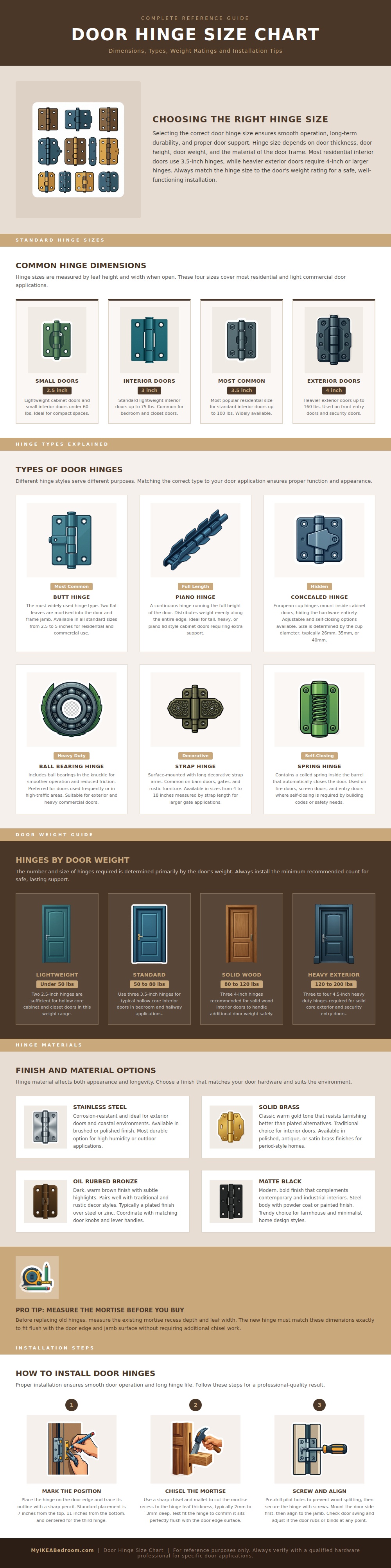
However, the longevity of a hinge is dependent upon the weight and thickness of the door. Hinge sizes is often categorized by the length of the hinge. For instance, a 2.5-inch hinge is typically used for cabinet doors only because the doors is much lighter in weight than full-size interior doors.
How to Choose the Right Door Hinges
Additionally, 2.5-inch hinges do not provide enough area for the screws of the door to remain secure. A 3.5-inch hinge, however, is one of the most common sizes of hinge. This size is often used for standard interior doors with hollow cores for the door panels and standard thickness of the door, around 1 1/8 inches in most homes.
Exterior doors, however, require different hinges than interior doors. Exterior doors are usually of a greater thickness and are also heavier in weight. Additionally, exterior doors are also exposed to the elements.
The moisture in the environment cause the wood of the door to swell, and this swelling places stress upon the screws that secure the door to the door frame. Thus, people often use 4-inch hinges for exterior doors because they provide more area for the screws to distribute the weight of the door. This extra strength of 4-inch hinges is required to handle the effects of wind on the door and for the constant use of exterior doors.
Thus, interior hinges should never be used for front doors because they will fail with the change in the weather. The type of hinge is also a factor in how the door will open. Butt hinges are one of the most common types of hinge for doors.
Butt hinges are strong, and they are relatively simple in their construction. Ball-bearing hinges is one type of hinge that are used for heavy doors and doors that are used very frequently. Spring hinges is one type of hinge that automatically closes the door; spring hinges are required for fire-rated doors.
Finally, piano hinges are a type of hinge that runs the full height of the door; piano hinges are often used for doors that are very heavy and whose weight must be distributed even along the edge of the door. Another specification of a hinge is the material out of which the hinge is constructed. Stainless steel hinges are often used in applications where the door may be exposed to water, such as bathrooms.
Solid brass hinges naturaly form a patina with age, which is a finish that many peoples prefer for older homes. Hinges with oil-rubbed bronze or matte black finishes are common in moddern homes and hardware, and do not require special care. It is important that the hinges match the other hardware in the home to create an installation that appears intentional and design.
The weight of the door is a specification regarding how many hinges are required for that door. A hollow-core closet door may only require two hinges. However, solid wood doors and entry doors typically have three hinges to ensure that the door does not sag.
Additionally, if the door is very heavy and tall, or if the building code require additional security for the door, four hinges may be required. If the door has more weight than other doors, and if it is used more frequent than other doors, more hinges will be required. Additionally, larger hinges will also prevent the sagging of the door at the top corner of the door.
Finally, how the hinge is installed is a factor in whether or not the hinge will remain secure. The mortise into which the hinges are installed must be cut to the exact thickness of the leaf of the hinge. Additionally, you should drill pilot holes into the wood prior to inserting the screws into the door.
Many peoples skip this step. However, if the pilot holes are not drilled, the screws may strip out of the wood of the door. You should choose hinges based off the weight of the door, and how often it will be used.
Using a hinge that is slightly larger than necessary is a safe solution because it allows for the installation of a heavier door than currently exists. However, if the hinges are barely large enough for the current door, it is likely that the hinges will fail if the weight of the door change or increase. Thus, you should of choose hinges for a door by considering the features of the door that will be installed, and by determining the weight of the door.
